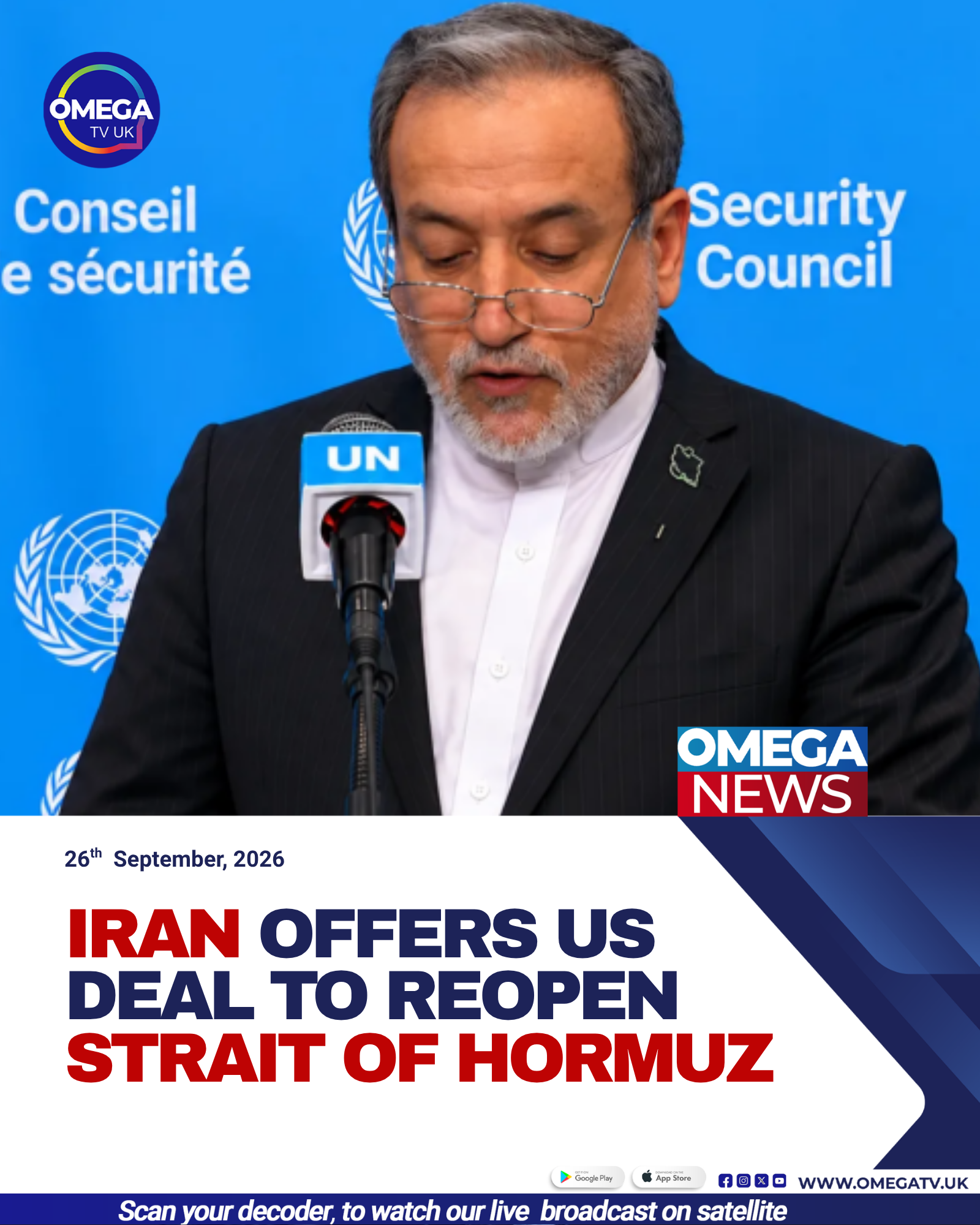
Iran offers seven-day plan to reopen Strait of Hormuz
Iran has offered the United States a deal that could restore normal shipping through the Strait of Hormuz within seven days if Washington meets conditions outlined in a June memorandum of understanding, Foreign Minister Abbas Araghchi said at the United Nations in New York.

Proposal Sent Through Qatar
Araghchi said Tehran had delivered the proposal to Washington through Qatar and that the choice now rested with the United States. He said the measures Iran expects from Washington are already contained in the June agreement.
US Says Discussions Continue
A US official said positive discussions were taking place through mediators, including on nuclear issues. However, Washington had not publicly issued an official response to the proposal at the time of the reports.
Trump Reportedly Rejects Deal
The Wall Street Journal, citing US officials, reported that President Donald Trump had rejected the proposal. The report said Trump was sceptical that Iran would meet his demands and expected military operations could resume after the November midterm elections.
Hormuz Central to Conflict
The Strait of Hormuz has become a major point of contention during the conflict between Iran, the United States and Israel. Before the war, around 20 percent of global oil and liquefied natural gas shipments passed through the strategic waterway. Its disruption has contributed to major fluctuations in energy prices.
June MOU Sought Ceasefire
The memorandum signed in June was intended to establish a ceasefire, ease the military confrontation and facilitate the reopening of the strait. It also included provisions concerning shipping, sanctions and Iran’s nuclear programme.
Iran Sets Conditions
According to reports on the proposal, Iran wants the United States to end its naval blockade of Iranian ports, ease sanctions on Iranian oil and observe a broader ceasefire. Iran has also sought the release of frozen assets as part of the arrangements.
Pezeshkian Supports Nuclear Talks
Iranian President Masoud Pezeshkian said the ceasefire process could begin immediately if the United States accepted the proposal. He also said Iran was prepared to allow United Nations nuclear inspectors into the country as part of negotiations.
Previous Agreement Collapsed
The June agreement eventually broke down as military operations resumed. Iran has since restricted vessels attempting to pass through the strait without authorisation, while the United States has carried out strikes against Iranian targets and maintained pressure on Iranian ports.
Shipping Remains Restricted
Despite the disruption, some vessels continue to pass through the waterway. Reuters reported that recent shipping data showed an average of about 18 transits per day over a 10-day period, with some days recording as few as nine vessels.
Wider Regional Conflict
The situation has also been complicated by fighting involving Yemen’s Houthi movement, which is allied with Iran. The group has intensified attacks affecting shipping and energy infrastructure around the Red Sea, creating another threat to regional trade routes.
Saudi Arabia Faces Attacks
Houthi attacks have included strikes targeting Saudi Arabia, while the Saudi-led coalition in Yemen has reported intercepting ballistic missiles and drones launched toward the kingdom.
Trump Links Deal to Elections
Trump has said he believes an agreement with Iran could be reached after the November US elections. Speaking at the UN General Assembly, he presented the conflict as a choice between reaching a deal and continuing military pressure.
Iran Rejects Threats
Araghchi has rejected what he described as coercion and threats against Iran, saying peace cannot be established through threats of annihilation. Tehran has continued to indicate that diplomacy remains possible if the conditions for negotiations are met.
Diplomatic Efforts Continue
The seven-day proposal comes as mediators continue efforts to bridge differences between Washington and Tehran. Any reopening of the Strait of Hormuz would depend on agreement over the conditions attached to the proposed ceasefire and wider negotiations.