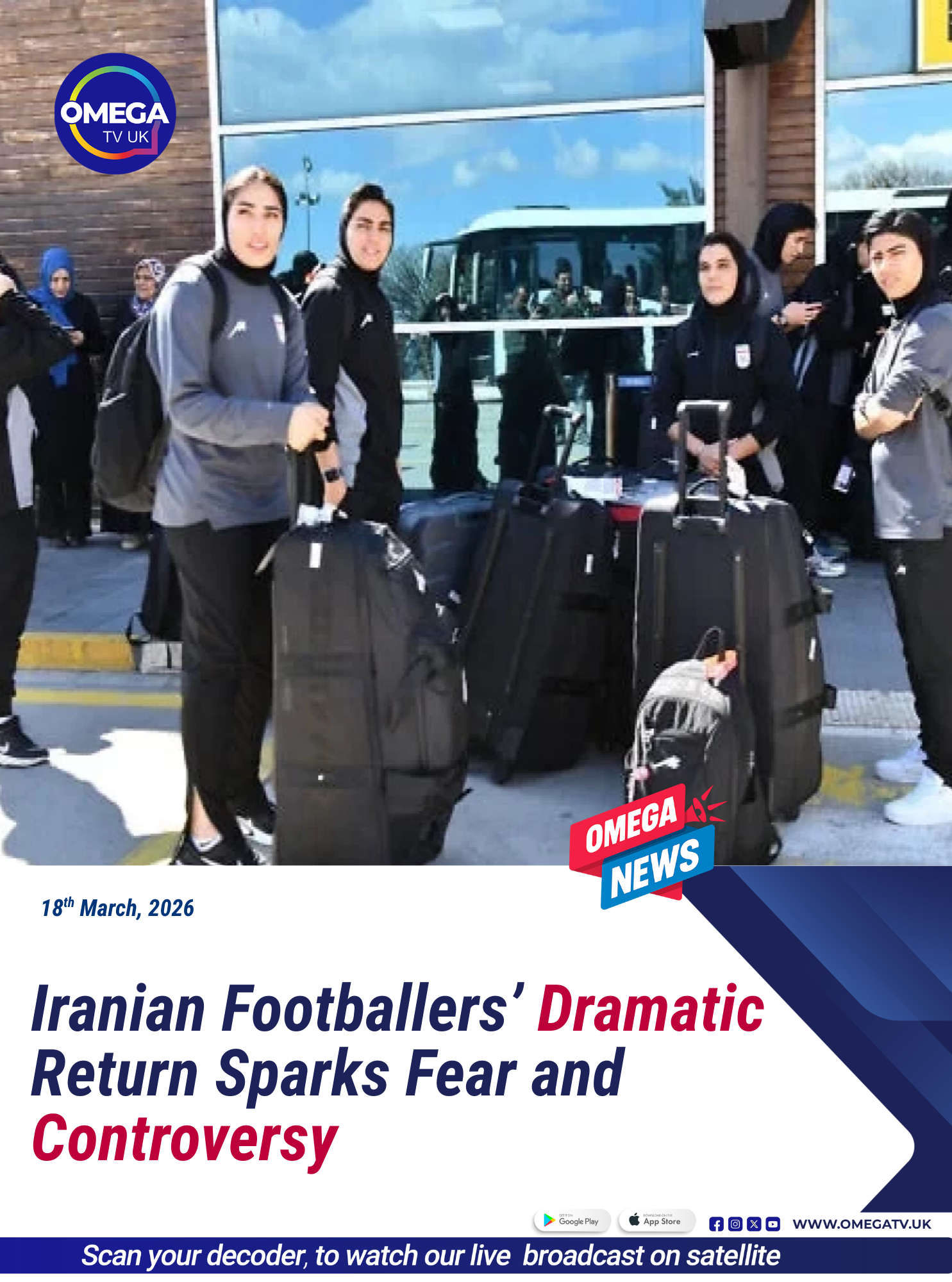
Five members of Iran women’s national football team have returned home after withdrawing their bids for asylum in Australia, ending a tense and closely watched situation that drew global attention.
The players were seen crossing back into Iran from Turkey on Wednesday, after traveling through Malaysia and Oman. Their return comes days after they had initially sought humanitarian visas in Australia, citing fears of possible repercussions back home.
Concerns first arose when the team remained silent during their national anthem at the opening match of the AFC Women’s Asian Cup on 2 March. The moment quickly gained international attention, especially as tensions escalated following the outbreak of conflict involving United States and Israel.
Human rights activists suggested the players may have faced pressure to abandon their asylum plans, including alleged threats directed at their families. Turkish media reported that upon arrival in eastern Turkey, the group was escorted under police supervision before continuing their journey back to Iran.
Among those identified are Zahra Soltan Meshkehkar, Mona Hamoudi, and Zahra Sarbali, with reports also indicating that team captain Zahra Ghanbari was part of the group. One player’s identity has not yet been confirmed.
The situation intensified after an Iranian state TV host publicly labeled the players as “traitors” for their silence during the anthem. In subsequent matches, the team sang the anthem, leading many observers to believe they were instructed to do so by officials.
Australia’s Home Affairs Minister Tony Burke confirmed that the players had initially been moved to a secure location and were granted humanitarian visa approvals, which would have allowed them to remain in the country.
However, as some players reconsidered their decision, Burke acknowledged the complexity of the situation, stating that external pressures could not be ignored.
Iranian authorities later framed the players’ return as a victory, claiming they had resisted foreign influence. Meanwhile, Iranian media outlets described the situation as a result of “psychological warfare” and external propaganda.
The episode highlights the difficult choices faced by athletes caught between international exposure and domestic political pressures, raising broader concerns about freedom, safety, and the intersection of sports and politics.