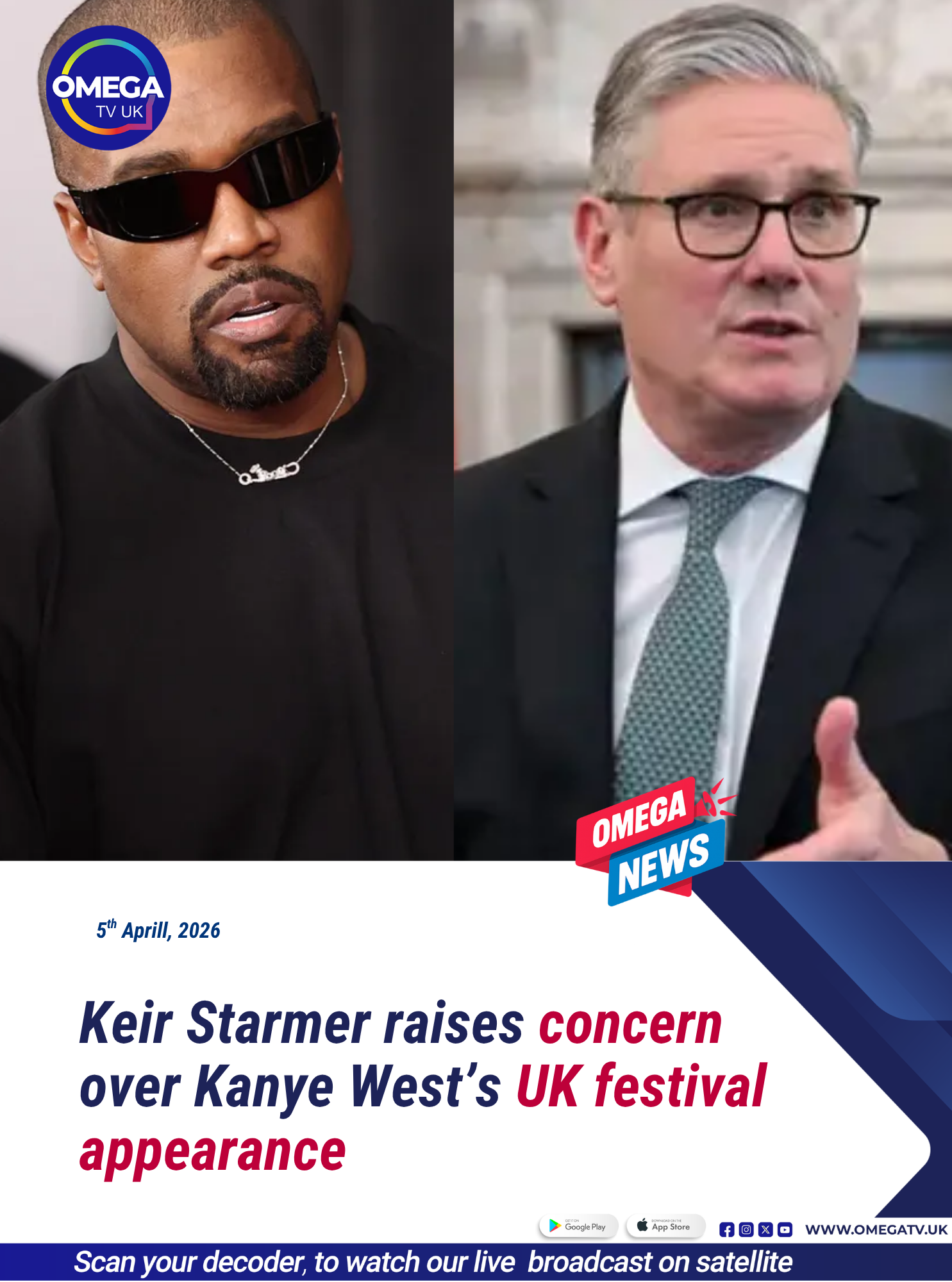
UK Prime Minister Keir Starmer has expressed concern over plans for Kanye West—now known as Ye—to headline the Wireless Festival in London this summer.
The American rapper, 48, was recently announced as the headline act for all three days of the popular rap and R&B event, scheduled to take place from 10 to 12 July. However, the decision has sparked widespread criticism due to West’s past antisemitic remarks and controversial public behaviour.
Speaking about the announcement, Starmer described the situation as “deeply concerning,” pointing to the artist’s previous comments and actions, including statements that were widely condemned as antisemitic and, at times, appearing to praise Nazi ideology.
“Antisemitism in any form is abhorrent and must be confronted firmly wherever it appears,” Starmer said, stressing that the UK must remain a place where Jewish communities feel safe and respected.
The controversy has reignited debate about whether West should be allowed to enter the country at all. Ed Davey has called on the government to deny the rapper entry, arguing that stronger action is needed to combat antisemitism. He described the situation as “extremely serious” and urged authorities to take a firm stance.
West’s history of controversial statements has led to significant backlash in recent years. In 2022, his social media accounts were repeatedly suspended after he posted offensive content, including remarks targeting Jewish people and imagery combining religious symbols with a swastika. That same year, he also drew criticism for wearing a “White Lives Matter” T-shirt during Paris Fashion Week.
The fallout from these incidents had major professional consequences. Sportswear giant Adidas severed ties with the artist, stating it does not tolerate antisemitism or hate speech of any kind.
More recently, West has attempted to address the controversy. In January, he issued a public apology in a full-page advertisement, stating that he regretted his past behaviour and distancing himself from antisemitic views. He also referenced his struggles with bipolar disorder, saying that during manic episodes he had “lost touch with reality.”
Despite these efforts, criticism has persisted. Reports indicate that West had previously been blocked from entering Australia after releasing a song that glorified Nazi leader Adolf Hitler, further intensifying concerns among governments and advocacy groups.
In the UK, the Board of Deputies of British Jews has also weighed in, with its leadership suggesting that West should not be permitted to perform. The organisation has emphasised the importance of standing firmly against hate speech and protecting community values.
A spokesperson for Sadiq Khan reiterated that West’s past comments are “offensive and wrong” and do not reflect the values of London. However, they noted that the decision to book the artist was made by festival organisers, not City Hall.
The organisers of Wireless Festival have yet to publicly respond to the criticism. The event has been promoted as a “three-night journey” through West’s most iconic music, marking what would be his first UK performance since his controversial Glastonbury appearance in 2015.
Meanwhile, West’s music continues to perform well commercially. Tracks from his latest album, Bully, released in March, have entered the UK’s top 100 singles chart, demonstrating his ongoing popularity despite the controversies surrounding him.
As the festival date approaches, pressure is mounting on both organisers and government officials to address the situation. The debate highlights the broader challenge of balancing artistic freedom with accountability, particularly when public figures have a history of inflammatory remarks.
Whether West will ultimately perform in London remains uncertain, but the controversy has already sparked a national conversation about values, responsibility, and the limits of public tolerance.