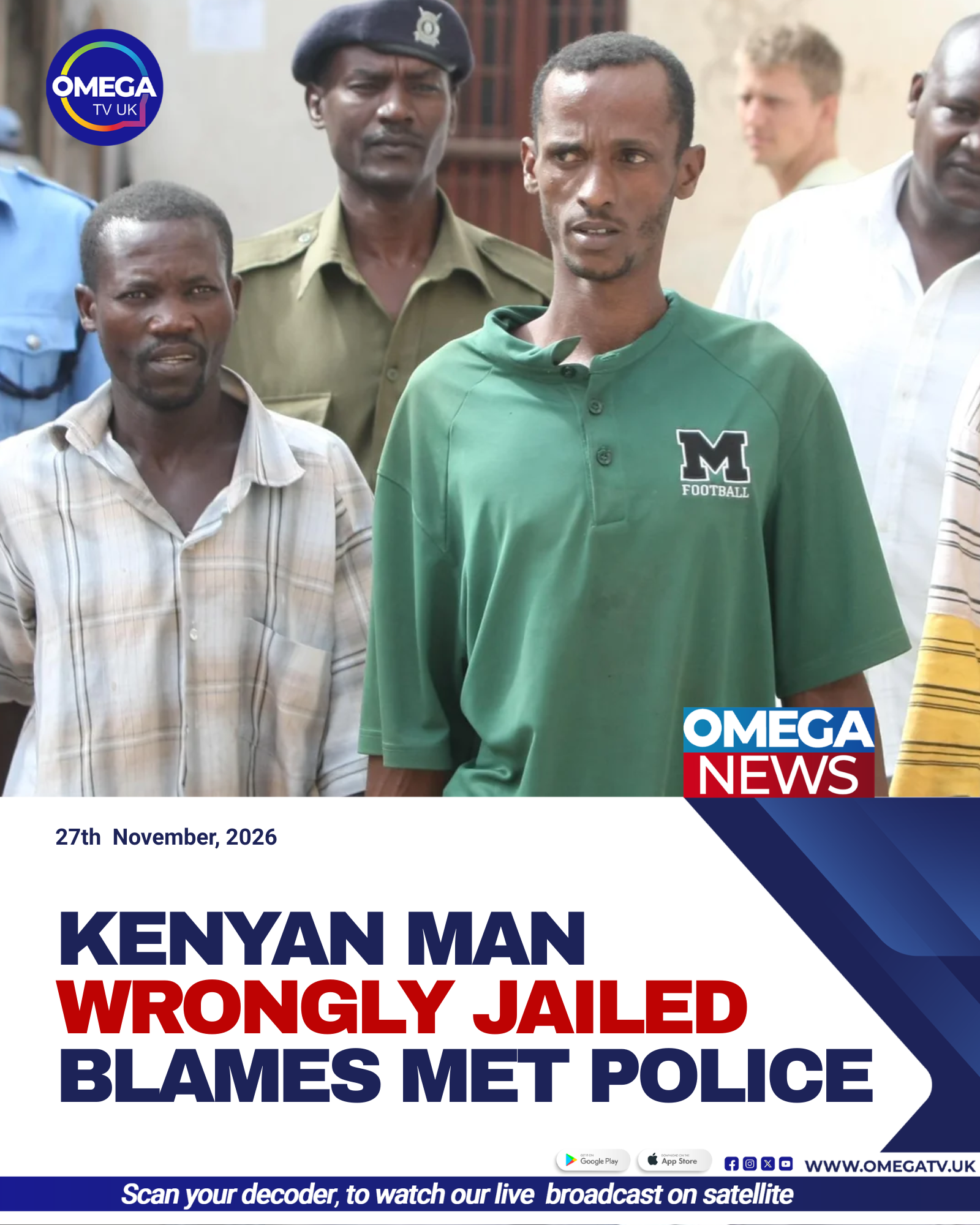
Kenyan Man Says Met Police Destroyed His Life After Wrongful Conviction
A Kenyan man who spent more than a decade in prison after being wrongly convicted over the killing of a British tourist and the abduction of his wife has accused London’s Metropolitan Police of destroying his life.

Ali Kololo was sentenced to death in 2013 following an attack on British couple David and Judith Tebbutt at their beach bungalow on Kenya’s coast in 2011. His conviction was overturned in April 2023 after a Kenyan court found serious doubts about the evidence used against him.
Kololo is now taking legal action against the Metropolitan Police, alleging that a senior British detective provided misleading evidence during his trial and unlawfully helped secure his conviction.
In his first media interview, he told the BBC that the experience had left him struggling to rebuild his life after losing his freedom, family and livelihood.
Before his arrest, Kololo lived with his wife and three young children. He had previously worked as a groundskeeper at the resort where the British couple were staying but later earned a living cutting trees and selling wood.
He said he was financially stable and able to provide for his family before the 2011 attack.
However, within 24 hours of the incident, Kenyan police arrested him.
Kololo alleges that officers beat him, burned him with cigarettes and tortured him for several days in an attempt to force a confession.
He said he could not read or write and was made to place his thumbprint on a statement claiming he had guided the attackers to the couple’s bungalow.
According to Kololo, he did not understand what the document contained and signed it because of the treatment he had received.
The Kenyan police told the BBC that the force always strives to operate within the law. Kololo is not pursuing a legal claim against them.
Following the attack, a team of Metropolitan Police officers travelled to Kenya to assist the investigation. The team was led by then Detective Superintendent Neil Hibberd.
The British government had instructed the officers not to accept information obtained by Kenyan authorities through interrogating detainees. However, Hibberd requested Kololo’s statement and later relied on it when giving evidence for the prosecution.
Hibberd also presented forensic evidence linking Kololo to the crime, including claims that a type of footwear he wore matched marks found in the sand at the resort.
However, the Kenyan officer who arrested Kololo said he was barefoot when he was handed over to police.
The Metropolitan Police’s own forensic examination had also been unable to establish whether the footwear in question had actually produced the marks. This information was not disclosed during the trial.
Kololo initially had no lawyer and was forced to question prosecution witnesses himself, including Hibberd, through a Swahili interpreter, despite Swahili not being his first language.
He was convicted of kidnapping and robbery with violence, becoming the only person convicted in connection with the attack. He spent three years on death row before his sentence was changed to life imprisonment.
The case later came under scrutiny by the UK’s Independent Office for Police Conduct (IOPC).
Its investigation found that Hibberd had failed to disclose significant forensic evidence during the trial. The watchdog concluded that the former detective would have had a case to answer for gross misconduct, but he could not face disciplinary proceedings because he had retired.
Hibberd’s lawyer previously said that he strongly disagreed with the report’s findings.
Kololo’s conviction was eventually overturned by Kenya’s High Court in April 2023 following years of legal support from the charity Reprieve and Kenyan lawyer Alfred Olaba, who represented him without charge.
Judith Tebbutt, who was held captive in Somalia for six months after her husband was killed, also supported efforts to clear Kololo’s name. She had previously told the BBC that she believed he had been wrongly blamed for the attack.
More than three years after his release, Kololo says he continues to suffer from the effects of his imprisonment and alleged torture.
He has difficulty walking and is no longer strong enough to return to the woodcutting work that once supported his family. He now tries to grow food around his home but struggles with unreliable rainfall.
His marriage ended while he was in prison, and his children went to live with their grandmother. They also had to leave school because the family could not afford the fees.
Kololo says his children barely recognised him when he was released, particularly his youngest child, who was very young when he was taken away.
He now lives alone in a mud hut and says he sometimes goes without food.
Despite his difficult circumstances, he remains hopeful that the legal process will bring him justice. However, he says his anger towards the police remains strong.
The Metropolitan Police has neither apologised to Kololo nor admitted wrongdoing. The force is challenging his compensation claim, which his legal team says could take years to resolve.
In a statement to the BBC, the Met said its thoughts were with Kololo, Tebbutt, her family and everyone affected by the crime. It also said it remained committed to supporting Kenyan authorities in their efforts to secure justice.
Preetha Gopalan, head of UK litigation at Reprieve, criticised the force’s handling of the case, accusing it of avoiding accountability and prolonging Kololo’s suffering through the legal process.
Kololo says financial compensation would not erase what happened to him, but it could help him support his children and provide for himself in old age.
“Even if I get a billion shillings, I will never be the same,” he said. “But if I get the justice I deserve, I can help my children and take care of myself when I am an old man.”