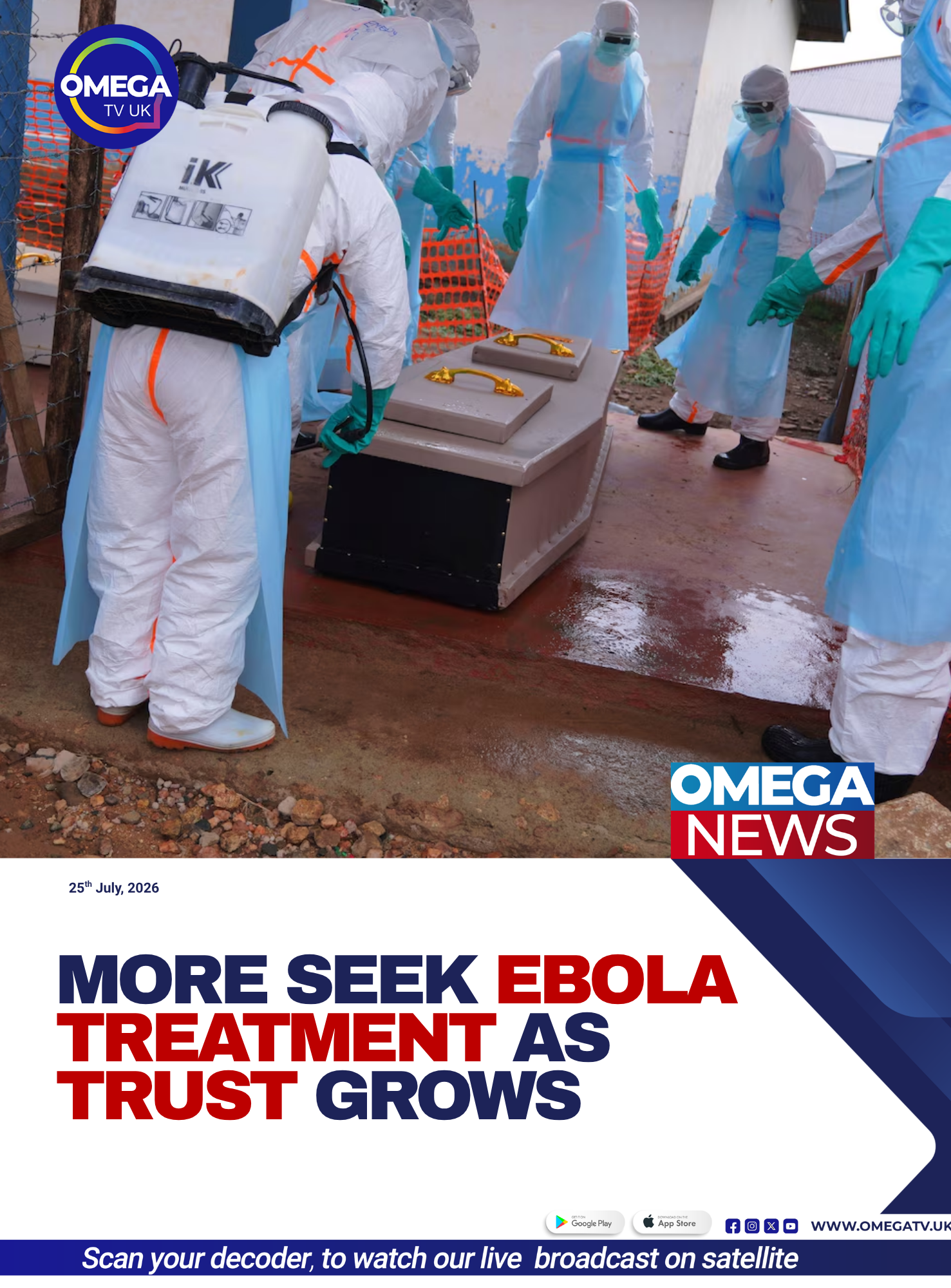
Health Officials See Rising Community Confidence as Response Efforts Continue in Eastern DR Congo
More people in the Democratic Republic of Congo (DRC) are seeking treatment for Ebola as confidence in health workers gradually improves, offering hope in the fight against one of the country’s deadliest outbreaks.

In Bunia, the capital of Ituri province and the epicentre of the current Ebola outbreak, medical teams say an increasing number of patients are voluntarily visiting treatment centres instead of remaining in their communities.
The growing trust marks an important step forward after months of fear, misinformation and hostility that hampered efforts to contain the disease.
Community Trust Begins to Improve
Health officials say the relationship between local communities and healthcare providers has strengthened as more patients receive treatment and recover.
Dr. Job Kkabagambe Tibasima, deputy supervisor for the Ministry of Health at the Ebola Treatment Centre at the Evangelical Medical Centre in Bunia, said patients are now leaving treatment facilities with greater confidence in the medical teams.
According to Dr. Tibasima, patients receive proper care and often express gratitude to healthcare workers before returning home, demonstrating a positive shift in public perception.
The improved trust is helping medical teams identify and treat cases more quickly, increasing the chances of slowing the spread of the virus.
Violence and Misinformation Hindered Response
Since the outbreak began in mid-May, Ebola response efforts have faced significant challenges.
Fear and misinformation have fueled attacks on healthcare facilities, with at least 12 treatment centres reportedly targeted by members of the public who distrusted outside authorities.
Many residents initially avoided seeking medical help, resulting in the majority of Ebola-related deaths occurring within communities rather than in specialized treatment centres.
Health officials believe rebuilding trust remains one of the most important tools in controlling the outbreak.
Outbreak Continues to Spread
Despite the encouraging increase in treatment-seeking behaviour, the Ebola outbreak continues to outpace response efforts.
More than 2,500 confirmed cases have been recorded so far, but health authorities believe the true number could be more than double because insecurity and ongoing armed conflict continue to restrict access to several affected communities.
Response teams are working under difficult conditions as violence limits surveillance, testing and treatment operations across eastern DRC.
WHO Calls for Greater International Support
Health workers are currently tracing approximately 80 percent of identified contacts of confirmed Ebola patients, but officials say reaching every affected community remains impossible under current security conditions.
The World Health Organization (WHO) says priority efforts include strengthening disease surveillance, improving clinical care, conducting safe and dignified burials, and expanding community engagement to reduce transmission.
The agency also stressed the importance of rapidly strengthening response systems in newly affected provinces before the virus spreads further.
Peace Essential to Containing Ebola
The World Health Organization says ending the outbreak will require more than medical expertise alone.
According to the WHO, political action toward a ceasefire is essential to improve humanitarian access and allow emergency health teams to reach vulnerable communities safely.
The agency also called on the international community to provide sustained financial and logistical support, warning that the people of the Democratic Republic of Congo cannot face the Ebola outbreak alone.
Health officials say lasting peace, stronger healthcare systems and continued community cooperation will be key to bringing the outbreak under control.