More Than Half of England Declared in Drought as Heatwave Worsens

More than half of England has officially entered drought conditions as prolonged hot and dry weather continues to strain the country’s water supplies, prompting fresh concerns over the environment, agriculture and public water security.
The Environment Agency (EA) announced that seven regions across central, eastern and southern England are now officially in drought after months of below-average rainfall and exceptionally high temperatures.
The affected regions include East Anglia, Hertfordshire and London, the Thames Valley, Hampshire and the Isle of Wight, Devon and Cornwall, the West Midlands, and Wessex, which covers Dorset, Somerset, Wiltshire and South Gloucestershire.
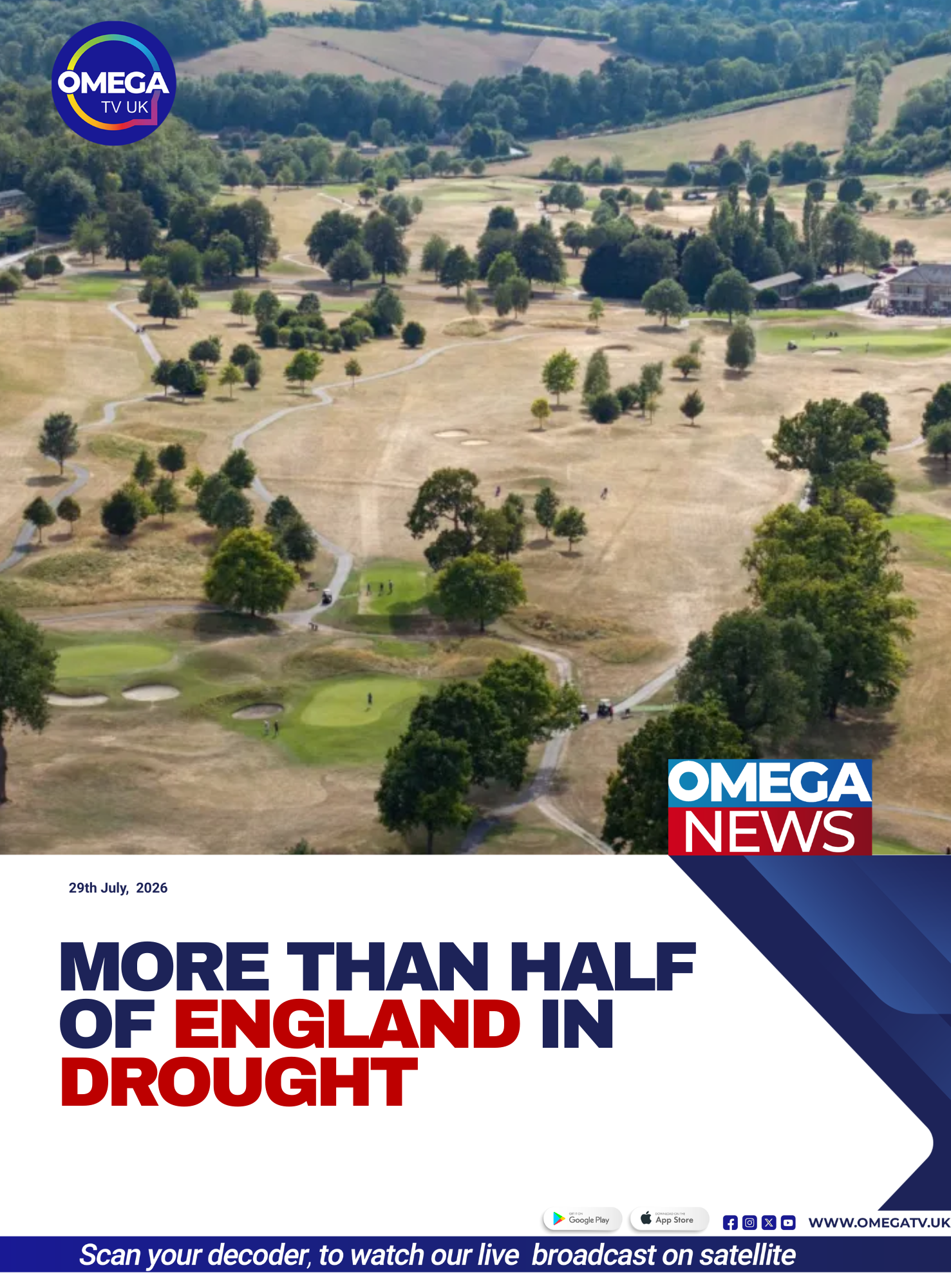
Officials say the effects of the drought are already being felt across the country. Rivers are running at unusually low levels, crops are being harvested earlier than expected, and wildfire risks have increased significantly. More than 20 million people are also living under hosepipe bans aimed at reducing water use.
The Environment Agency said it is increasing its response by closely monitoring water supplies and placing tighter controls on how much water can be taken from rivers and underground sources.
Helen Wakeham, Director of Water at the Environment Agency, said current water use is exceeding the rate at which nature can replenish supplies, making conservation efforts increasingly important.
Neighbouring regions are also experiencing severe dry conditions. North Wales and the Upper Severn River Basin entered drought last week, while eastern Scotland remains under its highest level of water scarcity monitoring.
Although the UK experienced a wet start to the year, late spring and summer brought unusually dry weather. England recorded only around seven percent of its normal July rainfall, while southern England received just one percent of its average rainfall for the month.
Meteorologists describe the rapid shift from very wet conditions to extreme dryness as “climate whiplash.” The Environment Agency says these conditions have led to a “flash drought,” where drought develops rapidly over weeks instead of months.
The Met Office has forecast some rainfall during early August, but experts say it is unlikely to provide enough water to end the drought or significantly improve conditions.
Scientists warn that climate change is increasing the likelihood of hotter summers and more frequent droughts by accelerating evaporation and drying out rivers, soil and vegetation more quickly.
Experts have also highlighted ageing water infrastructure and leaking pipelines as factors contributing to water shortages. The Environment Agency has previously warned that England could face a daily water supply shortfall of five billion litres by the middle of the century without major investment.
The drought is also affecting wildlife and food production. Low river levels are making it difficult for species such as Atlantic salmon to migrate, while farmers say extreme weather is making food production more expensive and unpredictable.
Meanwhile, temperatures are expected to reach as high as 35 degrees Celsius in parts of south-east England, increasing the risk of further wildfires. More than 200 wildfire incidents have already been reported across England and Wales in the past two weeks.
Authorities are urging the public to conserve water and remain alert as drought conditions continue across much of the country.