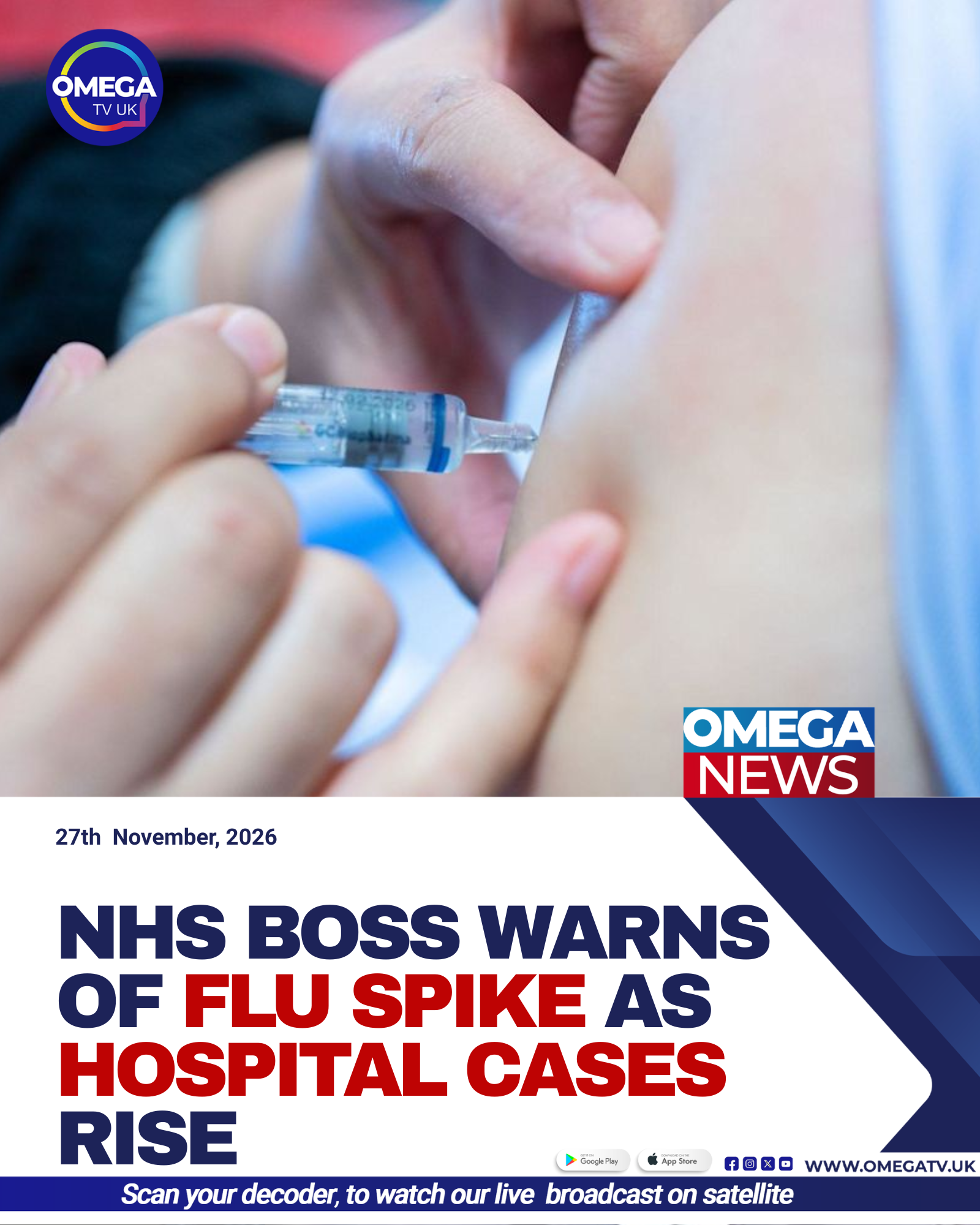
NHS Warns of Sharp Flu Rise as Hospital Admissions Surge
Health officials in England are urging vulnerable people to get their flu vaccines as hospital admissions rise sharply, raising concerns about growing pressure on the National Health Service (NHS) ahead of winter.

The UK Health Security Agency (UKHSA) said flu-related hospital admission rates had increased by almost 80% in one week, reaching their highest level for this time of year since before the Covid-19 pandemic.
Sir Jim Mackey, the outgoing chief executive of NHS England, described the situation as a worrying development, warning that hospitals were approaching a significant rise in flu cases.
Speaking at the NHS Alliance autumn conference, he revealed that some hospitals had introduced mask-wearing to limit the spread of respiratory infections.
He said he had been surprised when asked to wear a mask during a recent hospital visit, having not done so for several years.
Sir Jim added that hospitals were currently treating more patients with flu than at the same point last year.
The UKHSA is particularly concerned about low vaccination rates among vulnerable groups.
Just under 68% of people aged 65 and above had received their flu vaccine, a figure below the usual level recorded at this stage of the season.
The agency said nearly 9.5 million people under 65 with certain long-term health conditions are also eligible for vaccination. These include people with lung conditions, kidney or liver disease and diabetes.
However, only 34% of those in these clinical risk groups had received the vaccine by 22 November, leaving almost seven million people without protection.
Suzanna McDonald, who leads the UKHSA’s flu programme, said the H1N1 strain was contributing to the spread of the virus.
She explained that the strain had developed more changes than health officials would normally expect during the season. However, she said previous experience showed that flu vaccines could remain effective even when the circulating strain had changed.
McDonald urged eligible people to get vaccinated, warning that thousands die from flu every year.
She also cautioned that infection levels could rise further as Christmas approaches, with more people gathering indoors and increasing opportunities for the virus to spread.
People experiencing respiratory symptoms have been advised to wash their hands regularly, cover coughs and sneezes with a tissue or their elbow, and remain at home when unwell. They should also avoid contact with people who are particularly vulnerable to infections.
Meanwhile, concerns have been raised about low vaccination rates among young children.
Only 39% of eligible two and three-year-olds in England had received their free flu vaccine this autumn, according to the UKHSA.
The vaccine is available as a nasal spray through GP surgeries and some community pharmacies. School-age children are usually vaccinated at school, with a catch-up service available at pharmacies until 1 December for those who miss their appointment.
McDonald encouraged parents not to underestimate the importance of childhood vaccination, saying it could prevent hospital admissions and save lives.
The growing flu pressure comes as the NHS continues to face other challenges, including rising patient numbers and concerns about hospital overcrowding.
Sir Jim also criticised the continued use of corridor care, where patients receive treatment in hospital corridors because suitable beds are unavailable.
He said the practice had become established in some parts of the health service and called for urgent action to end it, highlighting concerns about patient safety and dignity.
Sir Ciaran Devane, chief executive of the NHS Alliance, warned that an early flu season could place additional pressure on already stretched services.
He said the NHS had dealt with the challenges of summer heatwaves and could now face another difficult winter.
Last year, an early rise in flu infections caused concern, although cases eventually peaked sooner than expected.
This winter, hospital admissions are already slightly higher than they were at the same point last year, but health officials remain uncertain about when infections will reach their peak.
With hospitals also treating more patients for other illnesses, officials fear a particularly severe flu season could create significant difficulties for healthcare services.