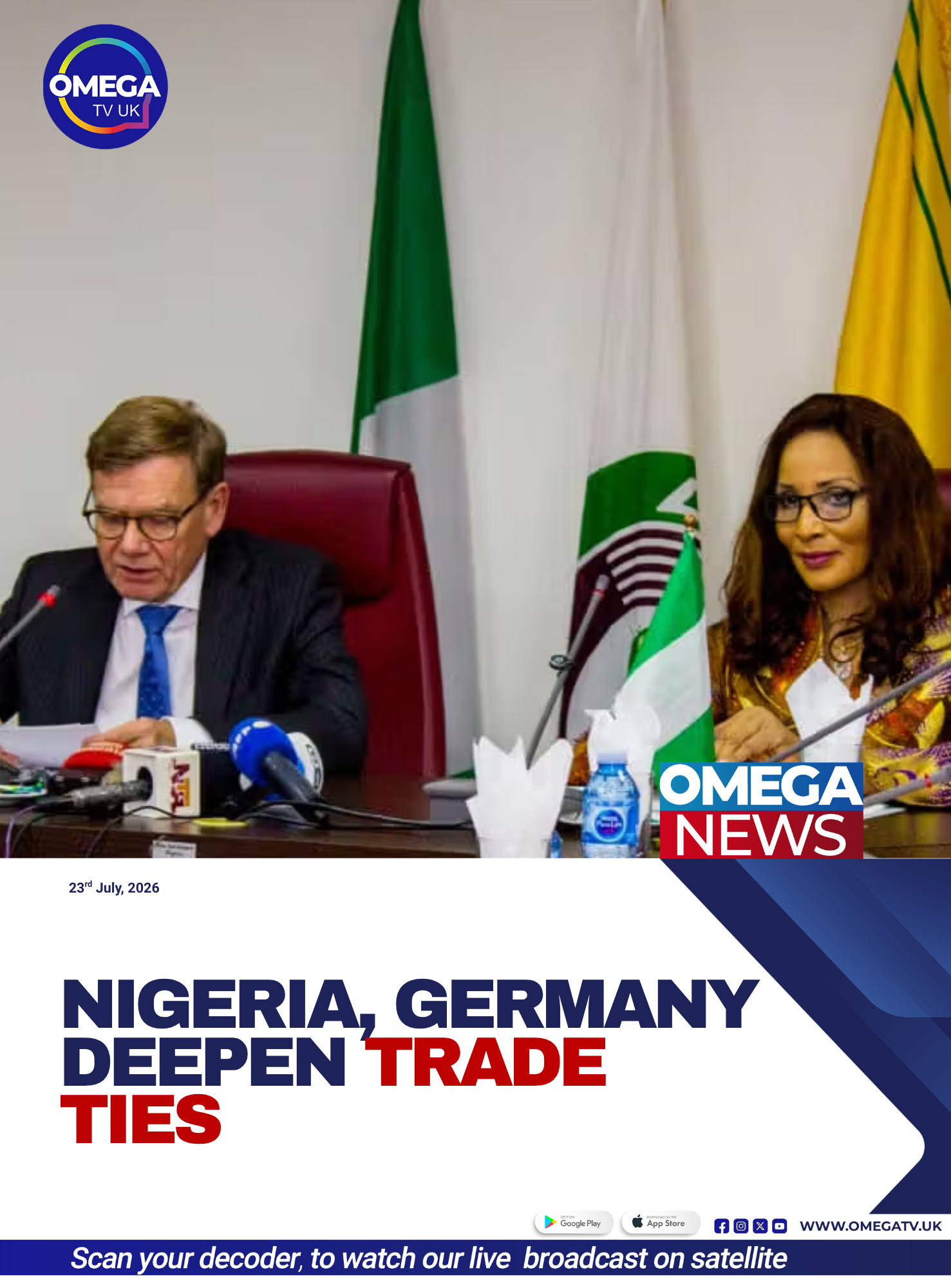
Berlin seeks stronger economic ties with Africa amid global geopolitical shifts
Nigeria and Germany have agreed to deepen business and trade cooperation as German Foreign Minister Johann Wadephul concluded a two-day visit to the West African nation aimed at expanding economic partnerships across Africa.

During talks in Abuja with Nigeria’s Foreign Affairs Minister, Bianca Odumegwu-Ojukwu, Wadephul stressed the importance of strengthening trade and investment between the two countries. His visit followed engagements in Lagos, Nigeria’s commercial hub, where he met business leaders and explored investment opportunities.
The visit comes at a time when Germany and other European countries are seeking to diversify global partnerships amid rising geopolitical tensions involving the United States, Russia and China.
Speaking during the visit, Wadephul said Nigeria remains a key economic partner with significant untapped potential, particularly in information technology and the country’s fast-growing startup ecosystem. He noted that bilateral trade between Nigeria and Germany increased by around 10% over the past year.
Germany also identified critical minerals, renewable energy and the pharmaceutical industry as sectors with strong prospects for future investment and collaboration.
The renewed partnership follows a series of economic reforms introduced by President Bola Tinubu’s administration. These include the liberalisation of the naira exchange rate, tax reforms and the removal of fuel subsidies, measures that have attracted investor interest despite contributing to high inflation and increased living costs for many Nigerians.
Germany also reaffirmed its commitment to supporting Nigeria’s security efforts as the country continues battling a long-running insurgency in its north-east. Wadephul praised Nigeria’s role in combating terrorism and warned that instability in neighbouring Sahel countries could further threaten regional security.
Despite Germany’s pledge to continue security and humanitarian cooperation, the country has reduced its foreign aid budget in recent years, reflecting a broader trend among Western nations to scale back international assistance.
Claudia Roth, a German Green Party lawmaker accompanying the delegation, said Germany wants to build equal partnerships with African countries rather than dictate development policies. She emphasised that Europe has much to learn from Africa while working together on shared economic and humanitarian challenges.
Roth also highlighted the growing humanitarian crisis in the Sahel, pointing to the large number of refugees who have fled conflict in neighbouring Mali into Mauritania.
Germany’s outreach to Nigeria forms part of a wider diplomatic tour across Africa. After visiting Mauritania and Nigeria, Wadephul is expected to conclude his trip in South Africa as Berlin continues efforts to strengthen political, economic and security cooperation across the continent.