A new report by Human Rights Watch has revealed that more than 1,800 civilians have been killed in Burkina Faso since the military seized power in 2022, raising serious concerns about alleged war crimes and crimes against humanity.
According to the findings, at least 1,837 civilians, including dozens of children, were killed in 57 separate incidents between January 2023 and August 2025. The report paints a grim picture of a country trapped in escalating violence, where civilians are increasingly caught between armed groups and state forces.
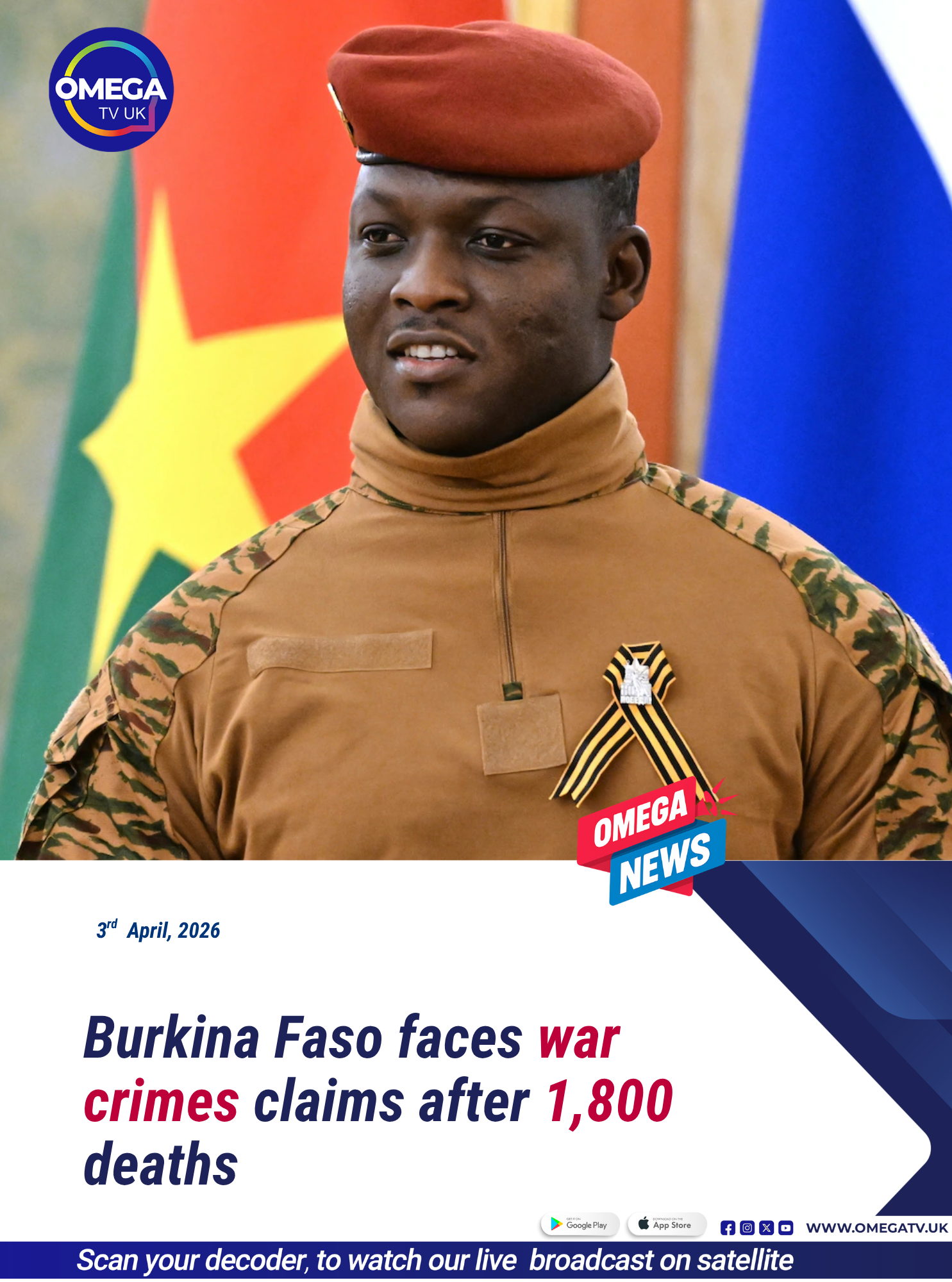
The military government, led by Ibrahim Traoré, is accused of being responsible for the majority of the killings. Human Rights Watch attributes around 1,255 deaths to government forces and allied militias, while Islamist militant groups are blamed for the remaining casualties.
The report suggests that Traoré, along with six senior military commanders, could be held accountable under the principle of command responsibility. It also points to the possible culpability of five leaders from jihadist groups operating in the country.
Burkina Faso’s authorities have previously denied accusations of targeting civilians, and the government has yet to respond to this latest report. The military had initially justified its takeover by promising to restore security and combat the growing insurgency led by groups linked to al-Qaeda.
However, the report argues that all sides involved in the conflict have committed serious abuses, including deliberate killings, attacks on civilian populations, looting, and forced displacement. It accuses the junta of failing to hold perpetrators accountable while also restricting media coverage and independent reporting.
Human Rights Watch described the scale of the violence as “mind-boggling,” highlighting what it sees as a lack of international attention to the crisis. The group documented several particularly deadly incidents, including one in December 2023 in the northern town of Djibo, where more than 400 civilians were allegedly killed by military forces and allied militias.
Survivors of such attacks have shared harrowing testimonies. One woman recounted how her two daughters were killed instantly, while she and her infant son were injured. Witnesses described the violence as indiscriminate and brutal, leaving deep psychological scars on communities.
A key focus of the report is the role of the Volunteers for the Defence of the Fatherland (VDP), a civilian militia group created by the junta to support the army. While intended to bolster the fight against insurgents, the VDP has been accused of participating in abuses and targeting civilians.
There are also allegations that critics of the government have been forced to join these militias as a form of punishment. Traoré has previously defended such measures, arguing that national security must take precedence over individual freedoms.
The conflict in Burkina Faso is part of a wider regional crisis affecting neighbouring countries such as Mali and Niger, where military governments are also battling jihadist insurgencies. Armed groups, including those linked to al-Qaeda, have expanded their control over large parts of the region, often targeting civilians who are suspected of supporting rival factions.
The report highlights the activities of the jihadist group JNIM, which has been accused of carrying out large-scale attacks. In one incident in August 2024, militants reportedly killed at least 133 people and injured more than 200 within just two hours.
Civilians in affected areas describe living in constant fear, caught between threats from militant groups and actions by government forces. Many say they are forced to choose between cooperation with insurgents or risking retaliation from the military.
Human Rights Watch is calling on the International Criminal Court to open a preliminary investigation into the alleged crimes committed by all parties involved in the conflict since September 2022. The organisation is also urging international partners to reconsider their cooperation with Burkina Faso’s military and to impose targeted sanctions.
Since coming to power, Traoré has gained support among some Africans for his anti-Western stance and calls for greater regional independence. Burkina Faso, along with Mali and Niger, has distanced itself from traditional Western allies such as France and instead strengthened ties with Russia for military support.
Despite these shifts, the violence has continued unabated, with civilians bearing the brunt of the conflict. The report underscores the urgent need for accountability and renewed international attention to a crisis that shows no signs of easing.