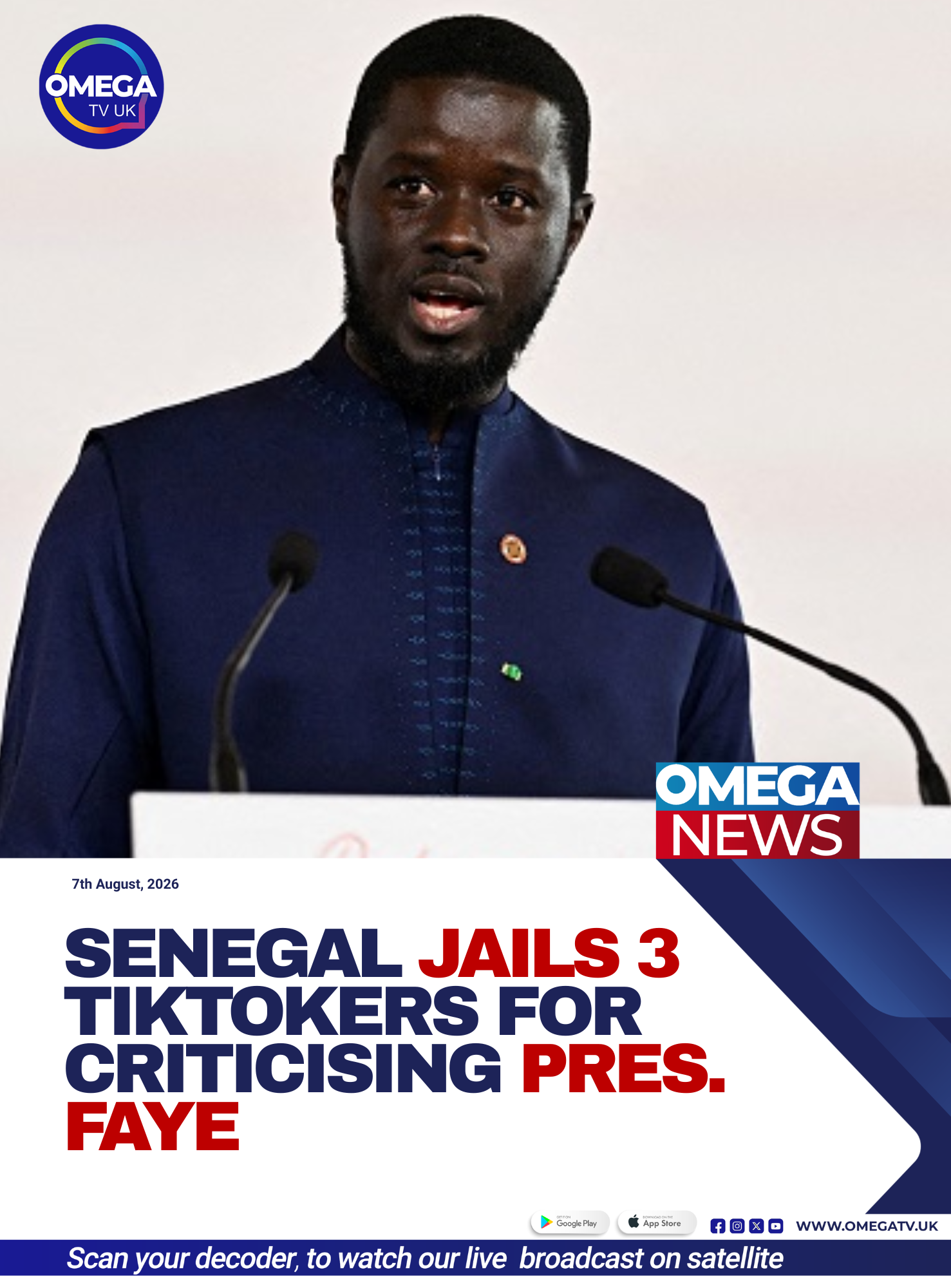
Sentences spark concerns over freedom of expression amid growing tensions between Faye and Sonko
A Senegalese court has sentenced three TikTok influencers to prison over posts that allegedly insulted President Bassirou Diomaye Faye.

The ruling has sparked criticism from observers who say the case raises concerns about freedom of expression and the limits of online speech in Senegal.
The three influencers work with Feenal Digital, an online content platform. Some observers have described the platform’s content as favourable towards former Prime Minister Ousmane Sonko, who leads the PASTEF party.
Three creators convicted
The longest sentence was handed to Mandoumbe Diop, popularly known online as Lamignou Darou. He was sentenced to three months in prison without suspension.
Diop is the most followed of the three creators, with more than 500,000 followers on TikTok. His videos regularly receive tens of thousands of views.
Two other Feenal Digital creators, Magueye Diaw, known as Oustaz Thiep, and Moustapha Ndiaye, known as Ndiaye Touba, were each sentenced to two months in prison without suspension.
Both were also fined 500,000 CFA francs, equivalent to about $800, according to their lawyer.
Lawyer challenges prosecution
The three influencers were represented by lawyer Abdy Nar Ndiaye, who argued that the content posted by his clients was comedic and should not have resulted in criminal prosecution.
The case has attracted wider attention because of the political circumstances surrounding the influencers and the growing tensions within Senegal’s ruling political camp.
Feenal Digital describes itself as an online platform that promotes activities involving the government and private sector on Facebook.
Faye and Sonko split
The court ruling comes as relations between President Faye and Sonko have deteriorated.
The two men were once close political allies and played central roles in the rise of the PASTEF movement. Their partnership was widely seen as an important force in Senegal’s recent political transformation.
However, disagreements between the two leaders have increasingly become public, exposing divisions within the ruling camp.
Faye recently launched his own political party, a move that has further deepened the political separation between the president and Sonko.
Freedom of expression concerns
The sentencing of the influencers has intensified debate over freedom of expression in Senegal, particularly regarding political criticism and online content.
Critics of the ruling argue that criminal penalties for social media posts could have a chilling effect on online speech, especially among young people who increasingly use platforms such as TikTok to discuss politics and current affairs.
Supporters of the prosecution, however, argue that public figures should not be subjected to insulting or defamatory content simply because it is presented through social media.
Political tensions deepen
The case has therefore become part of a broader debate over Senegal’s political direction and the relationship between government authority and digital expression.
As tensions between Faye and Sonko continue, the prosecution of the three influencers is likely to remain a focus of discussion over freedom of speech, political criticism and the growing influence of social media in Senegalese politics.