South Africa’s ANC Suffers Worst-Ever Local Election Result
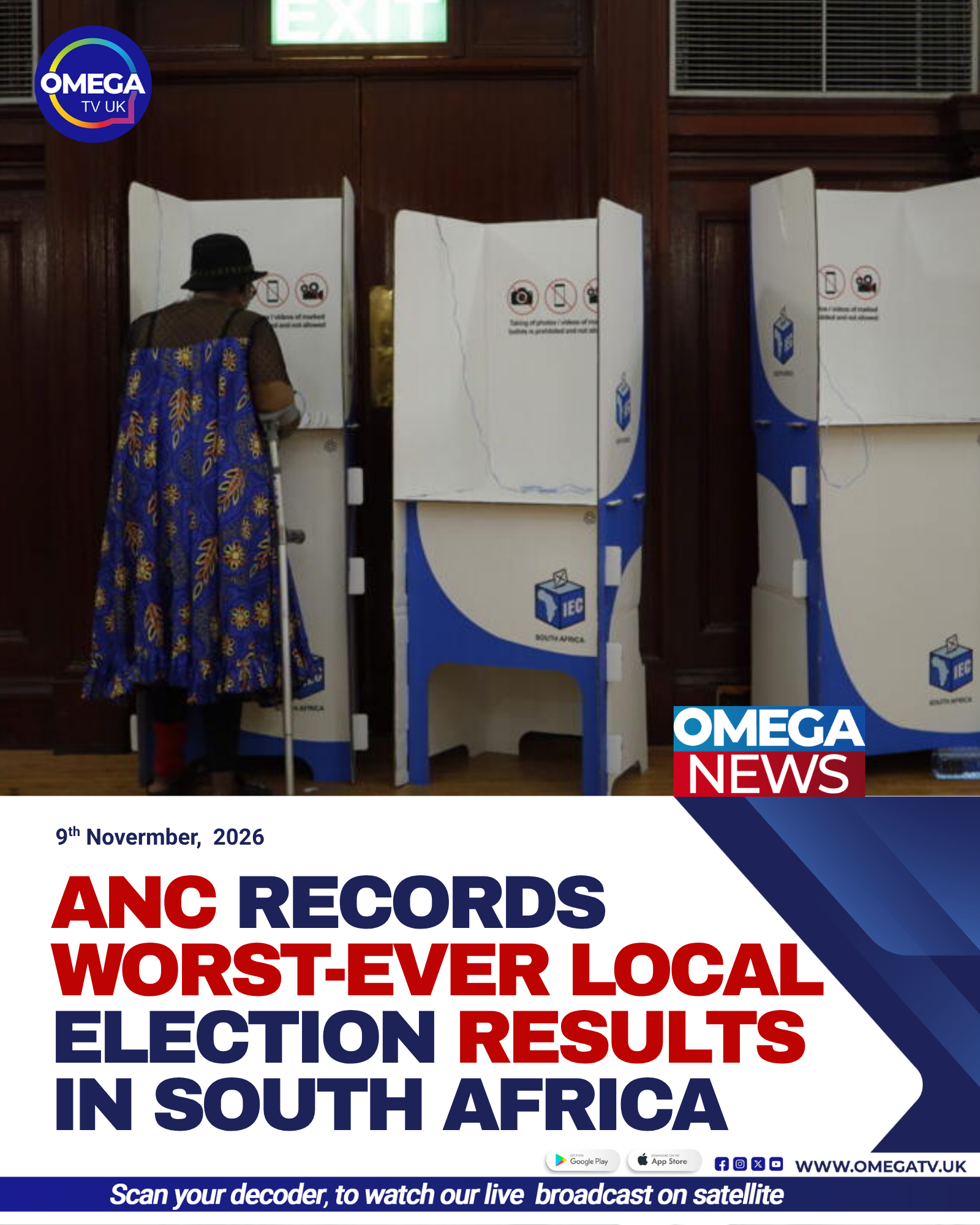
South Africa’s ruling African National Congress (ANC) has recorded its worst-ever performance in local elections since Nelson Mandela led the country out of apartheid more than 30 years ago. The party has described the outcome as “catastrophic”.

Although the ANC secured the largest share of votes nationally, it received just 30.76%, down from 46% in 2021 and 64.82% two decades ago.
Its losses were also reflected across the provinces and major cities. The party secured a majority in only one of South Africa’s nine provinces, Limpopo, compared with six in 2021. It also won the most votes in just two of the country’s eight major cities, down from six at the previous local elections.
The Democratic Alliance (DA) finished second nationally with 24.64%, retaining control of Cape Town. Former president Jacob Zuma’s uMkhonto weSizwe (MK) Party came third with 9.76%, replacing the ANC as the leading party in Durban. The Economic Freedom Fighters (EFF), led by Julius Malema, finished fourth with 6.22%.
ANC Secretary-General Fikile Mbalula described the result as catastrophic, saying the party had anticipated a difficult outcome. He pointed to the high cost of living and said many middle-class voters had turned against the ANC.
President Cyril Ramaphosa, who also leads the party, said the ANC accepted the people’s decision with humility, although he acknowledged that the decline in support was concerning.
The latest result follows the ANC’s loss of its parliamentary majority in the 2024 national elections for the first time in its history. It was subsequently forced to form a coalition government with several other parties, known as the Government of National Unity (GNU).
Despite making gains in several cities, the DA’s national vote share increased only slightly, from 21.83% in 2021 to 24.64%. Its latest performance also remained below the 26.9% it achieved in 2016.
Voter turnout rose to 52.29%, compared with 45.9% in 2021, when the elections were held during the COVID-19 pandemic.
Political analyst Susan Booysen said the results sent a devastating message to the ANC, reflecting declining support at municipal, metropolitan, provincial and national levels.
Poor service delivery and failing infrastructure are widely considered major reasons for the party’s declining popularity. Problems involving water, electricity and sanitation have affected communities across the country.
The ANC is also preparing for a leadership transition next year as Ramaphosa approaches the end of his party leadership term. He is expected to remain South Africa’s president until the next national elections in 2029, but questions remain over who could succeed him.
Political analyst William Gumede described the results as marking the end of the liberation movement’s political dominance since the end of apartheid. He warned that the ANC could become South Africa’s second-largest party by 2029 and face prolonged internal divisions.
Gumede also pointed to changing voting patterns, saying the DA, traditionally associated with a largely white support base, had attracted more black voters. He described the shift as movement towards a post-racial voting pattern.
Attention now turns to coalition negotiations, particularly in Gauteng, the country’s economic powerhouse. The ANC could lose its position in major cities such as Johannesburg and Pretoria.
Gumede said voters were increasingly rejecting the dominance of individual parties and demanding that political groups work together through coalitions.
Parties have 14 days from the announcement of the results to negotiate coalition arrangements.