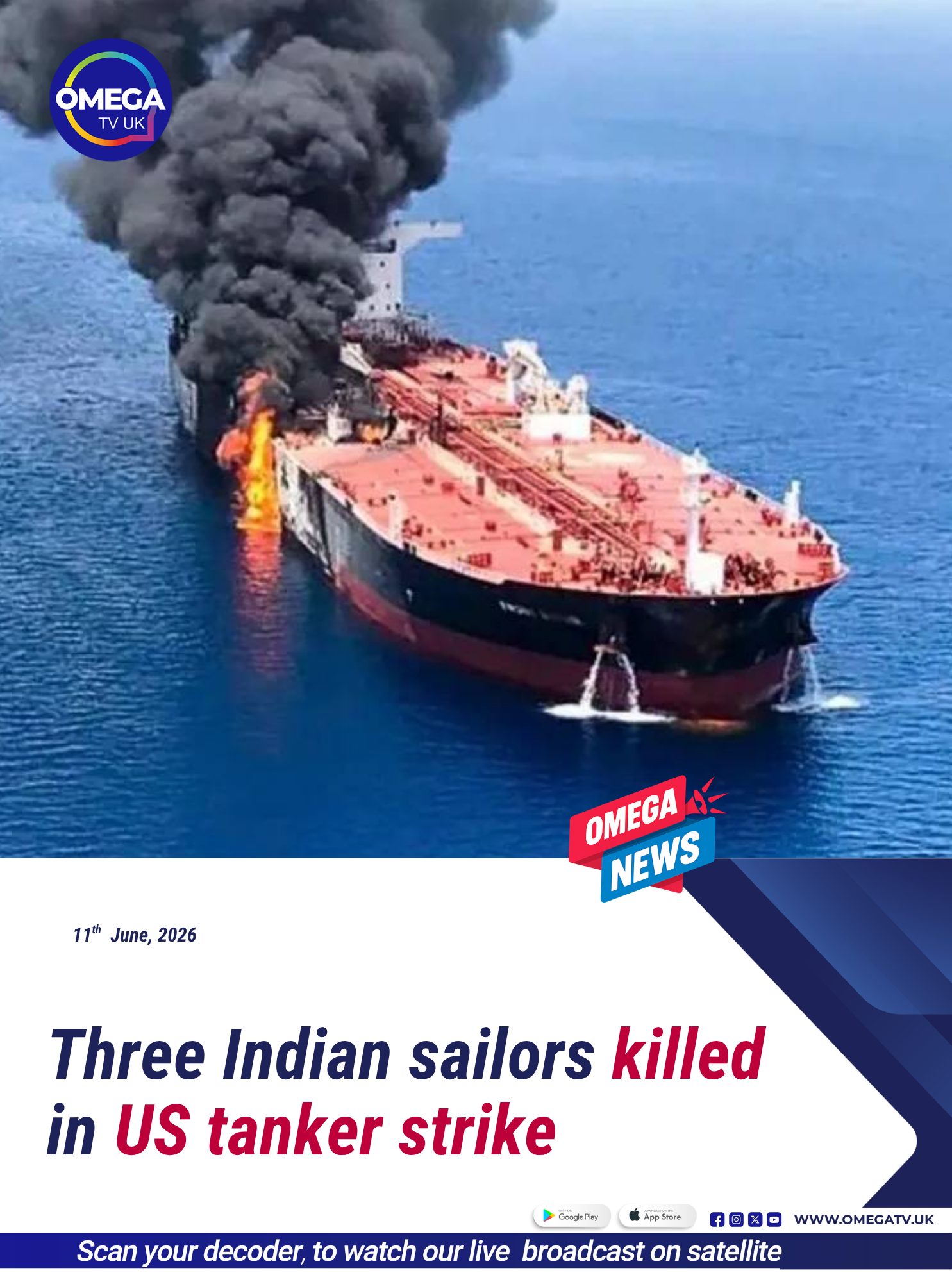
Three Indian sailors have died following a US military strike on an oil tanker in the Gulf of Oman, further increasing tensions in the Middle East as conflict between the United States and Iran continues to intensify. The sailors were among 24 Indian crew members aboard the Palau-flagged MT Settebello, which was attacked after allegedly failing to comply with instructions issued by American naval forces operating in the region.

According to the US Central Command, the tanker was suspected of transporting Iranian oil during an ongoing blockade imposed by the United States. American officials claimed the vessel repeatedly ignored warnings and directions from military forces before an aircraft launched precision strikes targeting the ship’s engine room. The attack left the tanker badly damaged and triggered emergency rescue operations in the Gulf of Oman.
Out of the 24 Indian sailors on board, 21 were rescued safely while three crew members were initially reported missing. Indian authorities later confirmed that the missing sailors had died during the incident. India’s Shipping Minister Sarbananda Sonowal described the tragedy as deeply unfortunate and assured the families that the bodies of the deceased sailors would soon be returned home.
The deaths have sparked diplomatic tensions between India and the United States. Following the attack, the Indian government summoned the deputy head of the US mission in New Delhi to seek explanations and raise concerns about the safety of civilian workers caught in military conflicts. India also repeated its position that commercial shipping vessels and innocent sailors should never become targets during international military operations.
This incident is the second involving Indian crew members aboard oil tankers in the Gulf of Oman within a single week. Earlier, another Palau-flagged vessel known as The Marivex was also struck by US forces after reportedly refusing to follow military instructions. All crew members aboard that tanker survived after being rescued by the Omani military.
The latest attacks come amid growing tensions surrounding the Strait of Hormuz, one of the world’s most important oil shipping routes. The waterway handles nearly 20 percent of global oil and gas transportation, making it critical to the global economy. Iran recently tightened restrictions around the strait during the ongoing conflict, prompting the United States to increase military operations and maritime enforcement in the Gulf.
US officials claim their actions are aimed at stopping vessels believed to be helping Iran bypass economic sanctions. Since the blockade began in April, American forces say several ships have been intercepted, disabled, or redirected during operations across the region.
Indian maritime unions and shipping organizations have strongly criticized the use of force against civilian vessels. Manoj Yadav, leader of the Forward Seamen’s Union of India, questioned why military authorities did not simply detain the tanker instead of launching a deadly strike. He argued that safer alternatives could have prevented the loss of innocent lives.
Meanwhile, fears continue to grow over the possibility of a wider regional war involving the United States, Iran, and allied nations. Both countries have exchanged fresh military threats despite attempts to maintain a fragile ceasefire reached earlier this year. Analysts warn that continued violence in the Gulf could disrupt global oil supplies and create serious economic consequences worldwide.
Families of the deceased Indian sailors are now mourning their loved ones as investigations into the incident continue. The tragedy has once again highlighted the growing risks faced by civilian workers operating in conflict zones across the Middle East.