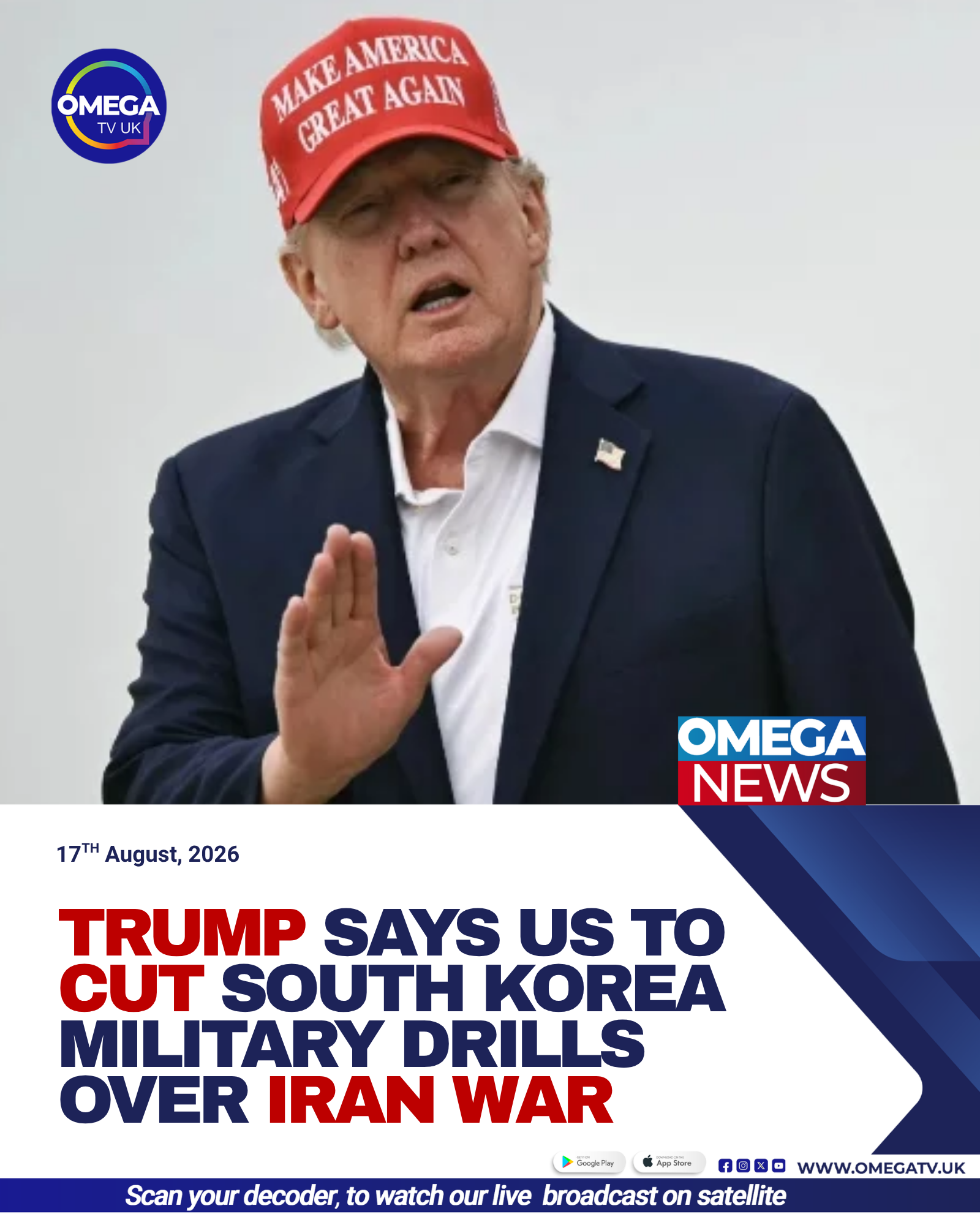
US President Donald Trump says the United States will “substantially reduce” joint military exercises with South Korea, citing costs and his relationship with North Korean leader Kim Jong Un.

Trump also linked the decision to South Korea declining to join the US in efforts aimed at the “denuclearisation” of Iran.
Seoul reviews announcement
South Korea said it was reviewing Trump’s comments but indicated that discussions with Washington over military cooperation would continue.
Earlier, Seoul had said the annual exercises would proceed as scheduled, with the 11-day Ulchi Freedom Shield involving about 18,000 South Korean troops.
Concerns over North Korea
The announcement comes as tensions remain high on the Korean Peninsula.
North Korea has conducted several ballistic missile tests this month despite United Nations restrictions and has criticised the US-South Korea exercises as preparations for an “aggressive war”.
About 28,500 US military personnel are stationed in South Korea.
Experts warn of risks
Some security experts have raised concerns that reducing the exercises could weaken coordination between the two allies.
Ewha University professor Leif-Eric Easley said scaling back the drills could slow South Korea’s efforts to take greater responsibility for its own defence and weaken deterrence against potential conflicts.
Trump’s history with military drills
Trump previously suspended major US-South Korea military exercises in 2018 during his first-term diplomatic engagement with Kim Jong Un.
He described the drills as provocative and argued that cancelling them would save the United States money.
The exercises were also scaled back in 2020 during the COVID-19 pandemic.
Seoul hopes for talks
South Korea has continued pushing for dialogue with North Korea, with President Lee Jae Myung recently proposing talks aimed at formally ending the Korean War, which technically remains unresolved since the 1953 armistice.
Trump’s latest announcement could open another opportunity for engagement with Pyongyang, but it also risks creating tension with Seoul over the future of the US-South Korea security alliance.