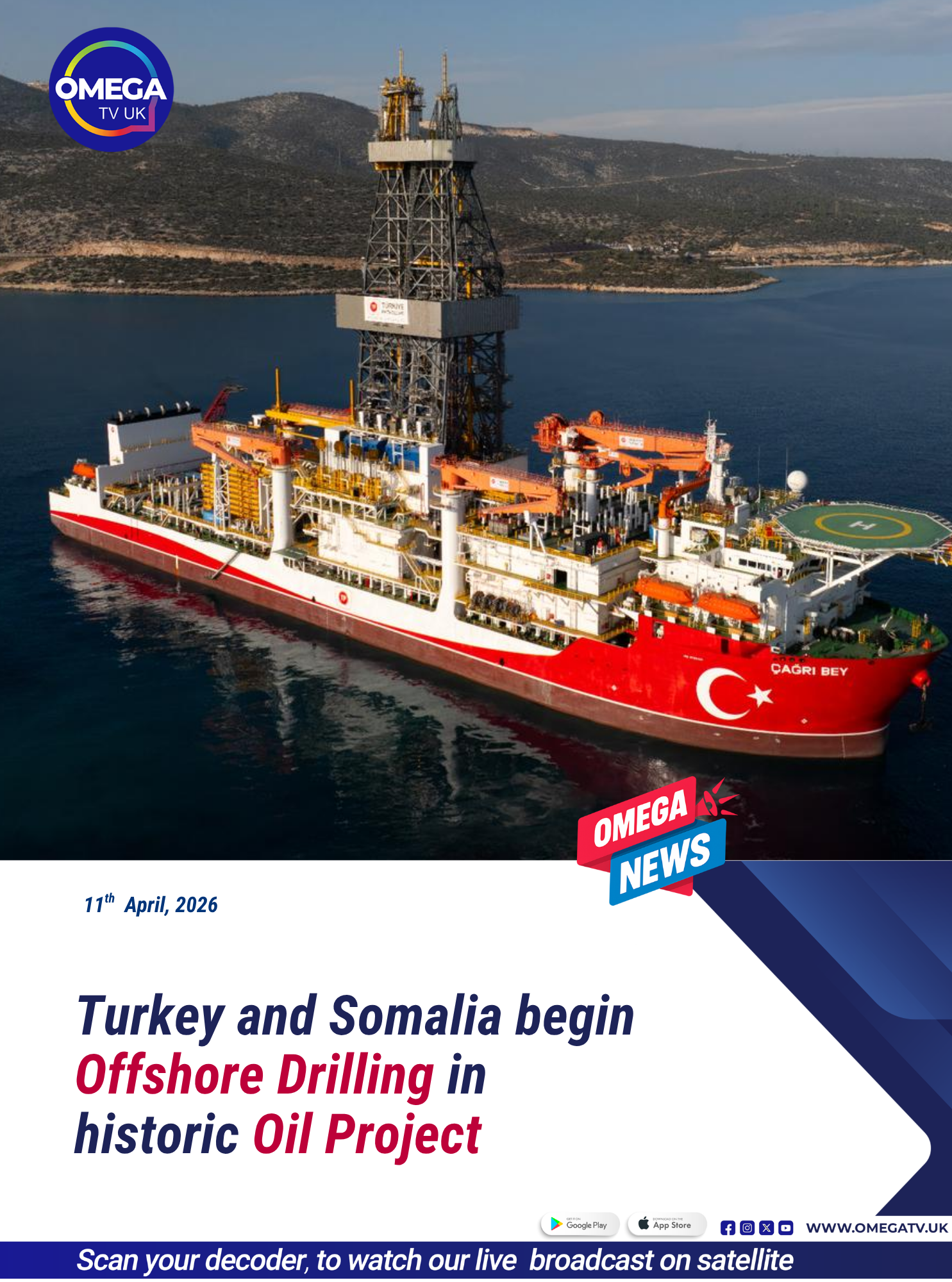
Turkey and Somalia launch first offshore oil drilling project at Somali coast
Turkey and Somalia have officially begun a historic offshore oil drilling project, marking a major step forward in energy exploration and economic cooperation between the two nations.
The development comes as a Turkish drilling vessel arrived at the port of Mogadishu, signalling the start of Somalia’s first-ever offshore oil drilling operations. The ship, named Cagri Bey, docked on Friday after entering Somali waters a day earlier, drawing attention due to its size and advanced drilling capabilities.
The project follows a hydrocarbon exploration agreement signed in 2024, which granted Turkish Petroleum Corporation the rights to explore three offshore blocks. Each of these blocks spans approximately 5,000 square kilometres, making the initiative one of the most ambitious energy projects in Somalia’s history.
Prior to the arrival of the drilling vessel, Turkey had already deployed another ship to conduct seismic surveys in the designated offshore areas. These surveys were essential in identifying potential drilling sites and assessing the presence of oil and gas reserves beneath the seabed.
According to Somalia’s state news agency SONNA, the arrival of the Cagri Bey marks the beginning of full-scale offshore drilling activities. This will not only be Somalia’s first venture into offshore oil production but also Turkey’s first deep-sea drilling operation conducted outside its own territorial waters.
Turkish Energy Minister Alparslan Bayraktar described the development as a significant milestone for both countries. He emphasised that the project represents Turkey’s growing role in global energy exploration, while also supporting Somalia’s ambitions to unlock its natural resources.
A formal ceremony was expected to take place at Mogadishu port, attended by Bayraktar and Somali President Hassan Sheikh Mohamud. The event underscores the strategic importance both governments place on the partnership.
Turkey has steadily expanded its presence in Somalia over the past decade, becoming one of the country’s most important allies. Beyond energy cooperation, Ankara has invested heavily in infrastructure, education, and security initiatives within Somalia.
In 2017, Turkey established its largest overseas military base in Mogadishu, further strengthening ties between the two nations. This long-standing partnership has laid the groundwork for large-scale projects like the current offshore drilling initiative.
For Somalia, the project represents a potentially transformative opportunity. The country has long believed it possesses significant untapped oil and gas reserves, but years of conflict and instability have hindered exploration efforts. Offshore drilling could open the door to new revenue streams, job creation, and broader economic development.
However, experts caution that the success of the project will depend on several factors, including security, infrastructure, and global oil market conditions. Offshore drilling is a complex and costly process, requiring sustained investment and technical expertise.
There are also environmental considerations, as deep-sea drilling carries risks that must be carefully managed. Both governments are expected to implement measures to ensure that operations meet international safety and environmental standards.
Despite these challenges, the launch of the project has generated optimism. It signals a new phase in Somalia’s economic development and highlights Turkey’s ambition to expand its influence in global energy markets.
As drilling operations begin, attention will now turn to the results of exploration efforts and whether significant oil or gas reserves will be discovered. If successful, the project could reshape Somalia’s economic future and further deepen its partnership with Turkey.