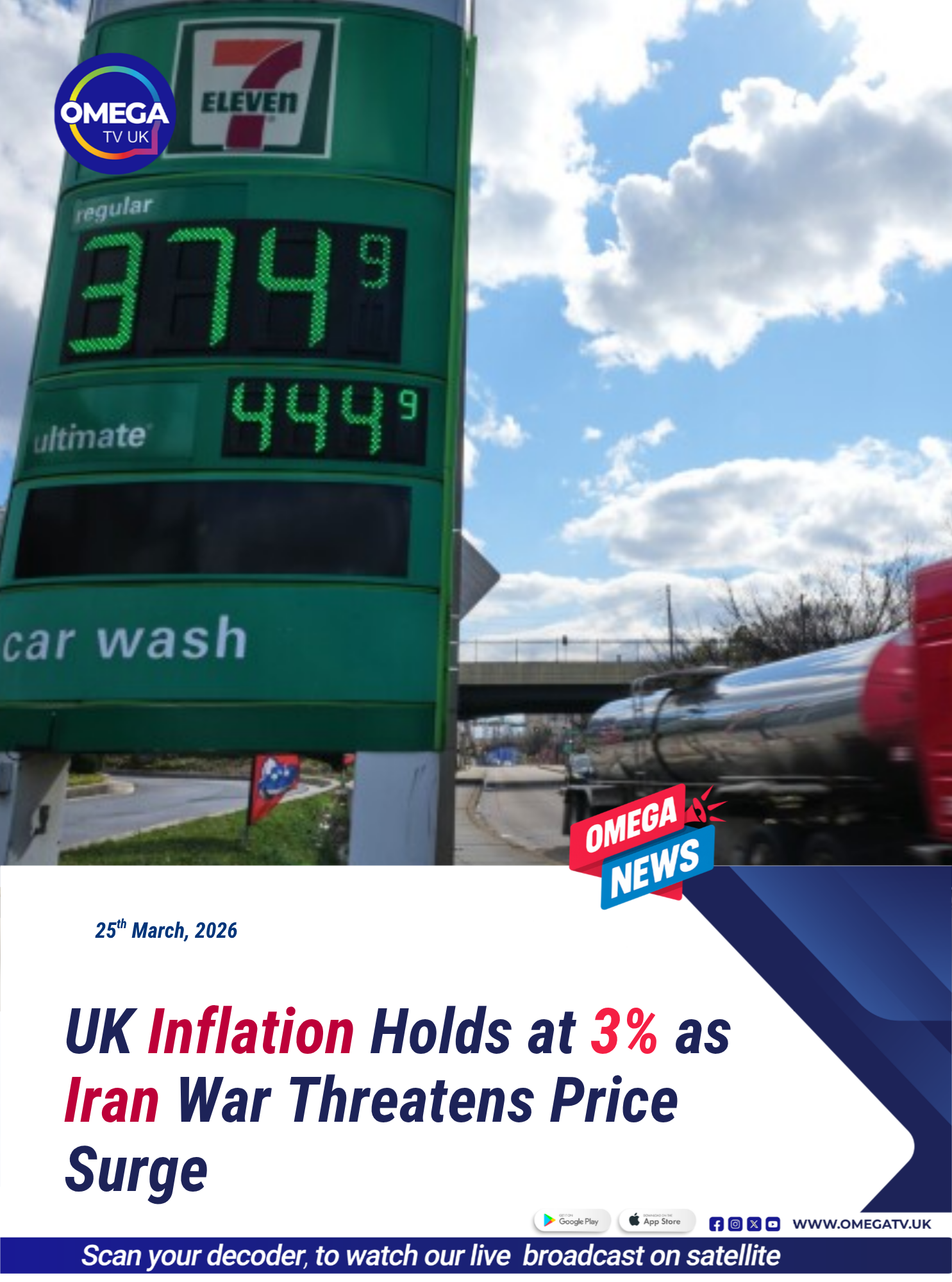
The UK inflation rate remained steady at 3% in February, according to official figures, staying above the government’s 2% target. The data, released by the Office for National Statistics, showed that while some prices such as clothing increased, others like petrol, alcohol, and tobacco declined, helping to stabilise the overall rate.
However, economists warn the stability may be short-lived. Rising global energy costs triggered by tensions linked to the Iran war have already begun to push oil and gas prices higher. The closure of the Strait of Hormuz, a key global shipping route, has intensified concerns over supply disruptions.
Food inflation eased slightly to 3.3%, the lowest since March 2025, but industry experts caution that increasing fertiliser and fuel costs could soon reverse this trend. The Food and Drink Federation described the situation as a “calm before the storm.”
The Bank of England had previously expected inflation to fall to 2% soon, but shifting global conditions have changed the outlook. Interest rates were recently held steady, though markets now anticipate potential increases if inflation rises again.
Chancellor Rachel Reeves stated that the government is working to ease pressure on households, including plans to reduce energy bills and prevent unfair price hikes. Officials are also considering additional support measures as global uncertainty continues.