
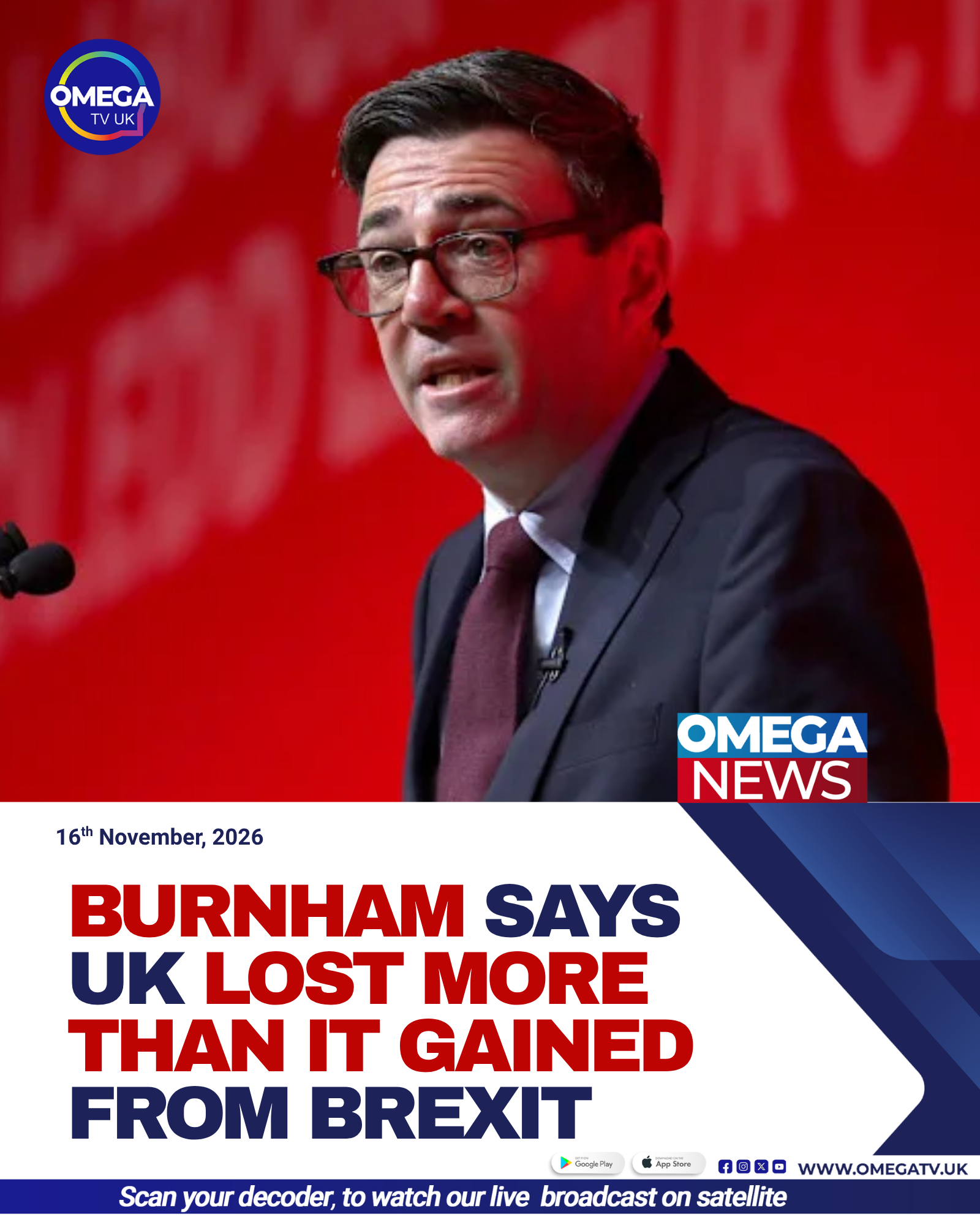
UK Lost More Than It Gained from Brexit, Burnham to Tell EU Summit
UK Prime Minister Andy Burnham is expected to argue that Britain has lost more than it has gained from leaving the European Union, as he prepares to address the country’s relationship with the bloc ahead of a major UK-EU summit.

Speaking at the Lord Mayor’s Banquet on Monday, Burnham will compare Britain’s Brexit agreement to the “emperor’s new clothes”, arguing that a needlessly hard Brexit created barriers for businesses and failed to deliver the promise to “take back control”.
He is expected to say: “The Brexit we were given has not worked. We have lost more than we have gained.”
Burnham’s comments come ahead of Friday’s UK-EU summit in Brussels, where he hopes to secure new agreements covering food and agricultural trade, energy cooperation and youth mobility.
The agreements were largely developed under his predecessor, Sir Keir Starmer, as part of efforts to improve relations between Britain and the European Union.
However, the Conservatives have accused Labour of taking Britain closer to EU membership through what they describe as a backdoor approach.
Burnham has said he wants to examine the advantages and disadvantages of different options for Britain’s long-term relationship with the bloc.
Foreign Secretary Ed Miliband has also indicated that the prime minister will outline possible options after the summit. However, Burnham has ruled out major changes before the next general election.
Three conditions for a new EU agreement
Burnham is expected to set out three tests that any agreement with the EU must satisfy.
First, it must remain consistent with Labour’s 2024 general election manifesto, which ruled out returning to the EU single market, customs union or freedom of movement.
Second, it must pass what he calls the “Makerfield test” by delivering practical improvements to people’s everyday lives.
Finally, the agreement must improve on the original Brexit deal and bring Britain’s relationship with the EU closer to what voters believed they were choosing in the 2016 referendum.
Burnham is expected to describe a new agreement as a “win-win” for both sides, arguing that cooperation should replace confrontation.
He will say Britain should adopt a more constructive approach and work with European partners to address shared challenges.
Proposed agreements on trade, energy and youth mobility
The upcoming summit will focus on further changes to the relationship established under the agreement reached by Starmer and EU leaders in May 2025.
The UK and EU have already reached a draft agreement aimed at removing many post-Brexit checks on food and agricultural exports.
The government believes the proposed arrangement will reduce costs and paperwork for businesses and could help lower prices for consumers.
However, critics have warned that closer alignment with EU regulations could leave Britain following rules made in Brussels without having a vote in their development.
Draft proposals on linking emissions trading systems and establishing a youth travel and work scheme have also been circulated among EU member states.
The agreements were close to being finalised under Starmer, although some details remained unresolved.
Opposition parties criticise the proposed reset
The proposed closer relationship with the EU has attracted criticism from opposition parties and former Conservative leaders.
Former prime minister Boris Johnson told the Daily Telegraph that he believed the public would support Brexit again if Burnham called for another vote on the issue.
Johnson warned that making Brexit a major political priority could damage Burnham and his party.
Deputy Conservative leader Alex Burghart also accused the prime minister of reopening a debate that the country had already settled, instead of concentrating on Britain’s current challenges.
Reform UK has defended Brexit, describing freedom from what it considers unnecessary EU regulations as one of its key benefits. The party has warned that closer alignment could negatively affect Britain’s independent trade policy.
The Liberal Democrats have also criticised the proposed food-export agreement, describing it as a temporary solution rather than a lasting fix. They argue that rejoining the single market and establishing a customs union would provide a more effective arrangement.
The Green Party of England and Wales has called for Britain to rejoin the customs union, with its leader, Zack Polanski, previously saying full EU membership remains the best option.
The summit in Brussels on Friday is expected to provide a major test of Burnham’s efforts to reset Britain’s relationship with the European Union while maintaining Labour’s commitment not to rejoin the single market or customs union.


