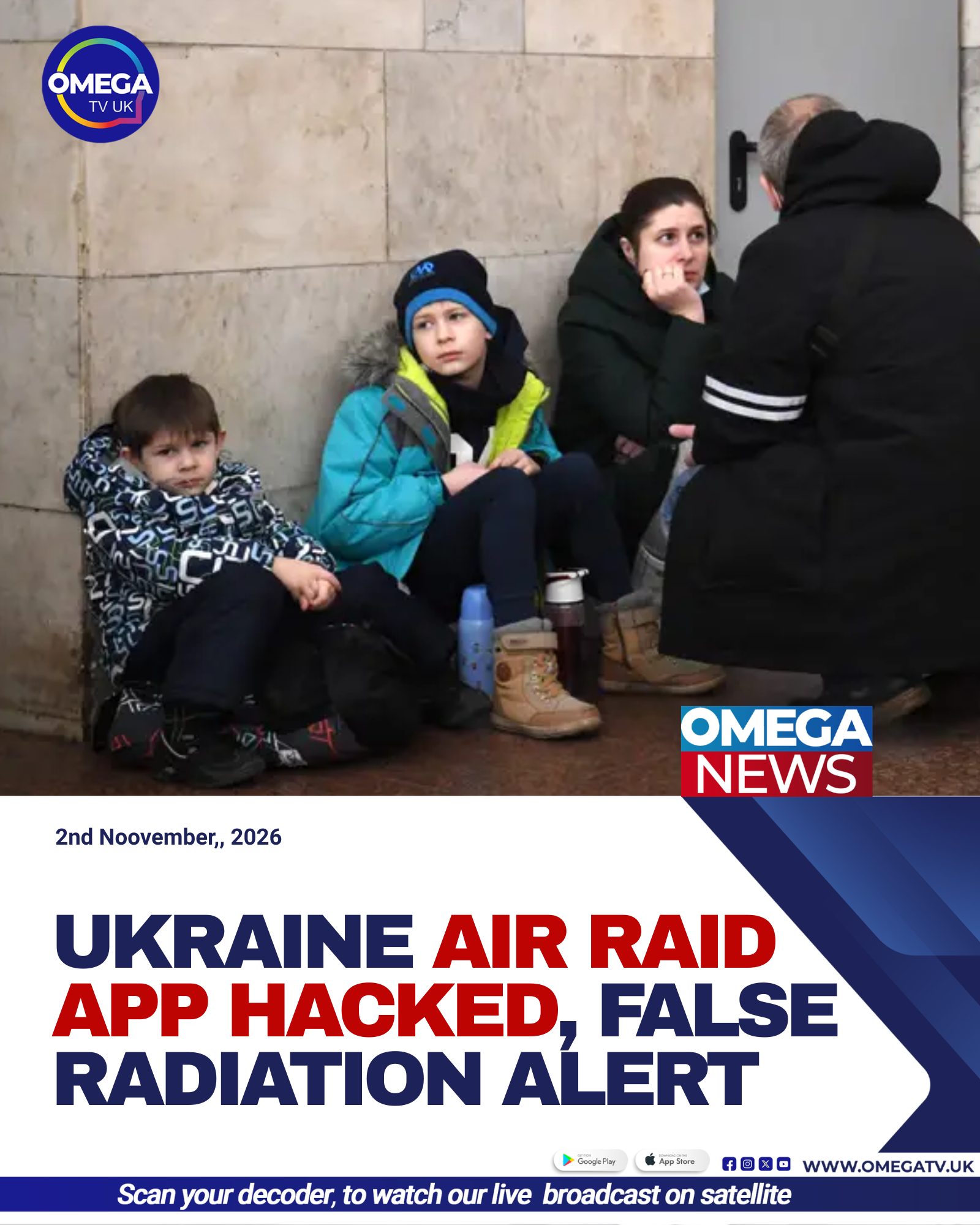
Ukraine Air Raid App Hacked, Sending False Radiation and Nuclear Threat Alerts
Ukraine’s air raid alert application was apparently hacked on Sunday, sending users a series of false warnings, including claims of a radiation threat in the capital, Kyiv, the Ukrainian Air Force has said.

The incident prompted authorities to reassure residents that there was no radiation danger and urged the public to remain calm while relying on official sources for information.
The first alerts appeared at approximately 22:47 local time, with red-level air raid warnings reportedly issued across the country. Residents in Kyiv also received a message claiming that a radiation threat had been declared in the city.
Further notifications followed, warning of a possible nuclear threat, chemical attack and street fighting in Kyiv. However, authorities later confirmed that the warnings were false.
At 23:53, a series of all-clear messages was sent to users’ phones, addressing each of the earlier alerts individually.
Ukraine’s Central Intelligence Agency said the app had experienced a technical failure and advised residents to consult alternative official sources for information about potential air strikes.
The agency also confirmed that the radiation warning had triggered loudspeaker alerts in the Lviv region, despite there being no radiation threat.
Several regional governors also reported that the application had apparently been compromised. Svitlana Onyshchuk, governor of Ivano-Frankivsk Oblast, said the situation in her region remained calm.
Meanwhile, Vinnytsia Oblast Governor Natalya Zabolotna warned residents about a possible cyberattack and advised them not to click on links contained in the suspicious notifications, which could be phishing attempts.
The Air Alert application, supported by Ukraine’s Ministry of Digital Transformation, provides instant notifications about the beginning and end of air defence alerts.
The ministry said the application had been temporarily disabled for maintenance after it was apparently compromised. Residents were advised to activate emergency notifications on their smartphones to continue receiving official warnings.
In a separate development, Russia’s Ministry of Emergency Situations said its own application had also suffered a massive cyberattack, which sent false information to the public.
Ukrainian news outlet UNN reported that the Russian attack involved fake nuclear threat alerts. A partisan Ukrainian group known as Atesh reportedly claimed responsibility, although the claim has not been independently verified.
The cyber incidents occurred shortly before the end of a localised ceasefire in Ukraine’s front-line Kherson region. The truce, which began last Tuesday, officially ended at 23:00 on Sunday.
The ceasefire had been introduced to allow civilians to evacuate the Russian-occupied city of Oleshky, although fighting continued in other areas during the period.