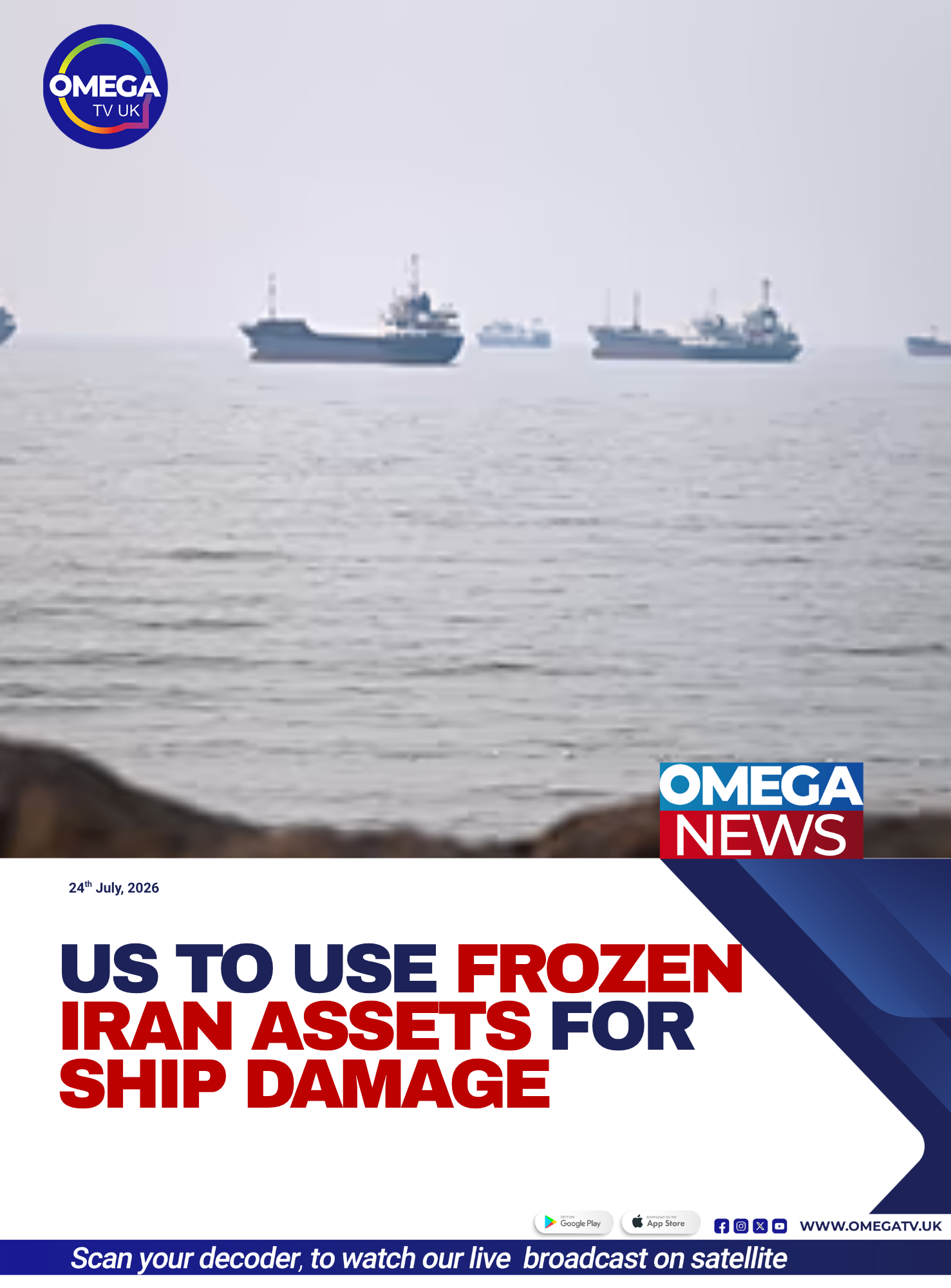
Trump says seized Iranian funds will cover shipping damage amid escalating Middle East conflict
The United States has announced it will use frozen Iranian assets to compensate for damage to ships and cargo as its military campaign against Iran entered its 13th consecutive night.

US President Donald Trump said Iranian funds under American control would be used to pay for losses linked to attacks on commercial shipping, calling the move “fair and equitable.” He warned that compensation could amount to a “very substantial” sum as tensions across the Middle East continue to escalate.
The latest developments come as the US military carried out fresh strikes targeting Iranian military infrastructure. US Central Command (Centcom) said the operation focused on military command centres, drone storage facilities, communication networks, coastal surveillance sites and maritime capabilities to reduce Iran’s ability to threaten civilian shipping in regional waters.
Iranian state media reported that four people were killed and five others injured in the overnight strikes. Explosions were also reported in the southern port city of Bandar Abbas and on Qeshm Island, both considered strategically important locations.
The renewed military action follows claims by Yemen’s Iran-backed Houthi rebels that they attacked two Saudi oil tankers in the Red Sea, further raising fears over the safety of one of the world’s busiest shipping routes.
The growing security concerns have disrupted maritime traffic and pushed global oil prices above $100 per barrel for the first time since May. According to Reuters, only one tanker passed through the Strait of Hormuz on Thursday, marking the lowest level of shipping traffic in the vital waterway since early May.
Trump has blamed both Iran and the Houthis for threatening international shipping and earlier warned Tehran of “major military punishment” if such attacks continued.
Iran’s Foreign Minister Abbas Araghchi strongly criticised Trump’s proposal to seize frozen Iranian assets. He described it as an “incendiary precedent” and warned that normalising the confiscation of sovereign assets could create dangerous consequences for international financial systems.
“Those who celebrate or profit from such funds should remember: once governments normalize confiscation, no one’s assets are safe,” Araghchi said, adding that the resulting chaos “will not be pretty or peaceful.”
Regional tensions also triggered heightened security alerts. Bahrain activated air raid sirens, while Iranian state media reported warning alarms in neighbouring Jordan.
The latest escalation comes despite a Memorandum of Understanding signed by the US and Iran in June. The agreement included commitments to halt military operations, reopen the Strait of Hormuz and work toward ending the conflict within 60 days. It also stated that the United States would make Iran’s frozen assets available for use.
However, the ceasefire collapsed just weeks later after renewed attacks on shipping in the Strait of Hormuz, prompting fresh US military strikes and reigniting one of the region’s most volatile conflicts.