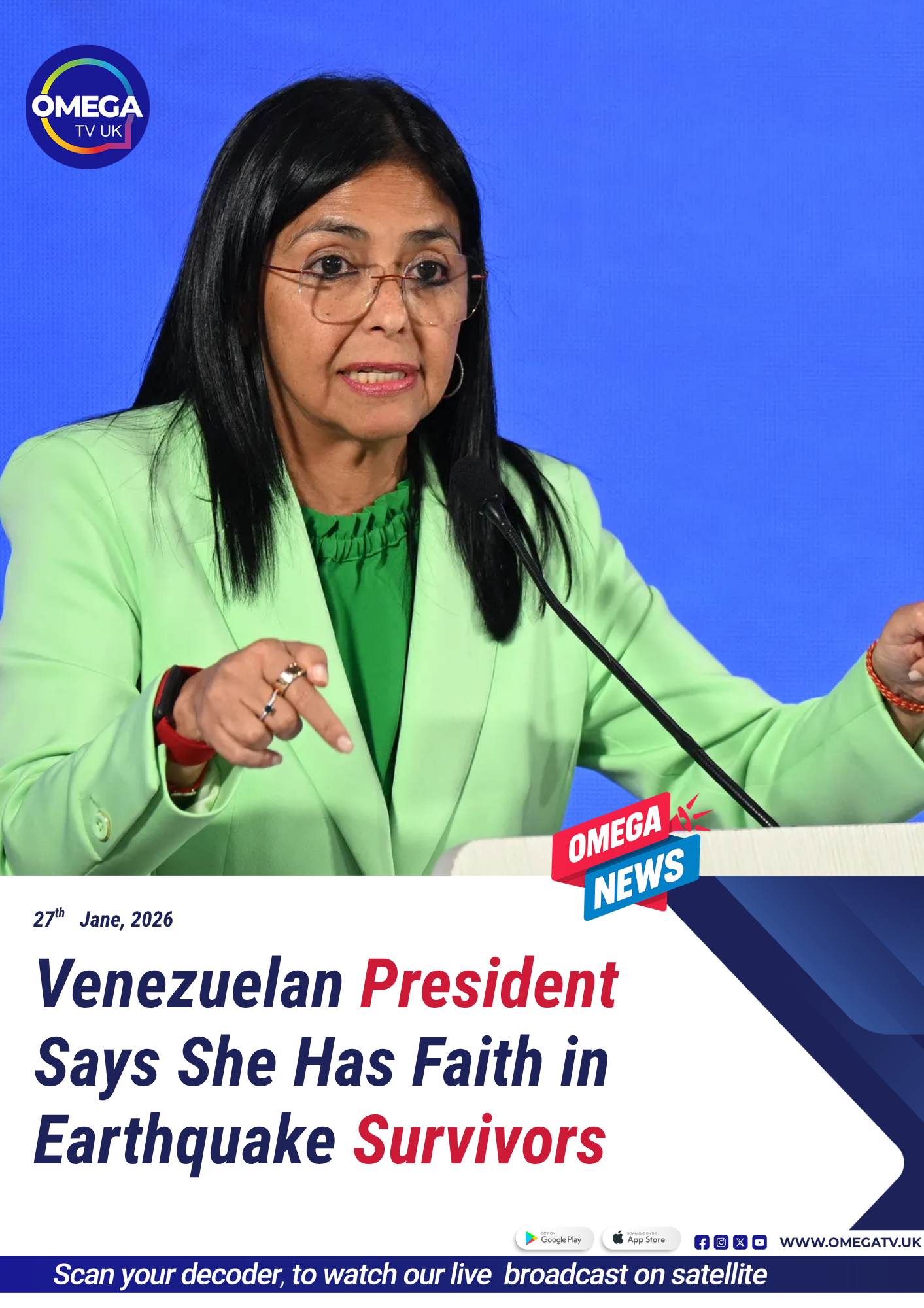
Venezuela is continuing large-scale rescue operations after two powerful earthquakes struck the country on Wednesday, leaving widespread destruction and a rising death toll. Acting President Delcy Rodríguez expressed confidence on Friday that emergency teams will still find survivors as search efforts enter their third day.

The twin earthquakes, measuring magnitudes 7.2 and 7.5, struck within seconds of each other during a national holiday period when many people were at home. The timing has intensified the scale of devastation, with entire neighbourhoods collapsing and critical infrastructure severely damaged across multiple regions.
According to official updates, at least 920 people have been confirmed dead, while more than 3,360 others have been injured. Authorities also reported that around 172 people are currently believed to be trapped under rubble, although independent civilian-led tracking platforms suggest that tens of thousands of individuals may still be missing, highlighting the uncertainty surrounding the full extent of the disaster.
Rescue teams, supported by international reinforcements, are continuing to search through collapsed buildings and debris fields. Emergency crews have been working around the clock, using heavy machinery, search dogs, and manual digging in areas where structures have completely pancaked.
The United Nations has also stepped in to coordinate humanitarian support. The UN’s humanitarian chief described the current phase as “crucial,” noting that the arrival of additional international rescue teams could significantly improve the chances of finding survivors in the coming hours. The emphasis is on rapid response, as experts warn that the likelihood of survival decreases sharply after the first 72 hours following a major earthquake.
Hospitals across affected regions are reportedly overwhelmed, with medical staff struggling to treat large numbers of injured patients while also coping with shortages of supplies and electricity disruptions. Temporary shelters have been set up for displaced families, many of whom have lost their homes entirely.
Authorities say communication with some remote areas remains difficult due to damaged roads and infrastructure, raising concerns that the true scale of the disaster may be even greater than current estimates suggest. Rescue coordination centers are attempting to prioritise the hardest-hit zones while maintaining supply chains for food, water, and medical aid.
Despite the grim conditions, President Rodríguez has maintained that hope remains, insisting that survivors are still being pulled from debris and that efforts will continue without pause. She urged national unity as the country confronts one of its most severe natural disasters in recent years.
Seismologists note that earthquakes of this magnitude are capable of causing catastrophic damage, especially when they occur in quick succession, as was the case in this event. The twin tremors triggered landslides in some regions and caused widespread structural failures in both urban and rural areas.
As international assistance continues to arrive, the focus remains on search and rescue, with officials stressing that the next few days will be critical in determining how many lives can still be saved.