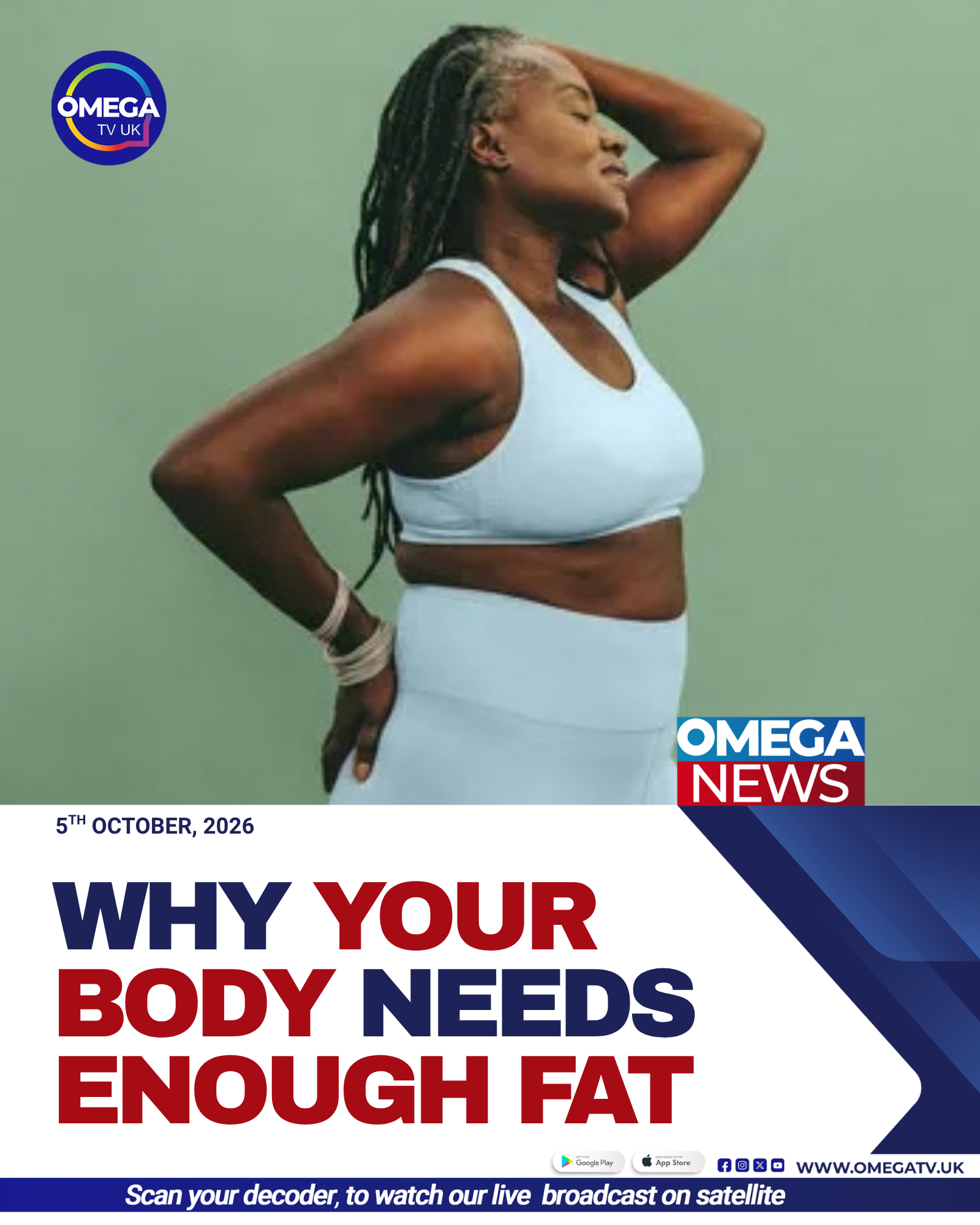
Body fat may play essential roles in the human body, and experts warn that there is such thing as too little. Scientists have issued warnings as they witness a rise in extreme dieting and the popularization of extremely thin bodies. Body fat is an organ that serves many purposes.

Body fat stores extra nutrients and breaks them down for the body when needed. It also produces hormones that tell the brain when the body has enough energy, and what to prioritize when it does not.
Leptin, one of the hormones secreted by body fat, tells the brain when the body has enough energy. Without enough body fat, the body will have difficulty differentiating between when to reproduce or protect itself and when the body has the energy to do so.
The body needs body fat to maintain its core temperature. White body fat insulates the body, and brown and beige body fat produce heat. Without enough nutrients, the body will begin to conserve energy by shutting down non-essential processes like the immune system.
The body will also break down muscle to provide nutrients and energy, and the bones will weaken and become more likely to break. Having too little body fat can also wreak havoc on the body’s hormone systems and reproductive systems. Men who chronically do not get enough nutrients will see a decrease in testosterone and energy. Female athletes with very low body fat percentages often miss their periods.
There is no ideal body fat percentage for everyone. In general, healthy men should have a body fat percentage of 10-20%, while healthy women should have a body fat of 20-29%.
Body fat percentages for athletes tend to be lower than that of the general population, but extreme cases still have serious health consequences. A study that tracked more than 700 athletes found that the lowest body fat percentages were 10% for men and 16% for women.
Experts warn that the location of body fat is just as important as how much a person has. While it may seem logical to assume that less body fat is better, experts warn that people should strive to maintain a healthy percentage and view body fat as an organ that is integral to healthy body functions, instead of something that should be shunned or avoided.