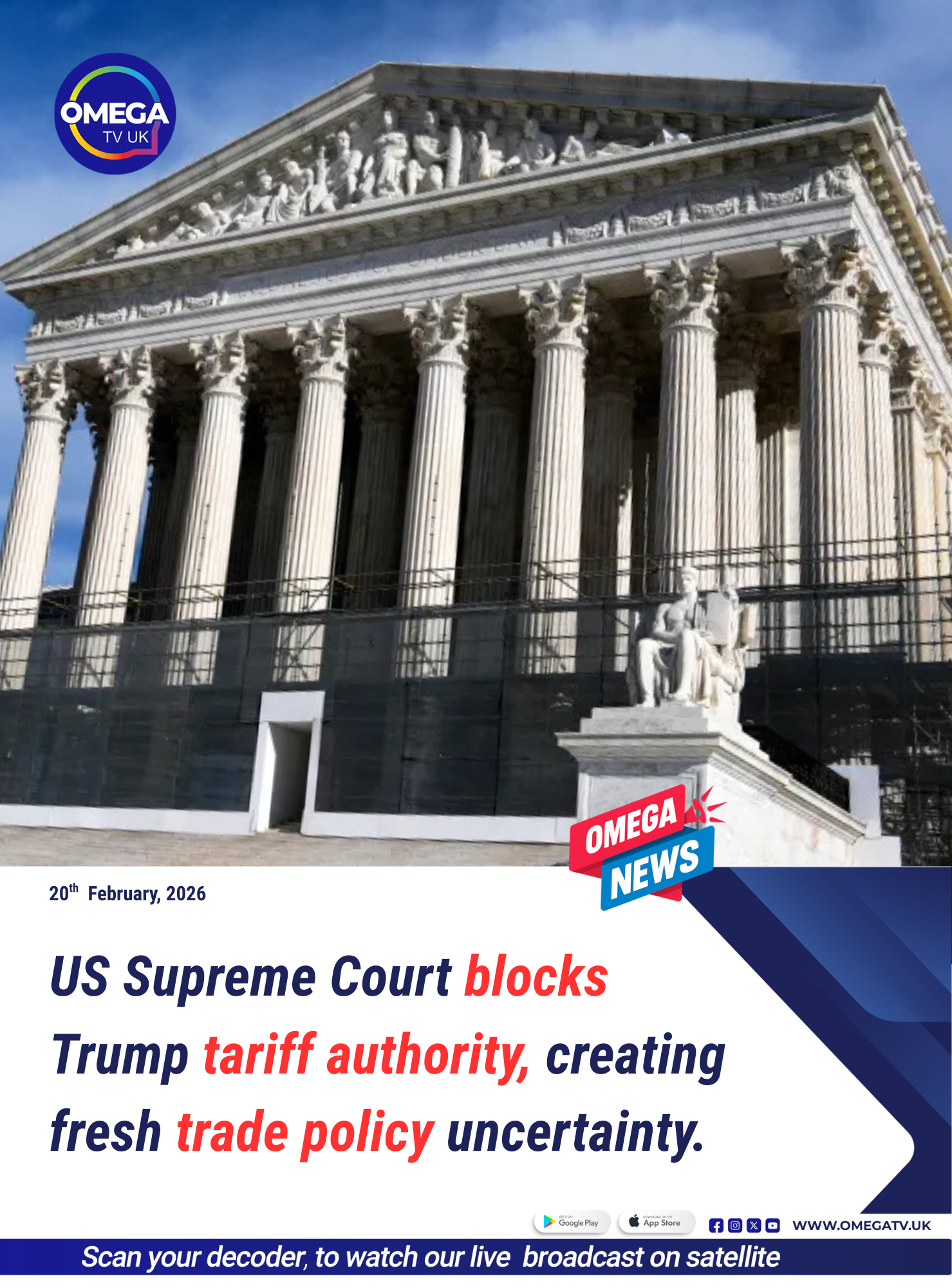
The US Supreme Court has stopped a major reason for tariffs, which is now causing uncertainty in policy decisions.The US Supreme Court, even with its conservative majority, has knocked down the legal foundation for a good part of the reciprocal tariffs that President Donald Trump put in place.

The ruling also changes the tariff rules for Canada, Mexico, and China, which were put in place because of concerns about illegal drugs like fentanyl coming into the United States.The tariffs were put in place under the International Emergency Economic Powers Act (IEEPA).The Court decided that the statute doesn’t give the president the power to set measures that have no limits in scope, amount, or duration, which means this legal route can’t be used for broad tariff implementation.
The decision doesn’t get rid of all the ways the executive branch can put trade restrictions in place.The administration still has other legal options it could use to bring back tariffs.But those routes might need approval from Congress or formal investigations by the US Department of Commerce, which usually take more time to go through.Since the president has long counted on tariffs as a tool in negotiations, it doesn’t seem likely that trade policy will change much.Still, the ruling brings up some new questions, especially about what will happen to tariffs that have already been paid and if US importers might be able to get refunds.
The ruling cuts back on executive power under IEEPA, but at the same time, it brings a new wave of uncertainty around how the US handles trade enforcement.By going to arbitration again, Ghana wants a clear legal decision and to show it’s serious about following international law and keeping peace in the region.