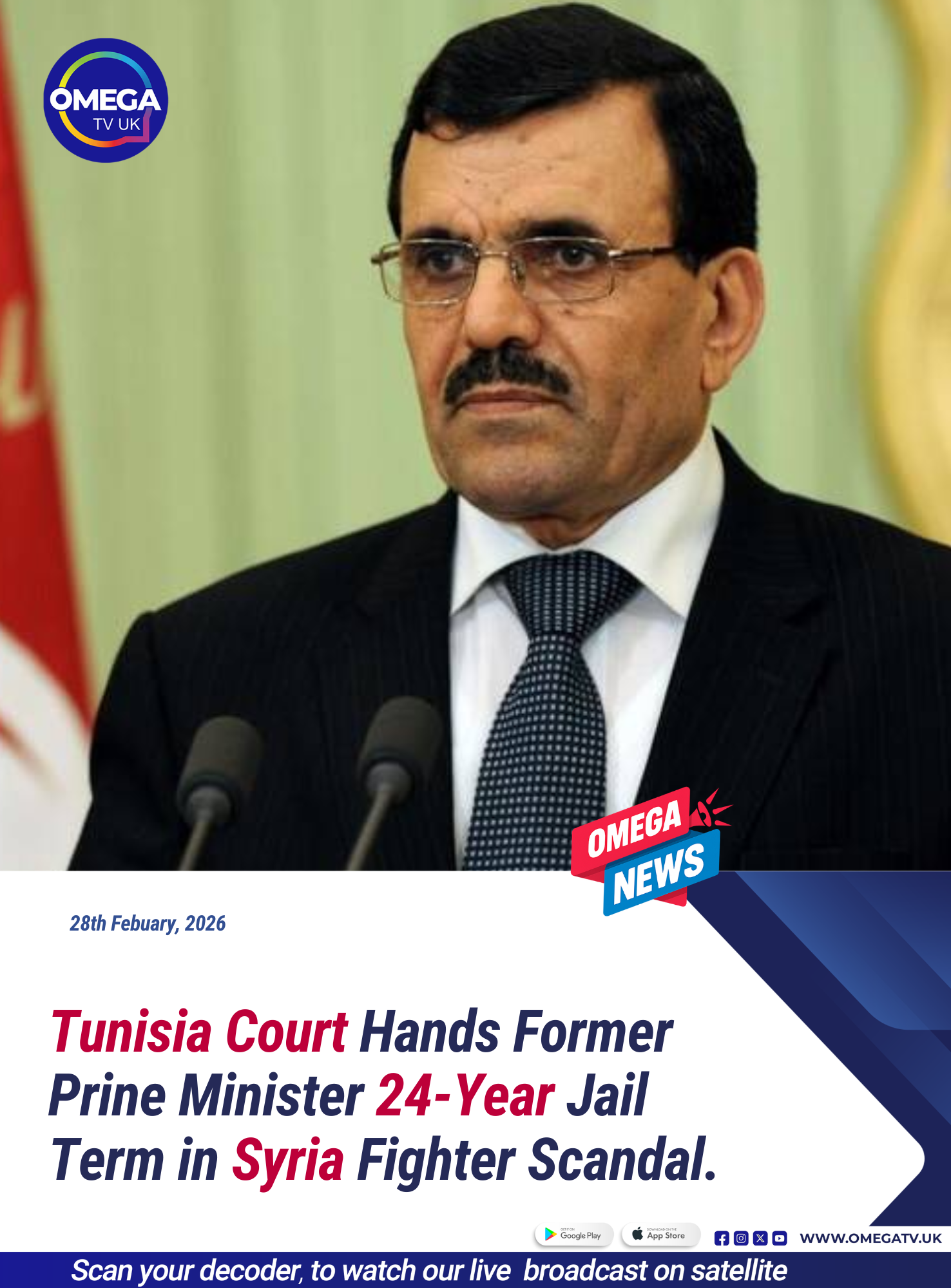
A court in Tunisia has sentenced former Prime Minister Ali Laarayedh to 24 years in prison over charges linked to facilitating the travel of jihadist fighters to Syria.The ruling follows a lengthy investigation into allegations that networks operating during his tenure enabled young Tunisians to leave the country and join extremist groups fighting in Syria during the early years of the Syrian conflict. Prosecutors argued that the former prime minister failed to act decisively against recruitment pipelines and, in some instances, indirectly supported structures that allowed militants to travel abroad.

Laarayedh, who served as Tunisia’s prime minister from 2013 to 2014 and previously held the position of interior minister, has consistently denied the accusations. His legal team maintains that the charges are politically motivated and lack sufficient evidence to justify the heavy sentence.
Tunisia has long grappled with the legacy of foreign fighter recruitment. Following the 2011 revolution, thousands of Tunisians reportedly traveled to conflict zones in Syria and Iraq, making the country one of the largest sources of foreign fighters per capita at the height of the crisis. Authorities have since tightened border controls and strengthened counterterrorism legislation.
The case has deepened political tensions within Tunisia, where debates over judicial independence and political accountability have intensified in recent years. Supporters of the verdict argue that accountability is essential in addressing the country’s security challenges and ensuring justice for victims of extremist violence. Critics, however, question whether the trial met international standards of fairness and transparency.
Human rights organizations have called for clarity on the judicial process, urging authorities to ensure due process rights are respected in politically sensitive cases. Meanwhile, security analysts note that Tunisia continues to face challenges related to radicalization, reintegration of returnees, and regional instability.
The sentencing comes amid broader political changes in Tunisia, where institutional reforms and shifts in executive authority have sparked both domestic and international scrutiny. Observers say the verdict could have implications for the country’s political landscape and future relations with international partners concerned about governance and rule of law.
As the former prime minister’s legal team prepares to appeal the decision, the case remains one of the most high-profile judicial proceedings in Tunisia’s post-revolution history. The outcome of the appeal process may further shape public debate about accountability, security policy, and political freedoms in the country.