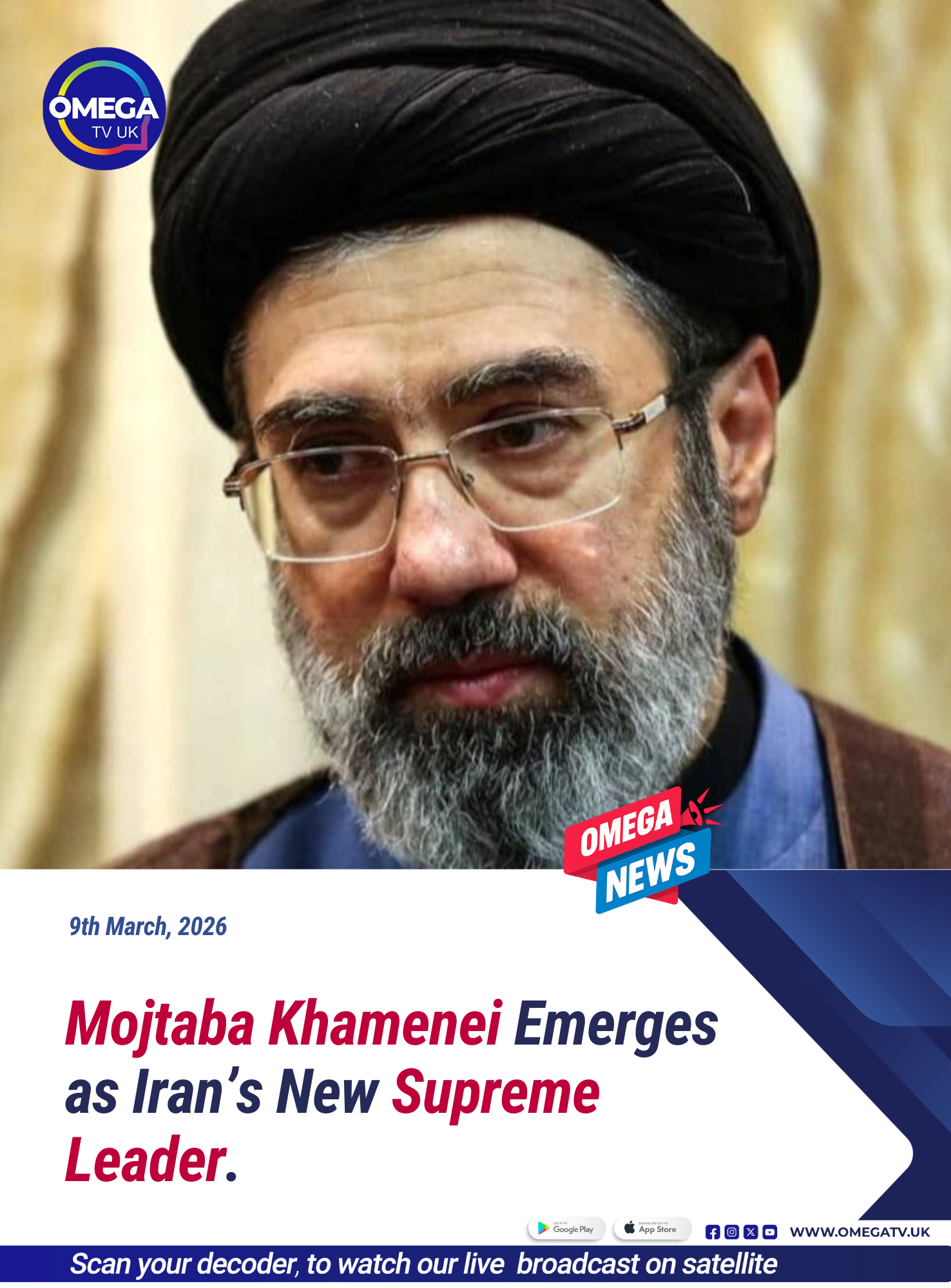
Mojtaba Khamenei has reportedly emerged as the new Supreme Leader of Iran, marking a significant moment in the political and religious leadership of the Islamic Republic. His rise comes after years of speculation that he could eventually succeed his father, Ali Khamenei who has held the powerful position since 1989.

Mojtaba Khamenei, a Shia cleric has largely operated behind the scenes in Iranian politics for many years. Despite maintaining a relatively low public profile, analysts and political observers have long believed that he wields considerable influence within the country’s ruling establishment. Reports have suggested that he maintains strong connections with powerful security institutions, particularly the Islamic Revolutionary Guard Corps (IRGC), which plays a crucial role in Iran’s military and political structure.
In Iran’s political system, the Supreme Leader holds the highest authority, surpassing even the president in power. The position includes control over the armed forces, oversight of the judiciary, and the ability to influence major domestic and foreign policy decisions. The leader also appoints key officials across several branches of government and maintains significant authority over national security and religious matters.
The process of selecting a Supreme Leader is traditionally handled by the Assembly of Experts, a council made up of senior clerics who are responsible for appointing and supervising the country’s top religious authority. Their decision plays a central role in shaping the leadership of the Islamic Republic.
Observers say Mojtaba Khamenei’s emergence could signal continuity in Iran’s political direction, particularly regarding its regional influence and its complex relations with Western nations. However, critics have raised concerns about the perception of dynastic succession, arguing that leadership passing from father to son could challenge the ideological foundations of the Islamic Republic.
International analysts are closely monitoring the development, as Iran remains a key player in Middle Eastern geopolitics and global security discussions. The leadership transition could have significant implications for regional stability, nuclear negotiations and Iran’s relations with global powers.