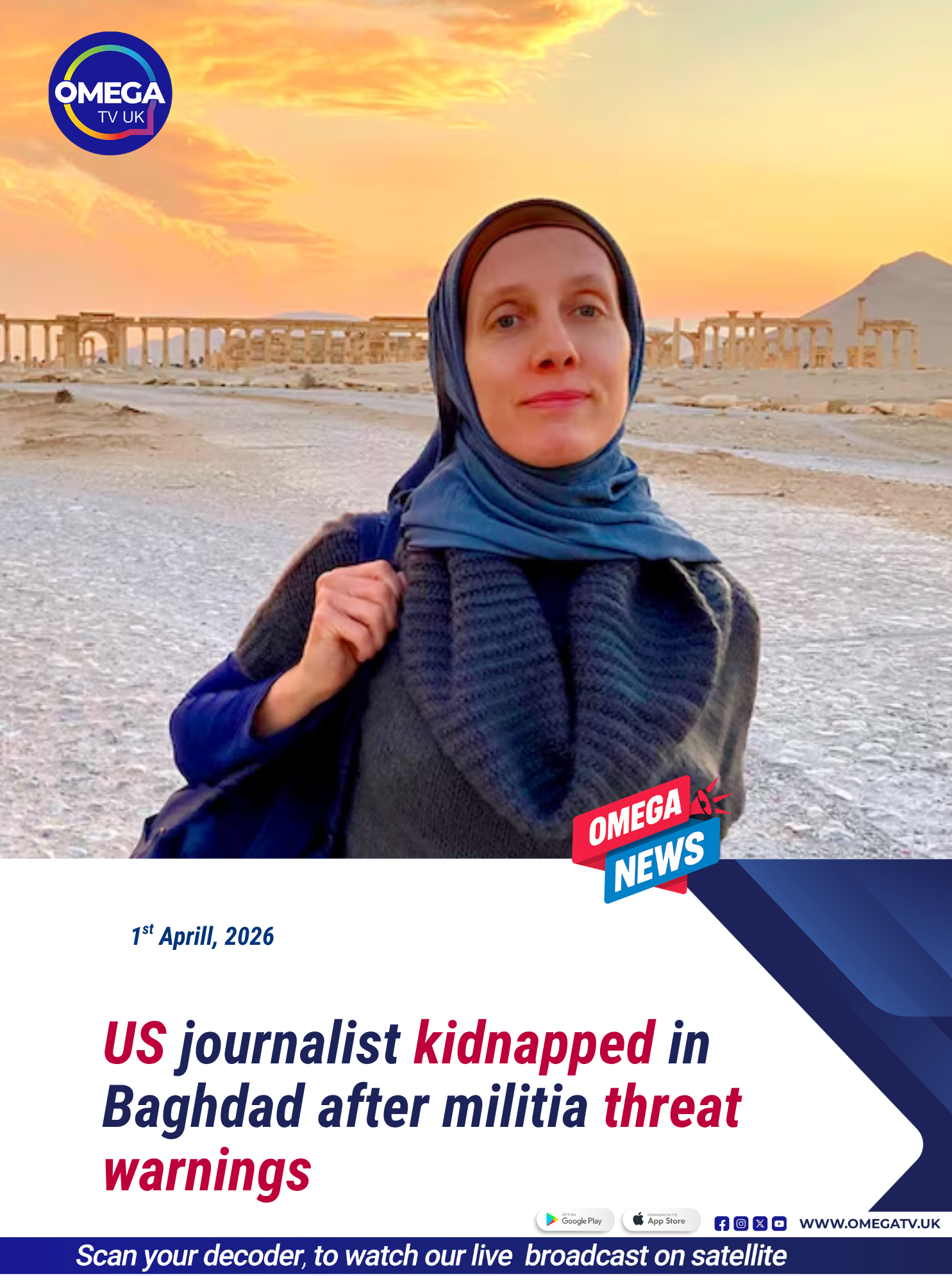
A freelance American journalist has been abducted in Iraq’s capital, Baghdad, sparking a high-level security response involving both Iraqi and United States authorities. Shelly Kittleson, an experienced conflict reporter, was taken on Tuesday evening near a hotel in the city, according to officials and media reports.

Iraqi security forces quickly launched an operation to track down those responsible. Authorities said the pursuit of the kidnappers led to a dramatic development when one of the vehicles used in the abduction overturned أثناء the chase. This resulted in the arrest of at least one suspect believed to be connected to the crime.
Officials in both Iraq and the US have indicated that the detained individual may have links to Kataib Hezbollah, an Iran-aligned militia group operating in the region. While investigations are ongoing, this connection has raised serious concerns given the group’s history and influence within Iraq’s complex security landscape.
Confirmation of the kidnapping came from Dylan Johnson, the US assistant secretary of state for global public affairs, who acknowledged that an American journalist had been abducted. Although he did not name Kittleson directly, multiple sources confirmed her identity.
Johnson stated that US authorities had previously warned the journalist about potential threats to her safety. According to officials, these warnings were issued several times in recent days, including as recently as Monday night—just hours before the kidnapping occurred. The US State Department is now working closely with the FBI and Iraqi authorities to secure her safe release.
Further details suggest that Kittleson may have been specifically targeted. Security sources and her emergency contact, Alex Plitsas, revealed that she had been alerted to a credible threat from Iran-backed paramilitary groups. Reports indicate that her name was allegedly included on a list of individuals being monitored or targeted by militants.
Despite these warnings, it is believed that Kittleson may have underestimated the seriousness of the threat, with one source indicating she initially thought the intelligence might not be accurate. Her abduction has now intensified concerns about the safety of journalists working in volatile regions, particularly those covering sensitive political and military developments.
The news organisation Al-Monitor, for which Kittleson has contributed, expressed deep concern over her disappearance. The outlet called for her immediate and safe release, describing the situation as alarming and urging authorities to act swiftly.
Iraqi officials have emphasized that the response to the kidnapping is being handled at the highest levels. Security forces continue to carry out operations aimed at locating the remaining suspects and rescuing the journalist. In an official statement, the interior ministry said efforts are ongoing to track the perpetrators using intelligence-led operations and field surveillance.
The ministry also confirmed that the kidnappers involved are still being treated as unidentified individuals while investigations continue. Authorities have pledged to pursue all those involved and ensure they face legal consequences.
Kittleson, who is based in Rome, has built a career reporting from some of the world’s most dangerous conflict zones, including Iraq, Syria, and Afghanistan. Her work has appeared in multiple international publications, focusing on security, politics, and regional instability.
Her kidnapping comes at a time when Iraq has seen a relative improvement in overall security compared to previous years, when Baghdad was notorious for frequent abductions. However, this incident highlights the persistent risks that remain, particularly for foreign journalists and individuals perceived as high-profile or politically sensitive.
Multiple US agencies, including the FBI and the National Security Council, are reportedly coordinating with Iraqi counterparts as part of the response effort. The involvement of elite units and intelligence services underscores the seriousness of the situation and the urgency to secure her release.
As investigations continue, the case has once again drawn attention to the dangers faced by journalists working in conflict zones, as well as the ongoing influence of armed groups operating across Iraq.