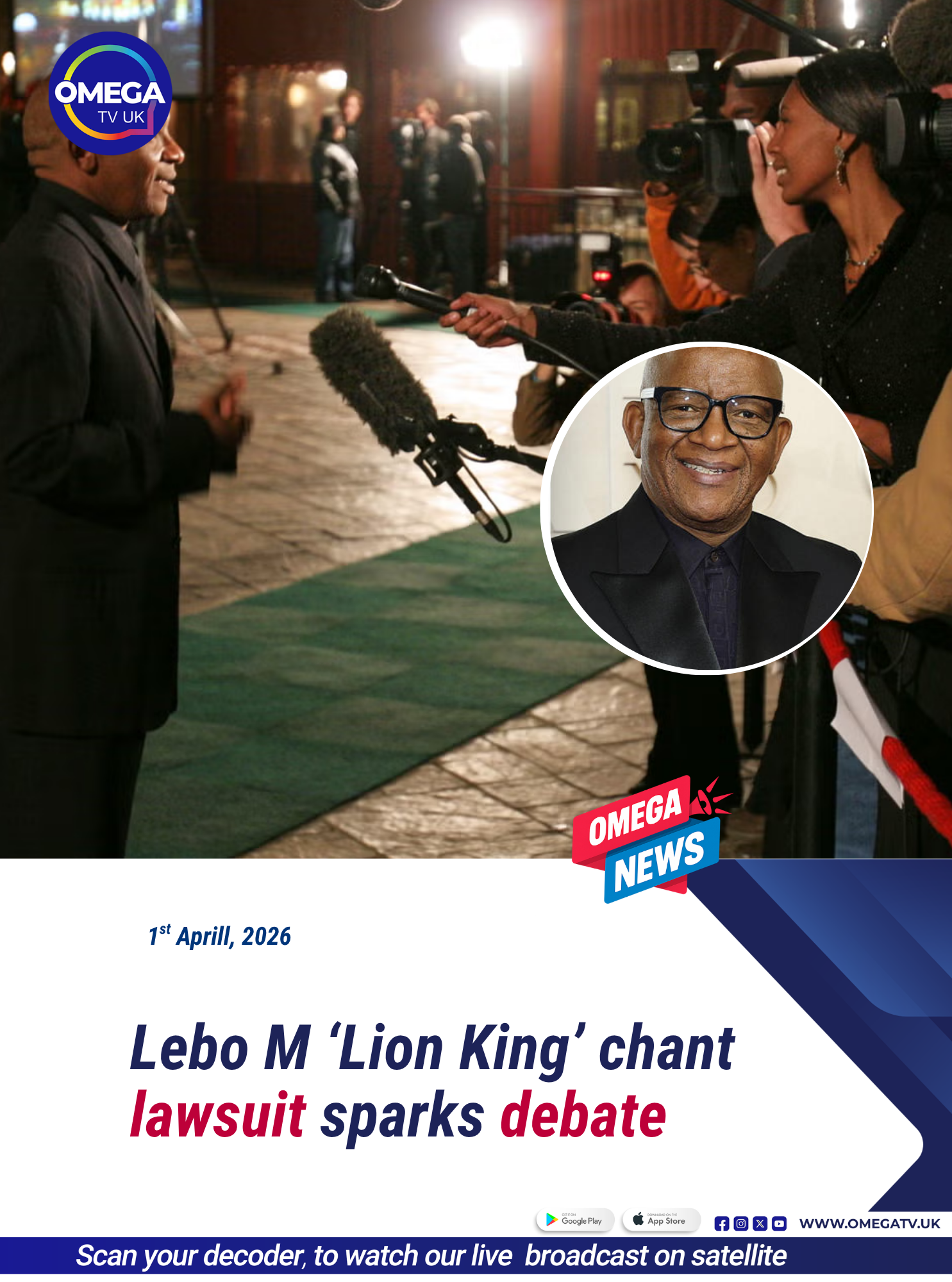
A legal dispute involving musician and performer Lebo M has ignited widespread debate over culture, language, and comedy, after he filed a lawsuit against Zimbabwean comedian Learnmore Jonasi over the interpretation of the iconic “Lion King” chant.

Lebo M, whose real name is Lebohang Morake, is accusing Jonasi of deliberately mistranslating and mocking the famous Zulu chant featured at the beginning of Disney’s The Lion King. The chant, which opens the 1994 animated film and appears in later stage and remake versions, has long been regarded as a culturally significant piece of music rooted in South African languages and traditions.
The dispute has quickly gained attention online, with social media users, cultural commentators, and members of the public weighing in on whether Jonasi’s actions crossed a line or simply amounted to harmless comedy.
Jonasi, a stand-up comedian, reportedly discussed and translated the chant during a podcast appearance and in his comedy routines. In one instance, he interpreted the Zulu phrase “Nants’ingonyama bagithi Baba” as meaning “Look, there’s a lion,” a version that differs from the official Disney translation, which is understood as “All hail the king, we all bow in the presence of the king.”
During the podcast episode, Jonasi also commented on the importance of correctly representing language, telling hosts not to “mess up our language,” before offering his own interpretation of the lyrics. His remarks, however, have been interpreted by Morake as mocking the chant and undermining its cultural importance.
The lawsuit, filed in a Los Angeles court where Morake resides, claims that Jonasi intentionally misrepresented the chant and used exaggerated impressions in his comedy to ridicule its meaning. Morake argues that the chant is a key part of his work and holds deep cultural and artistic significance that should not be trivialized.
However, not everyone agrees with that interpretation. Cultural expert Musa Xulu offered a different perspective, suggesting that Jonasi’s comments may fall within the boundaries of comedy rather than disrespect.
According to Xulu, the meaning behind the chant—particularly the phrase “Ingonyama,” which refers to a lion—still aligns with themes of leadership and royalty. He noted that the lion symbol itself is often associated with kingship, suggesting that Jonasi’s interpretation does not necessarily distort the overall message of the chant.
Xulu also emphasized that the comedian may have been engaging in light-hearted humor rather than attempting to offend. From this perspective, the act of reinterpreting or simplifying the chant could be seen as part of a comedic routine rather than an attack on cultural heritage.
Public reaction has largely echoed this sentiment, with some individuals expressing that the lawsuit may be excessive. One Johannesburg resident, Livingstone Khoarai, argued that the financial demands tied to the case appear unrealistic for an average comedian and questioned whether the issue justifies legal action.
Khoarai added that Jonasi’s comments seemed more like a spontaneous comedic moment than a deliberate attempt to insult culture. Many others have expressed similar views, suggesting that the incident reflects the blurred line between cultural sensitivity and creative expression in modern comedy.
The case has also drawn attention to the broader legacy of The Lion King, a global franchise that has been both celebrated for its African-inspired storytelling and criticized for its portrayal of African cultures to international audiences. The opening chant, performed in Zulu and Xhosa, remains one of the most recognizable elements of the film, often associated with themes of unity, strength, and leadership.
In Jonasi’s defence, some observers point out that his broader commentary included criticism of the franchise itself, particularly its portrayal of Africa. This has further complicated the discussion, raising questions about whether his remarks were aimed at the chant specifically or at the film as a whole.
As the lawsuit progresses, it is expected to test the boundaries between artistic interpretation, cultural respect, and freedom of expression. The outcome may set a precedent for how similar disputes involving language, translation, and creative performance are handled in the future.