Iran warns Gulf ports ‘not safe’ as US blockade threat escalates tensions

Tensions in the Middle East have intensified dramatically after Iran warned that no ports in the Persian Gulf or Gulf of Oman would remain safe if its own territory is targeted, raising fears of a wider regional escalation.
According to Iranian state media, the country’s military issued a stark warning, declaring that maritime security in the region must be shared equally. “Security in the Persian Gulf and the sea of Oman is either for everyone or for no one,” the statement said, signalling a readiness to retaliate against any actions that threaten Iran’s ports or coastal infrastructure.
The warning comes as the United States prepares to implement a naval blockade targeting Iranian ports and coastal areas, following the collapse of ceasefire negotiations over the weekend. The move marks a significant escalation in the ongoing conflict involving the US, Israel, and Iran.
The looming blockade has already sent shockwaves through global markets, with oil prices surging past $100 per barrel amid fears of supply disruption. Analysts warn that any sustained instability in the region could have far-reaching economic consequences, given its central role in global energy flows.
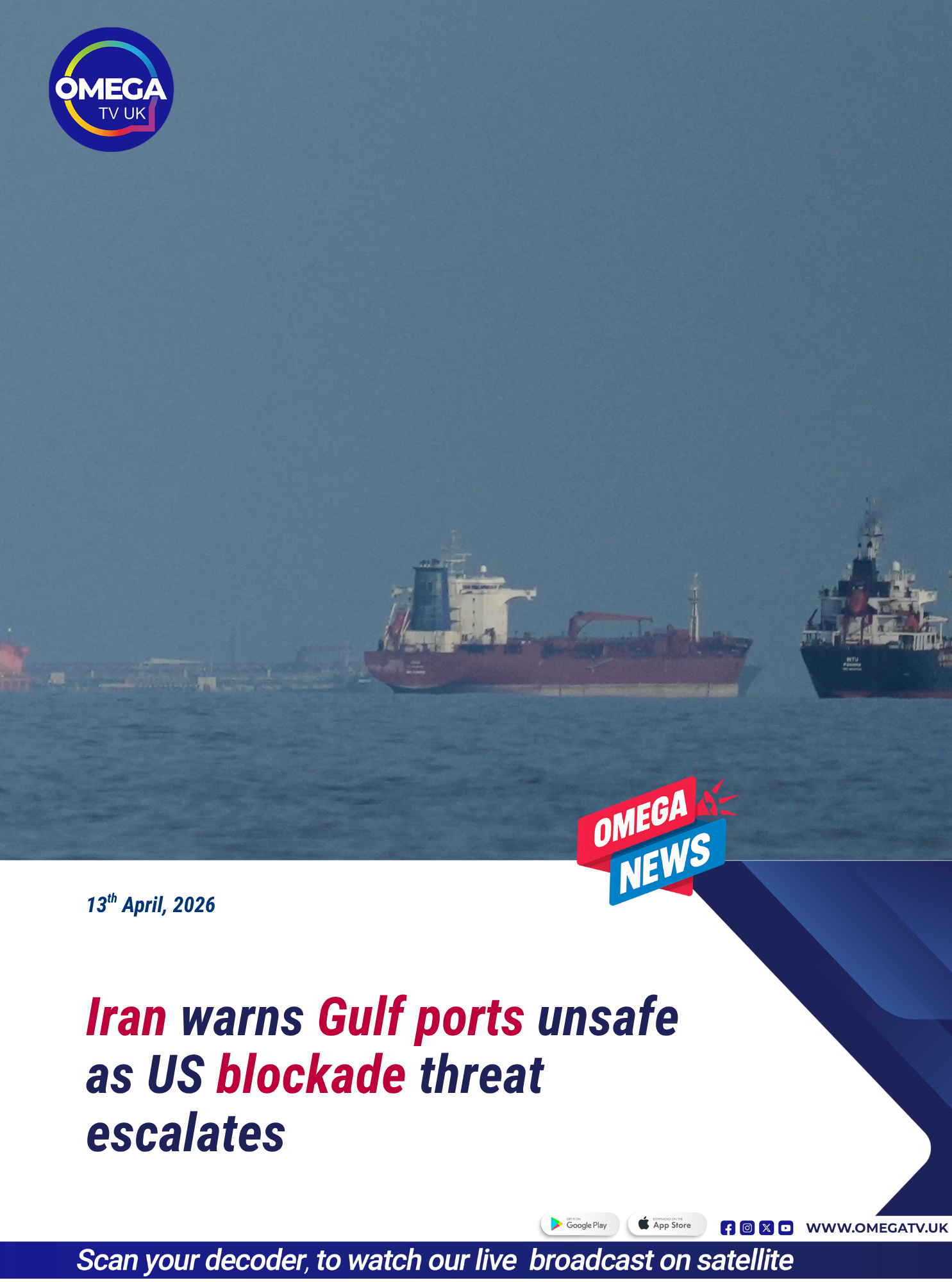
At the heart of the crisis is the Strait of Hormuz, a narrow but critical shipping route through which approximately 20% of the world’s oil supply typically passes. Since the conflict began, Tehran has effectively restricted access to the strait, heightening concerns over energy security and international trade.
Efforts by the United States to rally international support for reopening the strait have so far seen limited success. Donald Trump has repeatedly called on allied nations, particularly in Europe, to deploy naval forces to assist in securing the waterway. However, these appeals have largely been met with hesitation.
The United Kingdom has distanced itself from the proposed blockade. Keir Starmer stated that Britain does not support the move and emphasised that the country would not be drawn into the escalating conflict.
“We are not getting dragged into the war,” Starmer said, underlining the UK’s position of caution amid growing international pressure to take sides.
The situation has raised alarm among global leaders and economic analysts, who fear that a broader confrontation could disrupt not only oil supplies but also key shipping routes linking Asia, Europe, and Africa.
Shipping companies are already reassessing routes, while insurance costs for vessels operating in the region have begun to rise sharply. Experts warn that prolonged instability could trigger a ripple effect across global supply chains, affecting everything from fuel prices to consumer goods.
Iran’s warning suggests that any attempt to isolate its ports could result in a wider maritime conflict, potentially endangering commercial and military vessels across the region. The threat underscores the fragile nature of security in one of the world’s most strategically important waterways.
Diplomatic efforts to de-escalate the situation appear to have stalled, with both sides maintaining firm positions. While the US has framed the blockade as a necessary step to pressure Iran, Tehran has signalled that it views such actions as a direct threat to its sovereignty.
As tensions continue to rise, the risk of miscalculation or unintended escalation remains high. Even a minor incident in the crowded and heavily trafficked waters of the Persian Gulf could quickly spiral into a larger confrontation.
For now, the world is watching closely as military posturing, economic uncertainty, and diplomatic deadlock converge in a region that plays a vital role in the global economy.