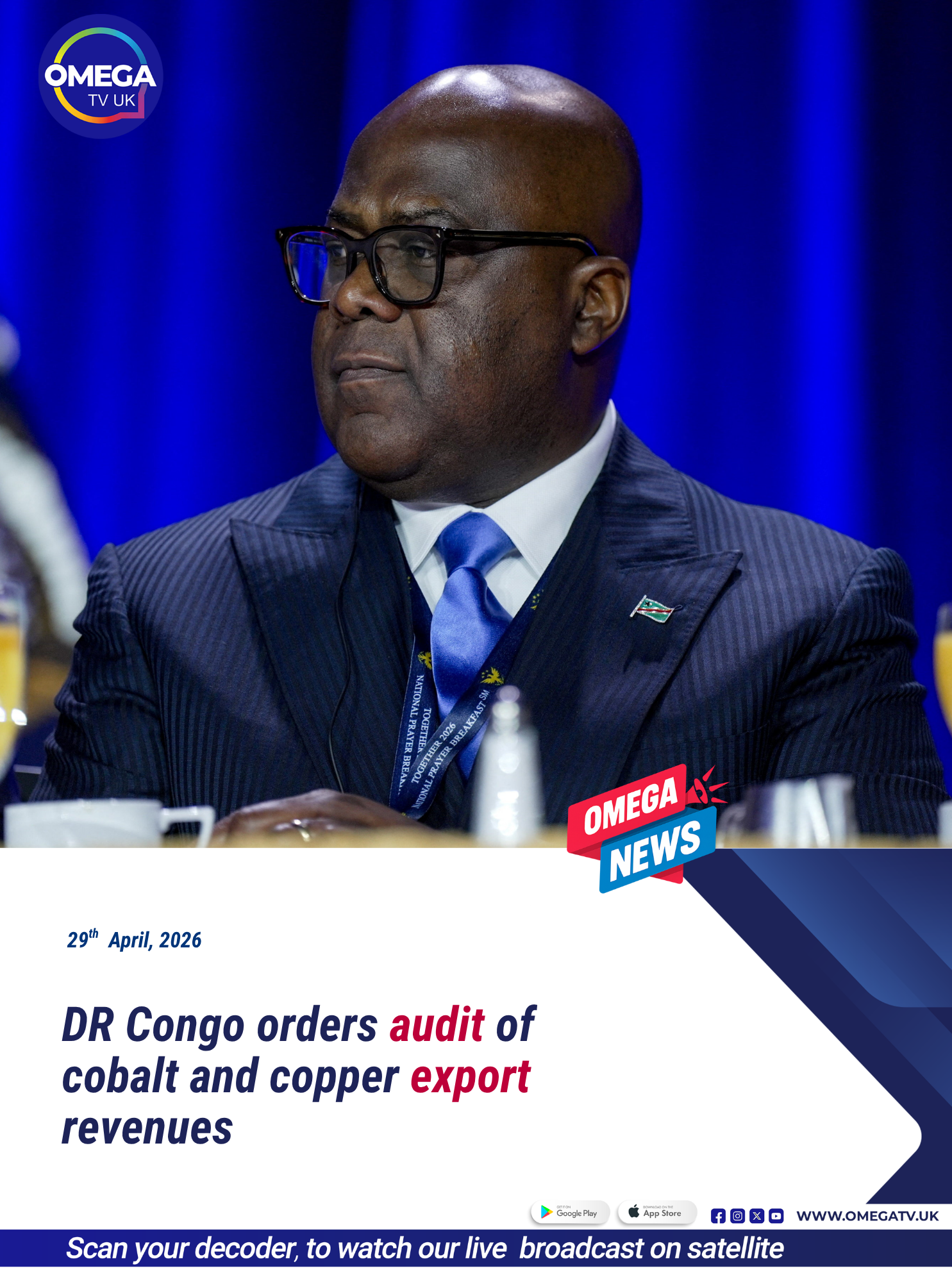
DR Congo orders 30-day audit of cobalt and copper revenues amid concerns over mining oversight

The President of the Democratic Republic of Congo (DRC), Félix Tshisekedi, has ordered a sweeping 30-day audit of the country’s mining export revenues and state-owned assets, as concerns grow over transparency and the nation’s ability to fully benefit from its vast mineral wealth.
According to Reuters, the directive comes amid mounting frustrations within the government over poor oversight, capital flight, and opaque joint ventures involving state mining companies. The move is seen as part of a broader effort to tighten control over one of Africa’s most resource-rich economies.
The DRC is one of the world’s largest producers of copper and cobalt, two critical minerals that play a central role in global supply chains. Cobalt is especially important in the production of rechargeable batteries used in electric vehicles, smartphones, and other electronic devices, while copper remains essential for electrical infrastructure and renewable energy systems.
In addition to copper and cobalt, the country also holds vast reserves of lithium, gold, and coltan, making it a key strategic player in the global transition toward cleaner energy technologies.
However, despite this immense natural wealth, the DRC has long struggled to translate its mineral exports into broad-based economic development. Officials have repeatedly raised concerns that the country is not receiving fair value from its resources due to weak regulation, corruption risks, and complex foreign partnerships.
President Tshisekedi’s latest order signals a renewed push to address these challenges. According to cabinet meeting minutes cited by Reuters, he has instructed authorities to conduct a full audit of mining revenues and state assets linked to extractive industries.
The review will focus on identifying gaps in revenue collection, monitoring export flows, and evaluating the structure of joint ventures between the state and private mining firms.
As part of the reforms, Tshisekedi has also directed officials to fully integrate port authorities with central and commercial banking systems. The aim is to establish a single traceable chain for all mineral exports and imports, reducing opportunities for illicit financial flows and undocumented shipments.
“No mineral export or import should escape a single traceable chain,” the president reportedly said during the cabinet meeting.
The audit is expected to run for 30 days, with initial findings due by 15 June. Authorities say the results will help guide future reforms in the mining sector, which remains the backbone of the country’s economy.
The DRC’s mineral wealth has increasingly placed it at the centre of global geopolitical competition. As demand for critical minerals grows, particularly in the renewable energy and electric vehicle industries, major global powers have intensified efforts to secure supply chains linked to Congolese resources.
In recent years, the DRC has signed strategic agreements with both the United States and China, reflecting its balancing act between competing international interests. These partnerships are aimed at expanding investment in mining infrastructure while ensuring access to essential raw materials for global industries.
However, analysts warn that without stronger governance, the country risks continuing to lose significant portions of its mineral revenue through inefficiencies and lack of transparency.
Mining sector experts have long pointed out that complex ownership structures, limited oversight of export pricing, and weak enforcement mechanisms have made it difficult for the DRC to fully capture the value of its resources.
The latest audit is therefore being closely watched by both domestic stakeholders and international investors, who are keen to see whether it leads to meaningful reforms or further regulatory tightening.
Within the country, the mining sector is both a source of economic opportunity and political tension. While it generates significant foreign exchange earnings, many communities in mining regions continue to face poverty, poor infrastructure, and limited access to public services.
Civil society groups have frequently called for greater accountability in the sector, arguing that improved governance could transform the DRC’s economic outlook.
President Tshisekedi’s administration has positioned resource management as a key pillar of its economic agenda, with the latest audit seen as part of a broader effort to strengthen state control over strategic assets.
As the 30-day review begins, attention will focus on whether the government can translate its vast mineral wealth into greater national benefit, or whether longstanding structural challenges will continue to limit progress in one of Africa’s most resource-rich nations.