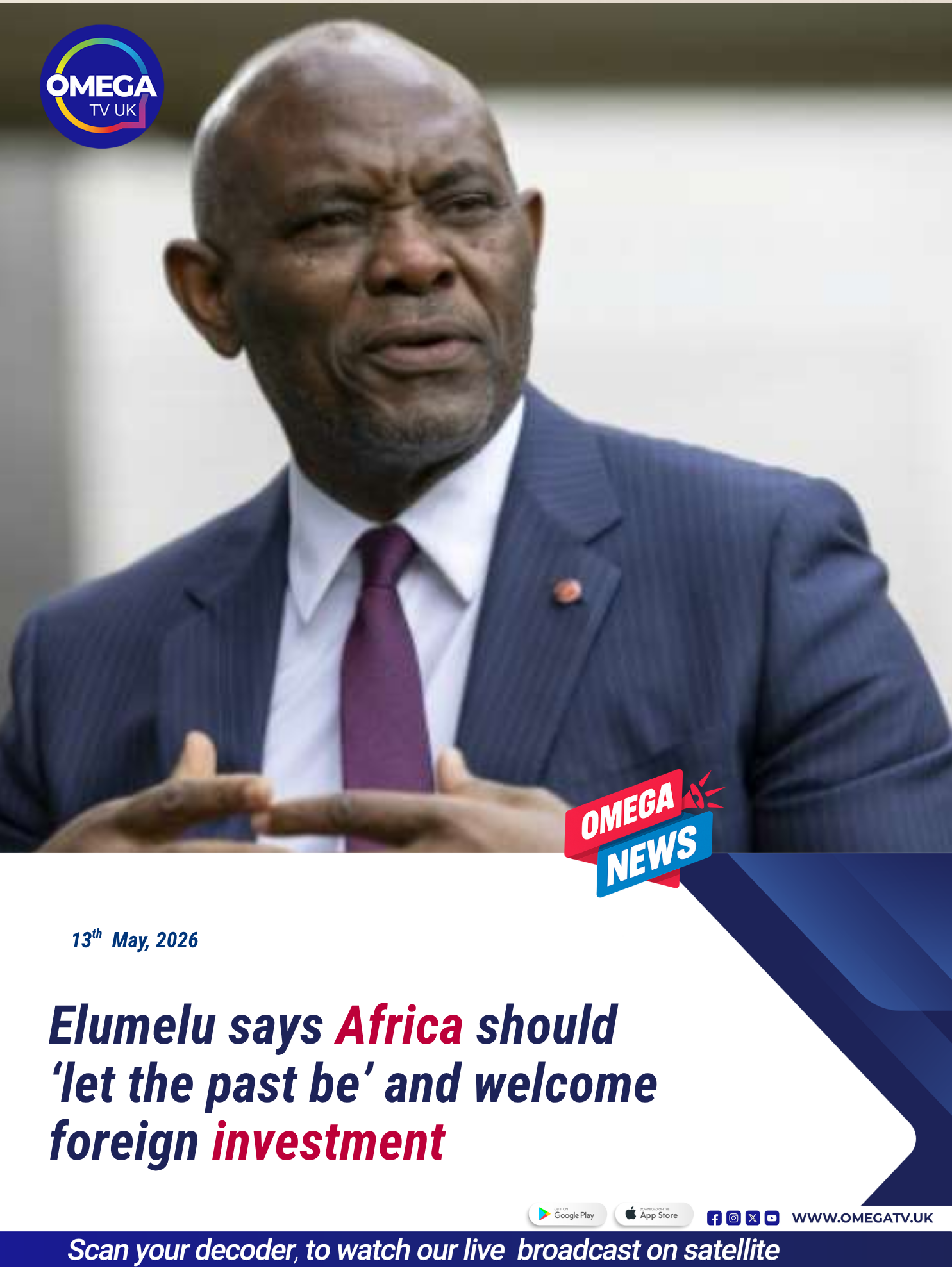
Africa should ‘let the past be’ and embrace foreign investment, says Tony Elumelu
Nigerian billionaire businessman and philanthropist Tony Elumelu has urged African nations to move beyond colonial-era grievances and fully open their economies to global investment, arguing that the continent’s future growth depends on attracting large-scale private capital from around the world.

Speaking to AFP on the sidelines of the Africa Forward Summit in Nairobi, co-hosted by France and Kenya, Elumelu said Africa must prioritize economic development over historical disputes, and actively welcome investors from all regions, including the United States, Europe, the Middle East, China, and Russia.
Elumelu, who chairs major institutions such as Heirs Holdings, Transcorp, and United Bank for Africa, is widely regarded as one of Africa’s most influential investors. He also runs the Tony Elumelu Foundation, which supports thousands of young entrepreneurs across the continent.
According to him, Africa’s development challenge is not a lack of opportunity but a lack of infrastructure and investment flow. He stressed that governments must create environments where global capital can thrive and local entrepreneurs can scale.
“What we need in Africa in the 21st century is massive private global capital coming into Africa,” he said. “Anyone that can help us address this is welcome in Africa.”
His comments come at a time when Africa is increasingly becoming a strategic battleground for global powers seeking influence through trade, infrastructure investment, and resource partnerships. Countries such as China, the United States, Turkey, Russia, and Gulf states have all expanded their economic presence across the continent in recent years.
Elumelu argued that Africa should not restrict its partnerships based on historical grievances, including colonial-era tensions. Instead, he said African leaders should focus on practical development goals such as job creation, energy access, transportation systems, and digital infrastructure.
“We should stop this victim mentality,” he said. “We should be cognisant of the history, but more importantly, we should commit to the future.”
His remarks also touch on ongoing debates about France’s role in Africa. French President Emmanuel Macron has recently sought to strengthen economic ties with African countries through initiatives such as the Africa France Impact Coalition, which aims to deepen cooperation between French and African businesses.
However, France’s colonial legacy continues to generate public controversy in several African countries. Just this week in Nairobi, protests broke out during the Africa Forward Summit, with demonstrators accusing France of neo-colonial influence. Some arrests were reported after a group attempted to disrupt the event.
Elumelu, however, defended engagement with France and other global partners, arguing that the current generation of leaders should not be judged by historical actions.
“President Macron was not born 100 years ago,” he said. “This is a new age. I believe he is sincere in his commitment to Africa.”
Beyond political debates, Elumelu emphasized that Africa’s most urgent challenge is building infrastructure that can support its rapidly growing population. With a median age under 20, he said the continent must focus on creating jobs and enabling young people to participate in the global digital economy.
“What our young entrepreneurs need is improved access to electricity, mass transportation systems, security, and ease of doing business,” he said. “These are the things that matter.”
He also highlighted the importance of technology adoption, including internet access and participation in artificial intelligence-driven industries, as key drivers of Africa’s future competitiveness.
“It is a good place to be at this point in time,” he said, describing Africa as a rising hub of global economic competition.
As global interest in Africa continues to grow, Elumelu maintained that the continent’s success will depend on how effectively it can attract investment, build infrastructure, and empower its youthful population.