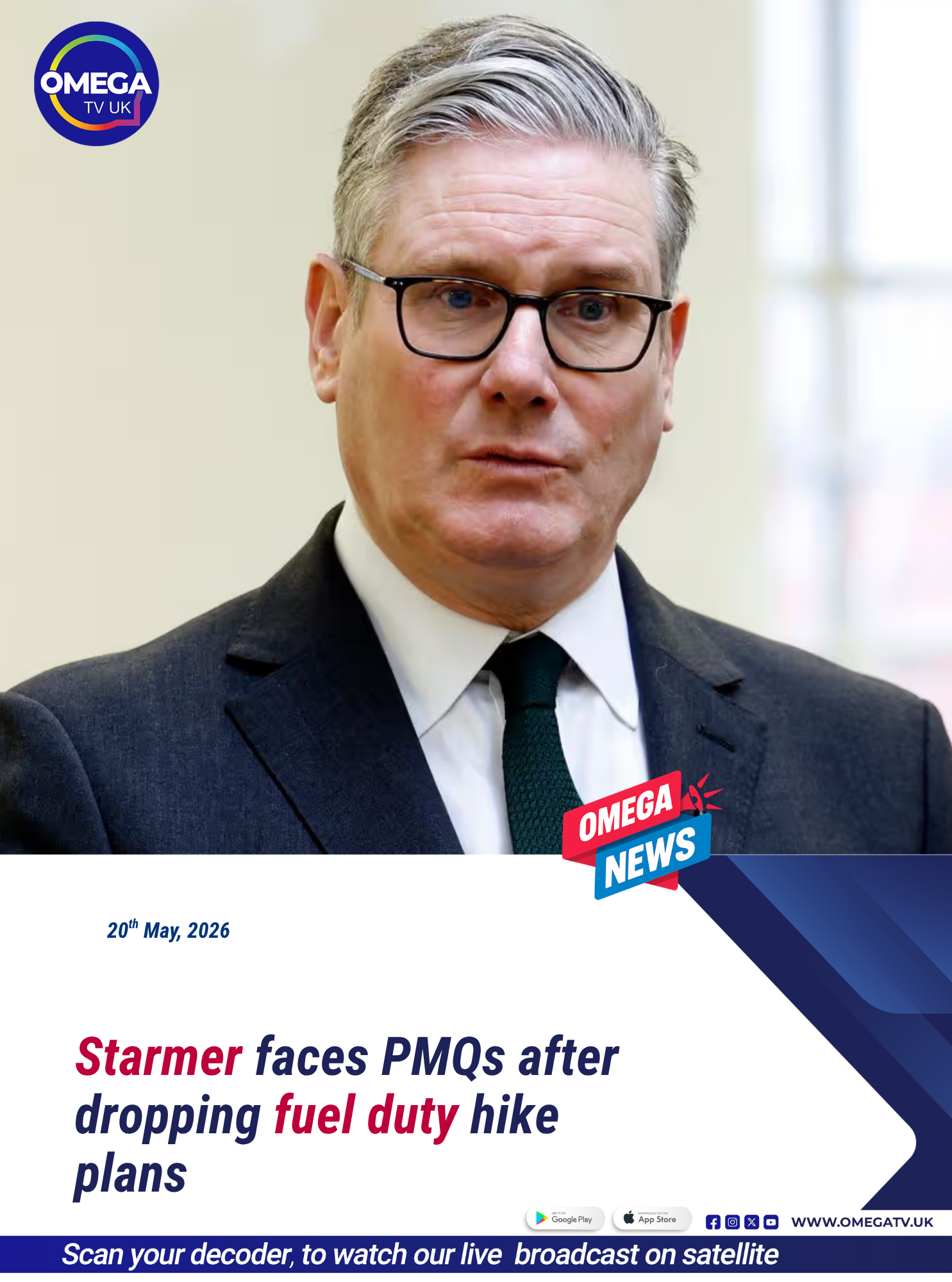
Keir Starmer faces PMQs as government drops fuel duty hike plans
UK Prime Minister Keir Starmer is facing mounting political pressure as he appears at Prime Minister’s Questions for the first time since Labour’s disappointing election losses in May, while his government has also abandoned plans to increase fuel duty.

The highly anticipated PMQs session comes amid growing speculation over Starmer’s future as Labour leader, with internal tensions continuing to dominate political discussion in Westminster following recent cabinet turmoil and electoral setbacks.
The government’s decision to scrap proposed fuel duty increases is being viewed as an attempt to ease pressure on households already struggling with the cost of living and rising transport expenses.
Fuel duty, a tax placed on petrol and diesel, has long been politically sensitive in the UK due to its direct impact on motorists, businesses, and inflation. Any increase often faces strong public and political opposition.
The reversal comes as Starmer attempts to stabilize his leadership after a difficult period marked by criticism from within his own party.
Recent days have seen growing unrest among Labour MPs and ministers, including the resignation of former Health Secretary Wes Streeting, who publicly declared that he had lost confidence in Starmer’s leadership.
Streeting’s departure intensified speculation about a possible leadership contest, though no formal challenge has yet been launched.
Under Labour Party rules, a leadership challenge would require significant support from Labour MPs before a contest could officially begin.
The atmosphere around PMQs is therefore expected to be particularly tense, with opposition parties and potentially even Labour backbenchers likely to scrutinize Starmer’s authority and political direction.
The prime minister is expected to face questions not only about internal party instability but also about economic policy, government priorities, and the fallout from recent election results.
Political analysts say the decision to abandon fuel duty hikes may be aimed at reassuring voters and shifting public attention toward affordability and economic management.
However, critics argue the move also reflects broader uncertainty within government strategy as Labour attempts to recover from its recent political difficulties.
Speculation surrounding Starmer’s leadership has continued to grow in Westminster, with several senior Labour figures reportedly being discussed as potential contenders should a leadership race emerge.
Deputy Prime Minister Angela Rayner and other prominent ministers have been repeatedly mentioned in political conversations surrounding Labour’s future direction.
Despite the mounting pressure, Starmer’s allies insist he remains committed to leading the government and implementing Labour’s legislative agenda.
Chancellor Rachel Reeves recently warned that any leadership contest could create instability and “plunge the country into chaos,” echoing concerns expressed by Starmer himself.
Prime Minister’s Questions is traditionally one of the most politically charged events in the British parliamentary calendar, giving opposition leaders and MPs the opportunity to directly challenge the prime minister in the House of Commons.
Today’s session is likely to be closely watched for signs of confidence or vulnerability within Starmer’s leadership team.
The political uncertainty comes as Labour attempts to reset its message after the election losses and rebuild public support ahead of future national campaigns.
For now, Starmer remains under pressure to demonstrate authority, unity, and a clear vision for both his government and the Labour Party.