Dozens of vehicles burned as jihadists tighten blockade around Mali’s capital
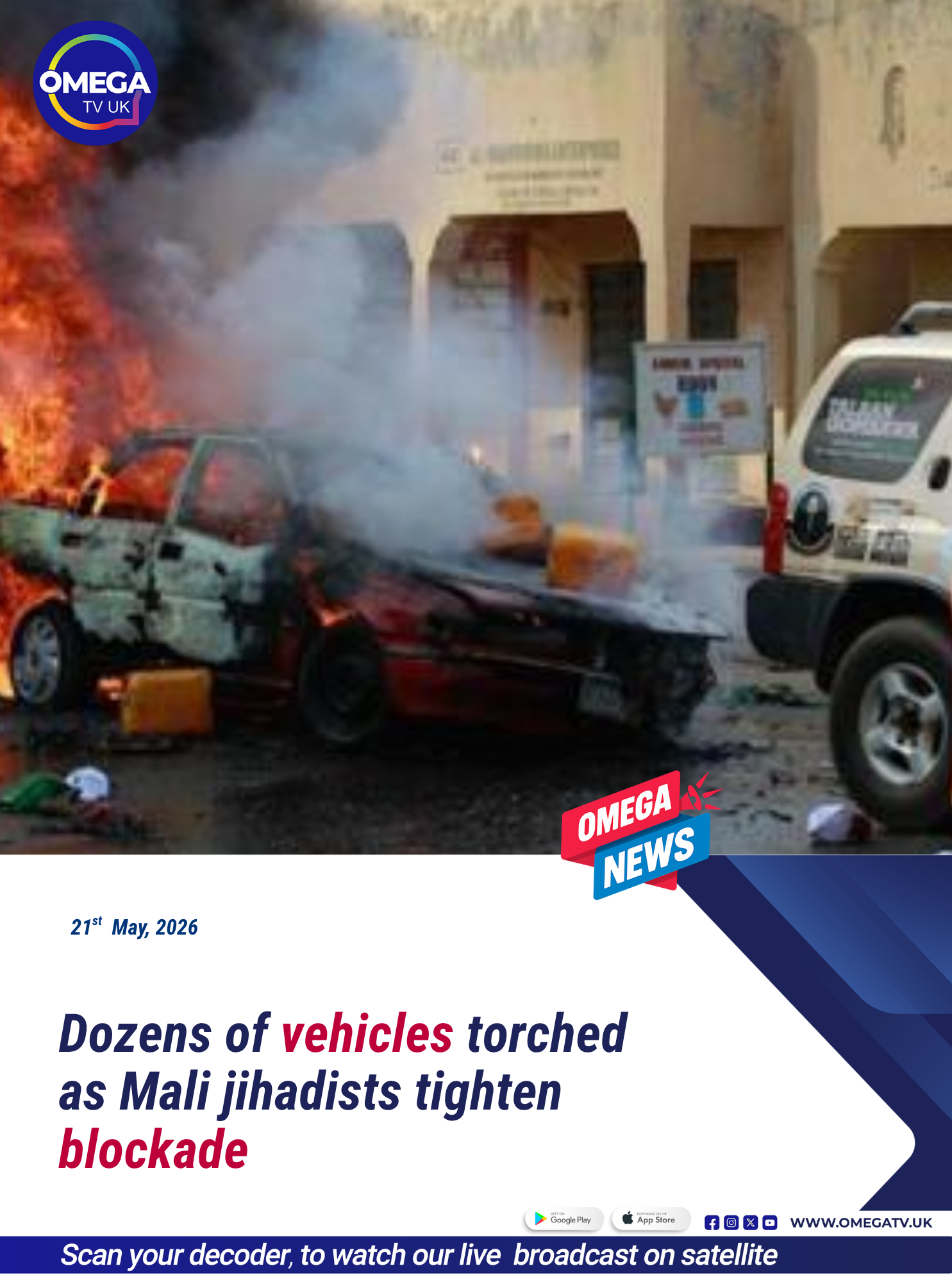
Dozens of vehicles, including fuel tankers, trucks and minibuses, have been burned near Bamako as jihadist fighters intensified a blockade around Mali’s capital, deepening fears over worsening insecurity and rising shortages.

Verified videos showed charred vehicles scattered along a major road roughly 45 kilometres west of Bamako after armed militants reportedly stopped convoys, ordered passengers and drivers out, and then set the vehicles on fire.
No casualties were immediately reported.
The attacks have been linked to Jama’at Nusrat al-Islam wal-Muslimin (JNIM), an al-Qaeda-affiliated jihadist group that has increasingly tightened its grip on key transport routes around the capital over the past year.
JNIM first imposed a fuel blockade on Bamako last year but expanded the operation after launching attacks on the city last month.
The blockade is severely affecting the movement of fuel, food and livestock into the capital, where millions rely on goods transported from neighbouring coastal countries such as Senegal and Ivory Coast.
Satellite imagery from NASA’s heat-monitoring system also detected large fire signatures in the area where the vehicles were burned.
Since last year, jihadist fighters have reportedly kidnapped drivers and destroyed more than 100 fuel trucks across Mali’s highways despite military escort operations.
Security analysts say the blockade is aimed at weakening public confidence in Mali’s military government and suffocating the country’s fragile economy.
Mali has been under military rule since Assimi Goïta seized power in a coup in 2020, promising to restore security and push back Islamist insurgents operating across the country.
However, the junta has struggled to contain the growing violence despite support from Russian mercenary groups.
Earlier this year, the government appointed Brigadier General Famouké Camara to oversee operations against the blockade, but attacks on convoys have continued.
Residents in Bamako say the partial closure of major roads has sharply increased the prices of everyday goods.
One resident told the BBC that potatoes which previously sold for 350 francs now cost around 500 francs due to transport disruptions.
“Everything in the market has become expensive,” he said.
The crisis is also affecting preparations for the upcoming Islamic holiday of Eid al-Adha, traditionally one of the busiest periods for livestock trading in Mali.
Sheep sellers in Bamako say transporting animals into the city has become dangerous because militants often intercept vehicles and seize livestock.
“People are afraid because they take the animals,” one trader explained.
As a result, many families say they can no longer afford sheep for the religious celebration.
Some residents are instead planning to pool money together to buy a single bull for communal slaughter.
Travel has also become increasingly risky as many Malians avoid journeys to their hometowns during the festive period due to fears of attacks along major roads.
“Travelling would put your life at risk,” one Bamako resident identified as Moussa said.
“I’ve decided to stay and celebrate in Bamako.”
The worsening blockade highlights the growing instability across Mali, where jihadist groups and separatist fighters continue to expand their influence despite years of military operations.
Last month, coordinated attacks by Tuareg separatists and JNIM fighters targeted several towns and cities across the country.
The violence reportedly led to the death of Defence Minister Sadio Camara following a suspected suicide bombing near the capital.
Large parts of northern and eastern Mali remain difficult for government forces to control, with residents increasingly caught between militant attacks, economic hardship and ongoing political instability.