Starmer Opens Up on Resignation, Says Successor Must Balance Global Crises and Domestic Challenges
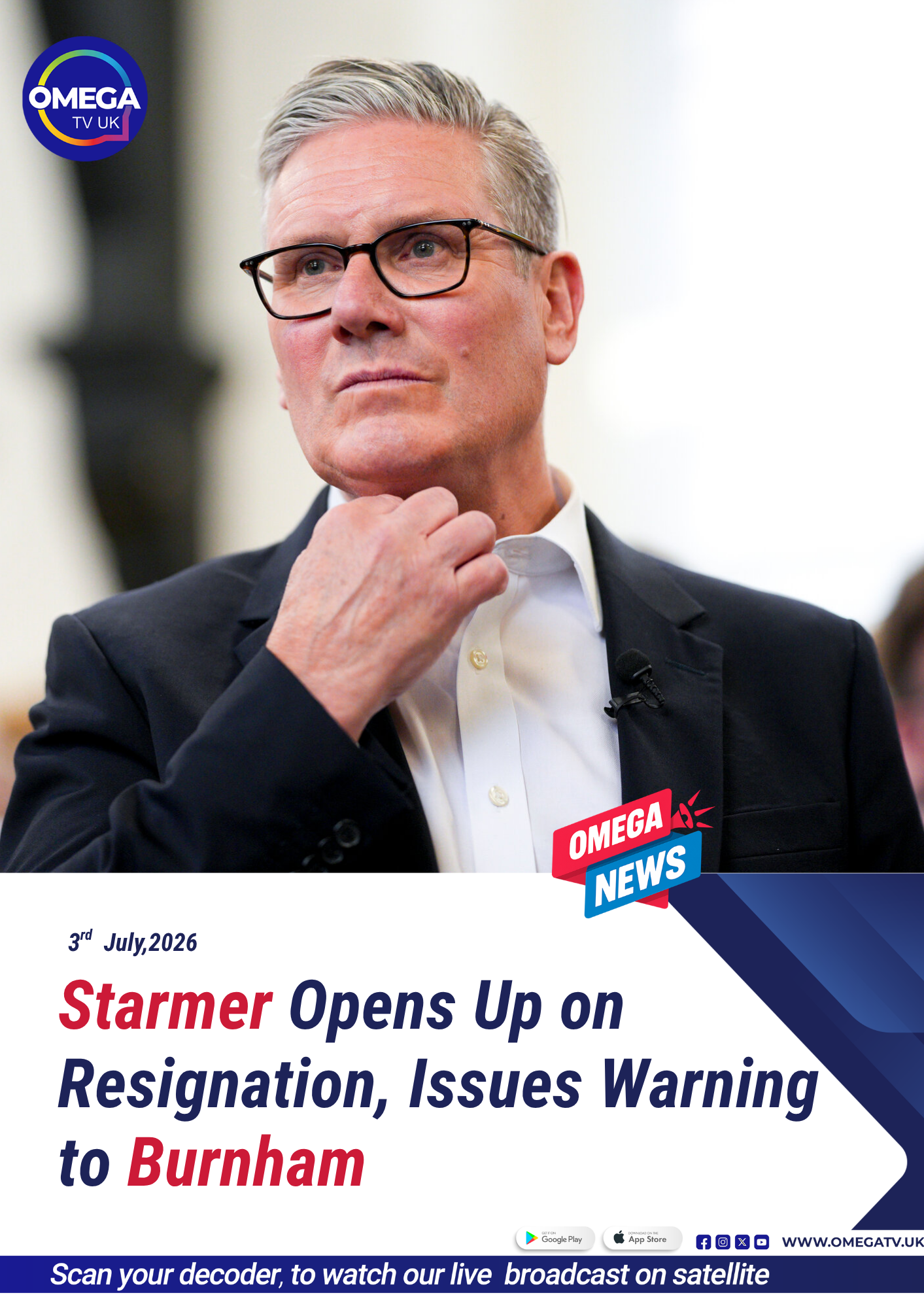
Outgoing Prime Minister Keir Starmer has spoken candidly about his decision to step down, describing it as one of the most difficult choices of his life while warning that his likely successor, Andy Burnham, will face the same demanding international challenges that defined his time in office.

In his first interview since announcing his resignation, Sir Keir revealed that the decision to end his political career came after an emotional weekend with his wife, Victoria, and their teenage children at Chequers, the prime minister’s official country residence. He described the process as “intensely personal” and admitted it was a “really, really tough” conclusion to reach after months of reflection and consultation with colleagues, advisers and union leaders.
Despite previously insisting he intended to remain prime minister and contest any leadership challenge, Sir Keir stepped down just days after Burnham’s victory in the Makerfield by-election. He said the decision was ultimately made with his family’s support after considering what was best for both the country and the Labour government.
Reflecting on his years in office, Sir Keir defended his record and rejected criticism over the amount of time he spent dealing with international affairs. During his tenure, opponents frequently accused him of focusing too heavily on global diplomacy rather than domestic issues, earning him the nickname “Never Here Keir.”
However, the outgoing leader argued that modern prime ministers cannot separate international crises from challenges at home. He insisted that whoever succeeds him will face the same difficult balance between foreign policy and domestic priorities.
According to Sir Keir, the world has become significantly more dangerous and unpredictable, making global engagement an unavoidable responsibility for any British leader. He warned that ongoing international conflicts and geopolitical tensions will continue to shape decisions affecting the UK’s economy, security and public services.
While many supporters of Andy Burnham hope a future Labour government would place greater emphasis on issues such as the cost of living, healthcare and public services, Sir Keir believes those domestic concerns are deeply connected to global events and cannot be addressed in isolation.
The outgoing prime minister also sought to dispel any suggestion of rivalry with Burnham. He said the pair had always maintained a positive relationship and pledged to support the next Labour leader without interfering in their leadership.
Sir Keir confirmed he intends to remain a Member of Parliament until at least the next general election but stressed that he would avoid publicly criticising or advising his successor, saying he planned to “keep my mouth shut” rather than offer constant commentary from the backbenches.
Looking back on his wider political legacy, Sir Keir said his greatest achievement was rebuilding the Labour Party after taking over a movement he described as politically, financially and morally bankrupt. He argued that his leadership helped rescue the party and restore it as a credible force capable of winning power, placing that accomplishment alongside Labour’s historic election victories under Clement Attlee in 1945 and Tony Blair in 1997.
Despite those achievements, Sir Keir acknowledged that his departure came after Labour MPs concluded he was no longer the right person to lead the party into the next general election. Nevertheless, he expressed confidence that the next Labour government would continue building on the foundations established during his leadership.