DR Congo Says Rwanda-Linked Militia Agrees to Disarm

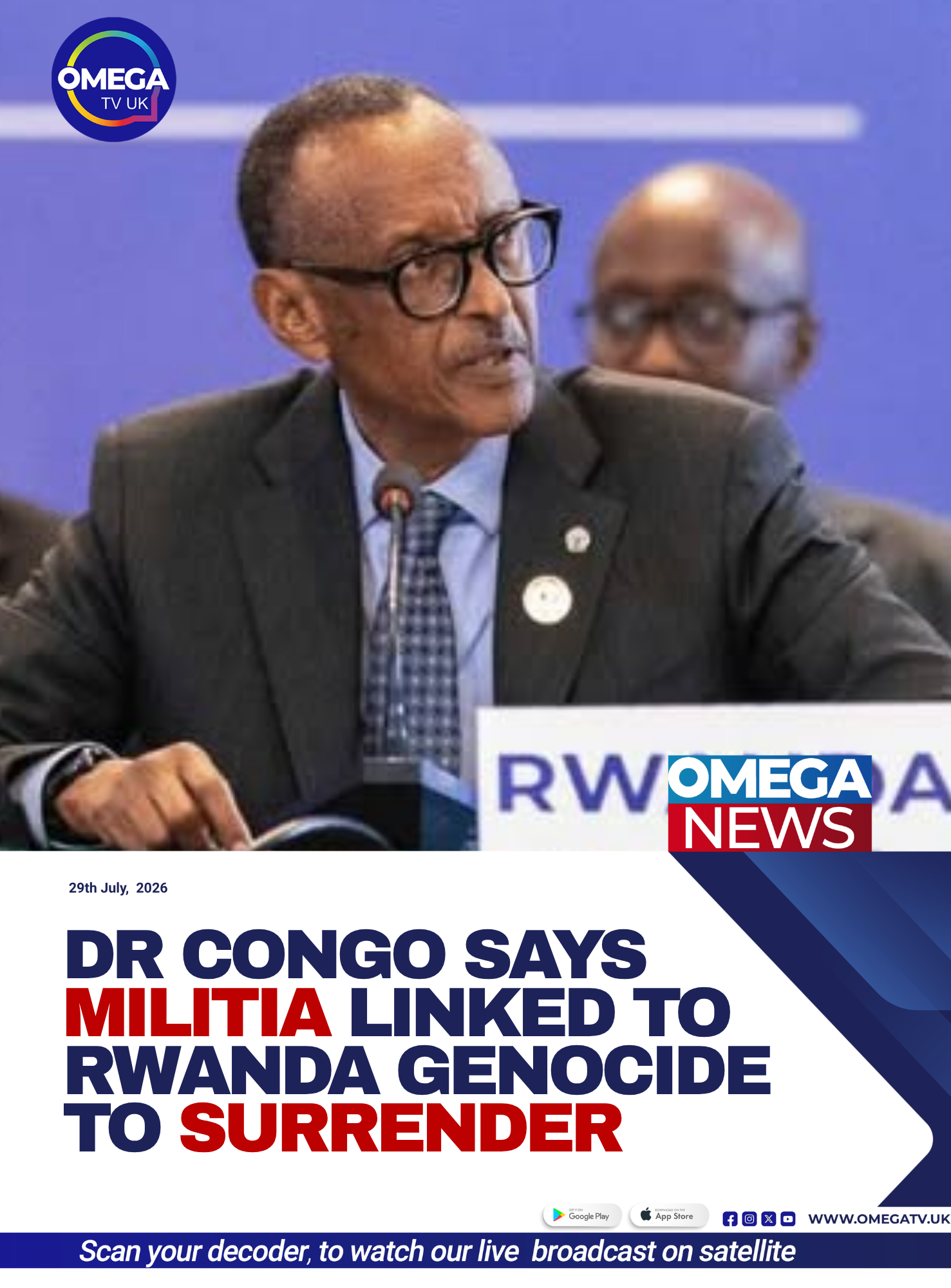
The Democratic Republic of Congo government has announced that an armed group linked to Rwanda’s 1994 genocide has agreed to disarm and begin the process of demobilisation in eastern Congo.
The Democratic Forces for the Liberation of Rwanda (FDLR) reportedly agreed to surrender under a new protocol announced by the Congolese government during a national television address on Tuesday.
As part of the agreement, the militia has committed to returning to Rwanda or relocating to another country willing to accept its members. The group also agreed that individuals wanted by courts for alleged crimes would face justice.
However, the FDLR has requested security guarantees for its members while they are held in a designated camp away from active conflict zones in eastern Democratic Republic of Congo.
The disarmament agreement is seen as a major step towards implementing a United States-brokered peace deal between Congo and neighbouring Rwanda, which aims to reduce decades of conflict in the region.
The FDLR includes remnants of Rwanda’s former army and militias accused of taking part in the 1994 genocide, during which hundreds of thousands of people were killed.
For years, Rwanda has pressured Congo to eliminate the armed group, accusing authorities in Kinshasa of cooperating with the FDLR. Kigali has repeatedly cited the group’s presence in eastern Congo as a security threat and a reason for its military involvement in the region.
The Congolese government has denied supporting the FDLR and has instead accused Rwanda of backing the M23 rebel movement, which has captured large areas of eastern Congo following a rapid military advance.
Rwanda has denied supporting M23 and rejected allegations that it is involved in the rebel group’s activities.
Although the surrender agreement has been welcomed as a possible step towards peace, Rwanda has questioned its significance.
Rwanda’s Foreign Minister described the protocol as a “non-event,” arguing that it does not form part of the Washington peace agreements. He said Congo remains responsible for dismantling the FDLR under existing commitments.
The FDLR has been one of several armed groups operating in eastern Congo, a region affected by decades of instability, competition over resources and cross-border tensions.
Experts say the success of the agreement will depend on whether the militia fully disarms, whether fighters are properly monitored and whether broader regional disputes between Congo and Rwanda are addressed.
The latest development comes as international efforts continue to find a lasting solution to conflict in eastern Congo and improve relations between the two neighbouring countries.