UN Extends Sanctions on Armed Groups in Central African Republic

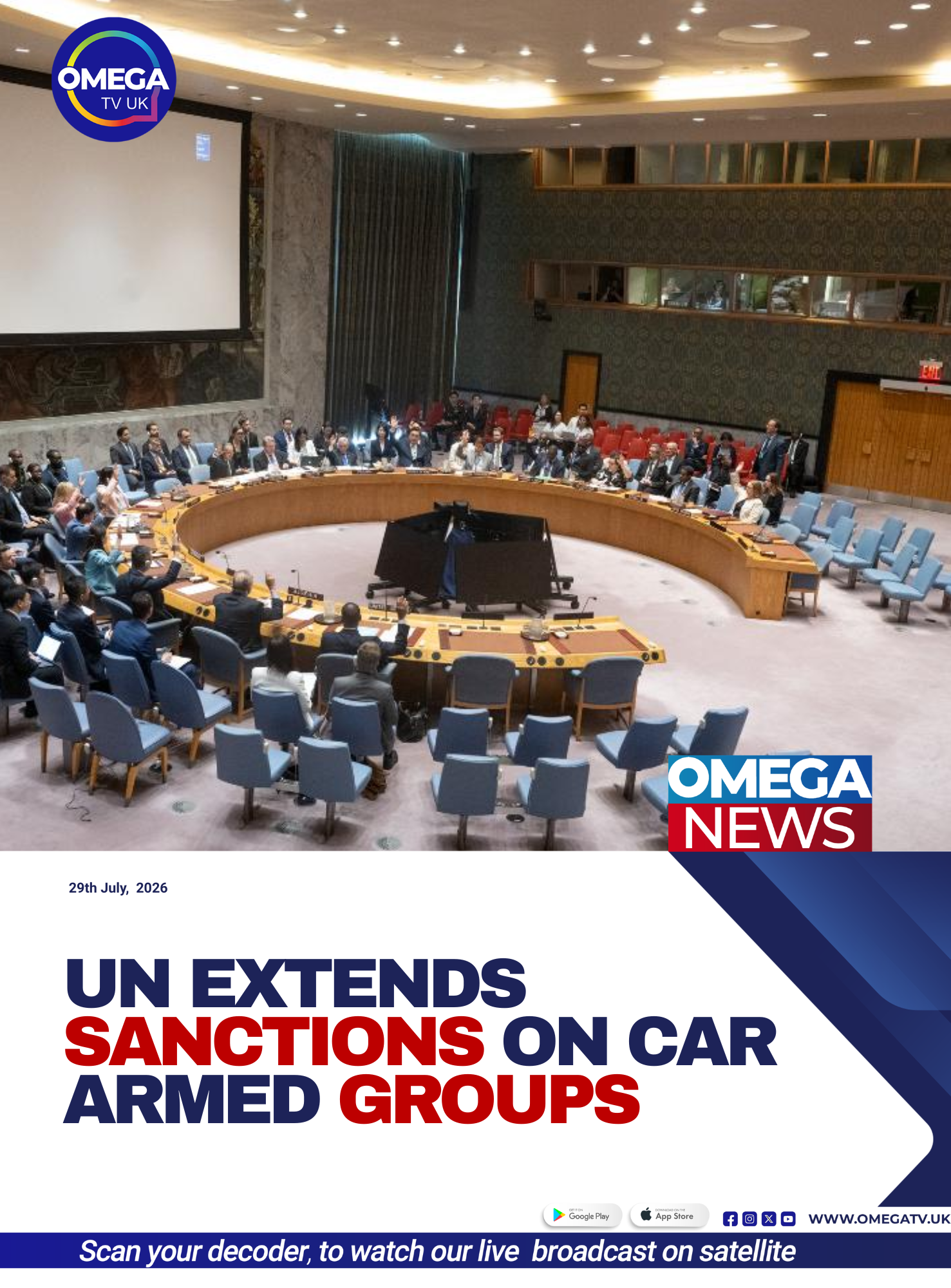
The United Nations Security Council has unanimously voted to extend sanctions against armed groups and individuals operating in the Central African Republic (CAR), citing continued security threats despite progress in governance and stability.
The resolution extends the sanctions until 31 July 2027, maintaining measures aimed at limiting the activities of armed groups that continue to fuel violence in the country.
The sanctions include asset freezes, travel bans and restrictions on the supply of weapons and military equipment to armed groups and individuals designated by the United Nations.
During the Security Council meeting, member states acknowledged the progress made by the Central African Republic in strengthening democratic governance, improving security and expanding state authority in recent years.
However, the Council warned that armed groups and cross-border arms trafficking networks remain a major challenge, particularly in border regions where insecurity continues to threaten civilians and undermine peace efforts.
France’s Ambassador to the United Nations, Jérôme Bonnafont, said the Central African Republic had made significant progress but stressed that the country’s security situation remains fragile.
He said it is the responsibility of the international community to continue supporting the country in its efforts to combat armed groups and individuals who threaten national stability.
The Central African Republic’s Ambassador to the United Nations, Marius Aristide Hoja Nzessioué, questioned how armed groups continue to obtain weapons despite the sanctions already in place.
He called for greater efforts to identify and dismantle the networks responsible for supplying and financing armed groups, arguing that cutting off these support systems is essential to achieving lasting peace.
According to the ambassador, simply imposing sanctions is not enough if armed groups are able to rearm through new supply routes. He warned that without addressing the sources of weapons and financial support, the cycle of violence is likely to continue.
The Security Council’s latest decision reflects ongoing international concern over the security situation in the Central African Republic, where armed groups have continued to operate despite years of peacekeeping and political reforms.
The United Nations hopes the extended sanctions will help reduce the flow of weapons to armed groups while supporting the country’s efforts to strengthen security institutions and protect civilians.
The sanctions will remain in effect until the end of July 2027, while the Security Council continues to monitor developments and assess the effectiveness of the measures in promoting long-term peace and stability in the Central African Republic.