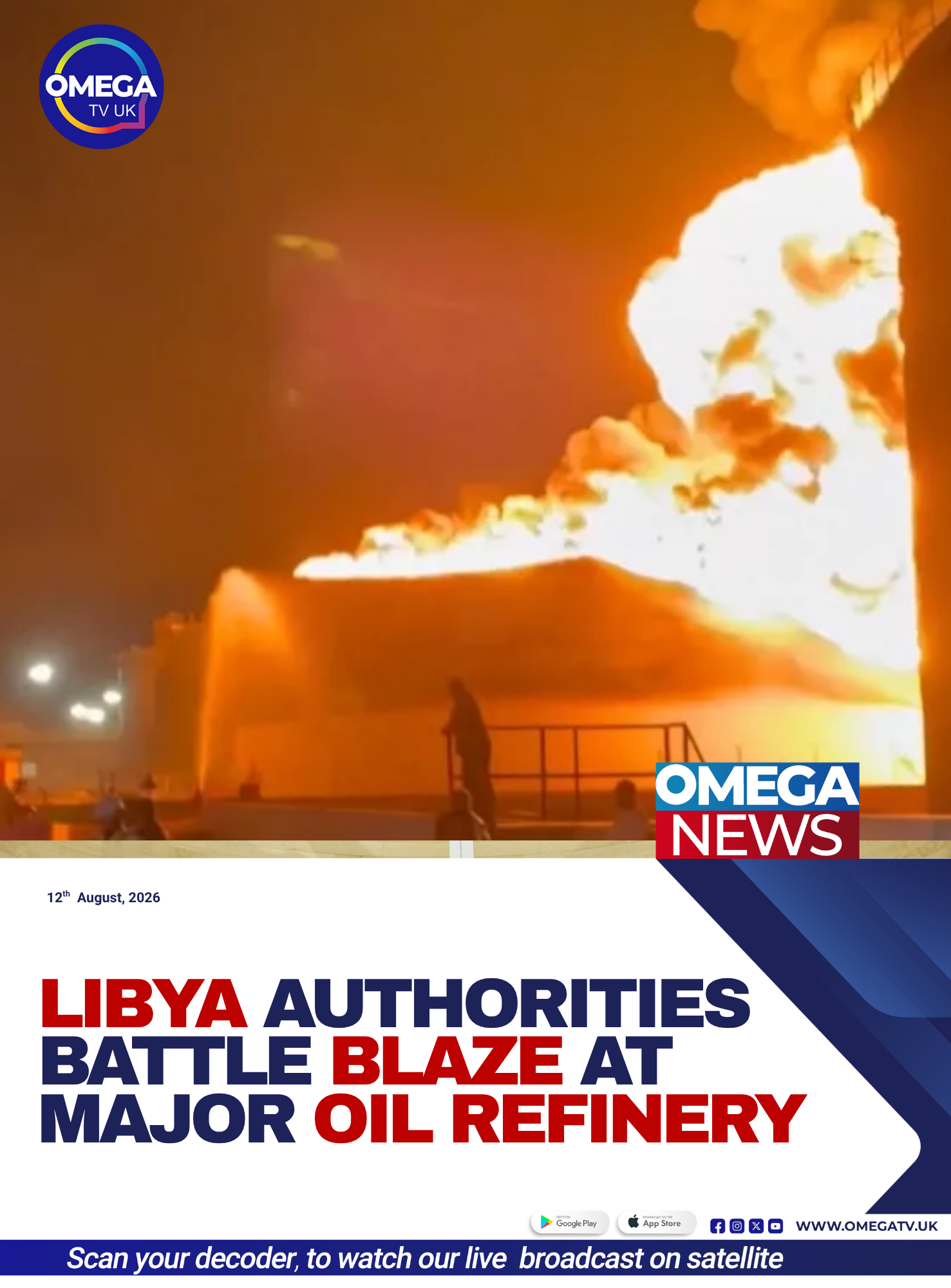
Libyan authorities battle huge blaze at major oil refinery
Libyan emergency crews are battling a major fire at the Zawiya oil refinery after a fuel storage tank was hit in a drone strike, raising fresh concerns over the country’s security and oil operations.

Drone strike sparks fire
The Zawiya refinery, located west of Tripoli, was targeted on Monday evening in the third reported attack in the area within two days. The strike hit a fuel tank containing about 4.5 million litres of fuel, causing the tank to collapse and triggering a massive blaze.
Emergency crews respond
Firefighters and emergency teams were deployed to contain the flames and prevent the fire from spreading to other parts of the facility. Libya’s Ambulance and Emergency Service said there were no serious injuries, although several people were treated for smoke inhalation.
Major oil facility affected
The Zawiya refinery is Libya’s largest operational refinery, with a production capacity of about 120,000 barrels of oil per day. The National Oil Corporation warned that continued attacks could force it to suspend operations.
Series of attacks
The latest incident follows two other drone strikes in Zawiya targeting a naphtha reservoir and a water desalination facility. The NOC condemned the attacks and called on authorities to investigate those responsible.
Security concerns grow
The attacks have renewed concerns about Libya’s fragile security situation. The country has remained politically divided since the 2011 uprising that ended Muammar Gaddafi’s four-decade rule.
Rival administrations
Libya continues to have competing centres of power. The internationally recognised government is based in Tripoli and led by Prime Minister Abdulhamid Dbeibah, while an eastern administration is backed by military commander Khalifa Haftar.
Oil industry under pressure
The latest attack highlights the vulnerability of Libya’s vital energy infrastructure amid the country’s prolonged political and military divisions. Authorities now face pressure to identify those behind the attacks and protect key facilities from further disruption.