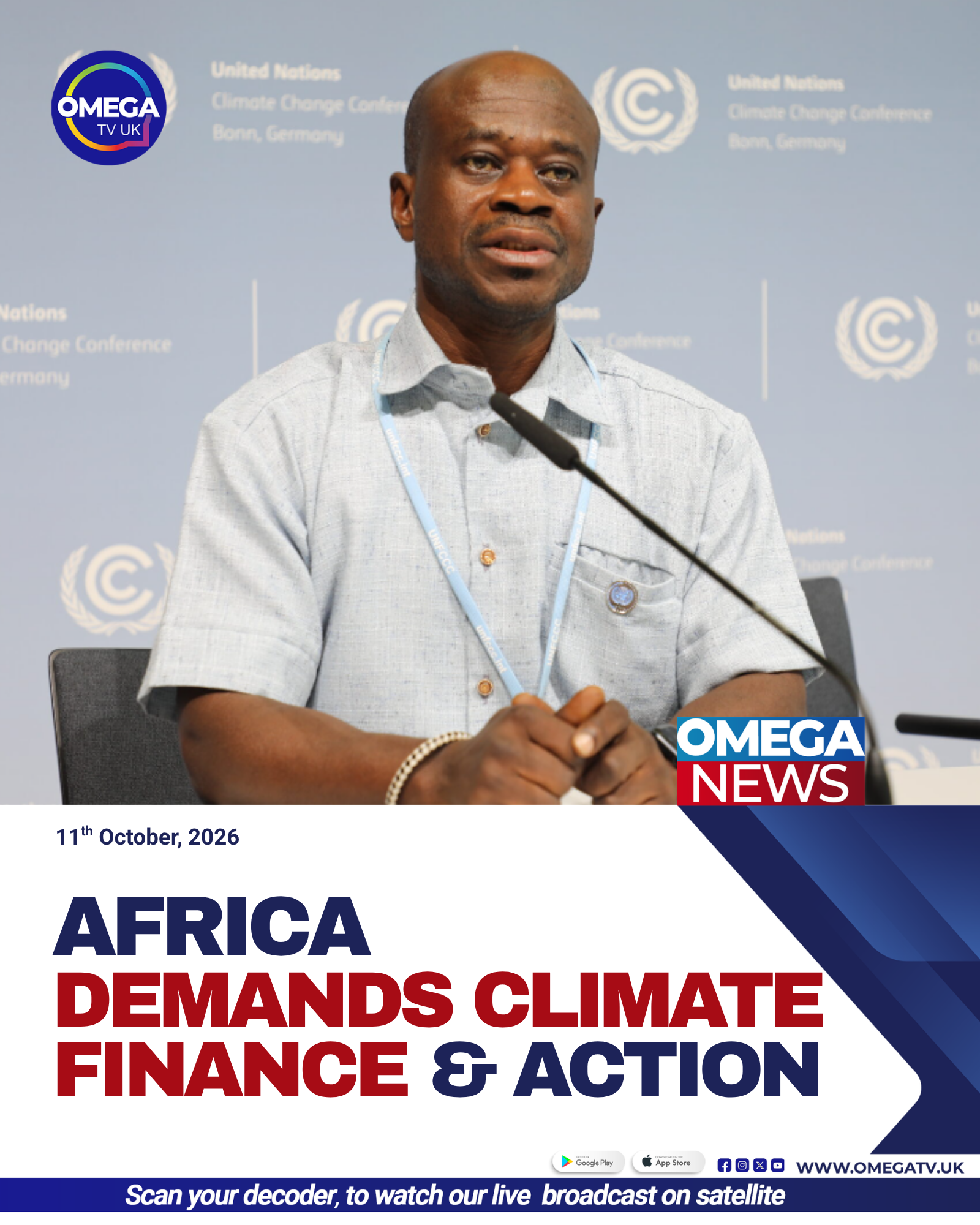
The African Group of Negotiators on Climate Change has called for climate commitments to be delivered on, and for predictable, scalable grant-based finance to help adaptation in Africa at COP31.

The group is pushing for concrete outcomes from the negotiations in Antalya, Türkiye, in November, which will help Africa to implement its National Adaptation Plans (NAPs), Nationally Determined Contributions (NDCs) and long-term strategies.
Speaking at the AGNES Pre-COP31 Strategy Meeting in Nairobi, AGN Chairperson, Nana Dr Antwi-Boasiako Amoah said that the meeting should be an “implementation COP” for Africa.
The meeting was convened by the African Group of Negotiators Experts Support (AGNES Africa)
“Africa cannot afford empty COPs; COP31 must deliver, not just make more commitments,” he said.
Noting that African countries need enhanced access to climate finance, technology, national capacity-building, and support in the translation of national adaptation planning into investment, Dr. Amoah said that Africa is calling for a fair international financial system, reflecting the differing responsibilities and vulnerabilities of countries for climate change, and not charity.
In his view, predictable and scalable grant-based finance for adaptation, including a scaled-up Paris Agreement Loss and Damage Fund, is a priority for Africa.
Dr. Amoah called on negotiators to ramp up pressure on the Fund for Responding to Loss and Damage to ensure it was more accessible, adequately resourced, and responsive to the needs of vulnerable developing countries.
“Climate impacts in Africa are already happening and putting at risk people, livelihoods, productive assets, and cultural heritage, beyond what adaptation can handle,” he said.
“National budgets are being redirected away from other priorities into recurrent disaster response and recovery,” he added.
Africa is calling for climate policy to contribute to broader development objectives such as energy access, poverty reduction, food and nutrition security, decent work, and industrialization, while pursuing climate goals.
Dr. Amoah said that the continent is committed to the global transition to a climate-resilient, low-emission development pathway but that its specific development aspirations must be factored into the negotiations.
These include universal access to modern energy services and cleaner cooking fuels and technologies, to unlock energy and industrial development and broader economic transformation.
“There is a huge potential to tap into the continent’s renewable energy potential to create value-added products in Africa, develop local skills, create jobs, and put Africa at the forefront of the green industrial revolution,” he observed.
Africa warned against the use of climate negotiations to pursue protectionist policies and trade barriers, or to advance unequal partnerships in areas such as critical minerals, agriculture, and technology.
“The COP31 process is part of a continuum from Belém to Antalya and beyond to Addis Ababa, where COP32 is scheduled to be held in 2027, and will be determined by the extent to which Africa can bend the negotiations to its will, rather than the other way around,” he said.
Dr. Amoah thanked AGNES for facilitating negotiations on agriculture and gender, and for providing capacity-building and evidence for African negotiators. He called for enhanced linkages between African universities, research agencies, policymakers, and negotiators to ensure that negotiations were informed by science and up-to-date information.