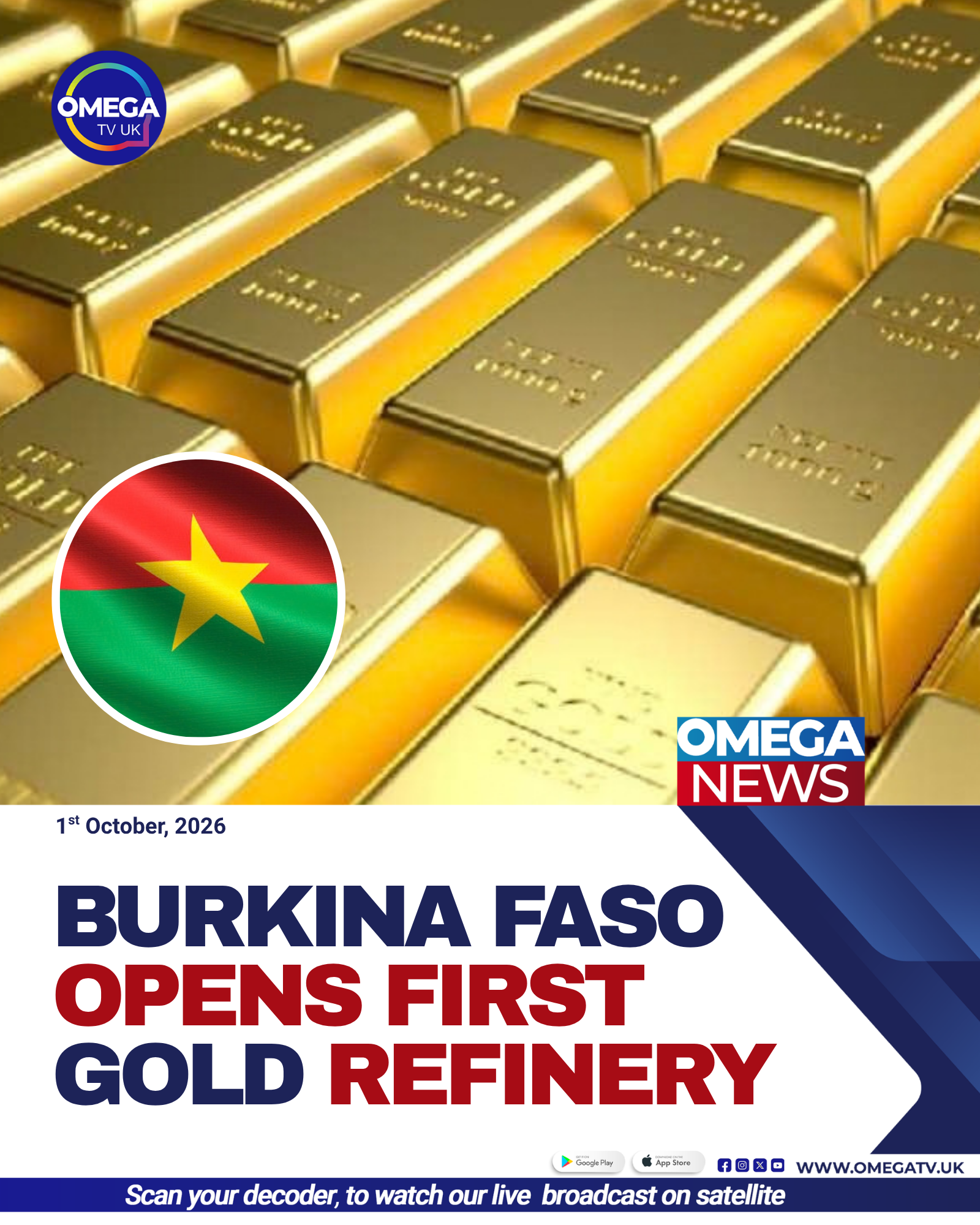
Burkina Faso has opened its first gold refinery as it seeks to exert greater control over its mining sector and secure a bigger slice of the value of its natural resources.

The National Gold Refinery of Burkina Faso, RAFFINOR-BF, was inaugurated on Monday in the capital, Ouagadougou, by Captain Ibrahim Traore. The country is Africa’s third-largest producer of gold, with output last year of more than 94 tonnes, according to the World Gold Council.
However, authorities have struggled to control the informal mining sector, exacerbated by jihadist violence and smuggling. The presidency described the refinery as a milestone for the country’s economic independence. Traore, who staged a coup in 2022, has been embarking on a programmatic offensive to increase domestic control of Burkina Faso’s natural resources and industrial production.
The government has nationalised several gold mines and has promoted local production of cotton, tomatoes and textiles, among other goods. “Our ambition is no longer to be a country that simply extracts and ships our raw materials abroad,” the presidency quoted Traore as saying. He said that the government wanted to refine metals locally, and to develop the complete value chain within Burkina Faso.
The country suspended exports of gold from informal mining in 2024, in order to organise the sector, said Mines Minister Yacouba Zabre Gouba. Traore has accused jihadists of facilitating the smuggling of gold out of the country, which he said was funding terrorism. Burkina Faso remains engaged in a deadly fight against jihadist groups which control parts of the country and launch attacks.
The government has mobilised a civilian volunteer force to help the military in the fight. Gold has become more valuable as prices hit records and traffickers are taking advantage of the situation in the Sahel. The presidency said that RAFFINOR-BF has an annual production capacity of 164 tonnes of gold and could be expanded to a maximum of 515 tonnes.
The refinery has been under construction since 2023 and cost 11 billion CFA francs ($19 million). It was financed by the Burkinabe state in conjunction with the domestic private sector. Its objective fits in with a wider government policy to extract more value from the country’s minerals and to avoid exporting raw materials.