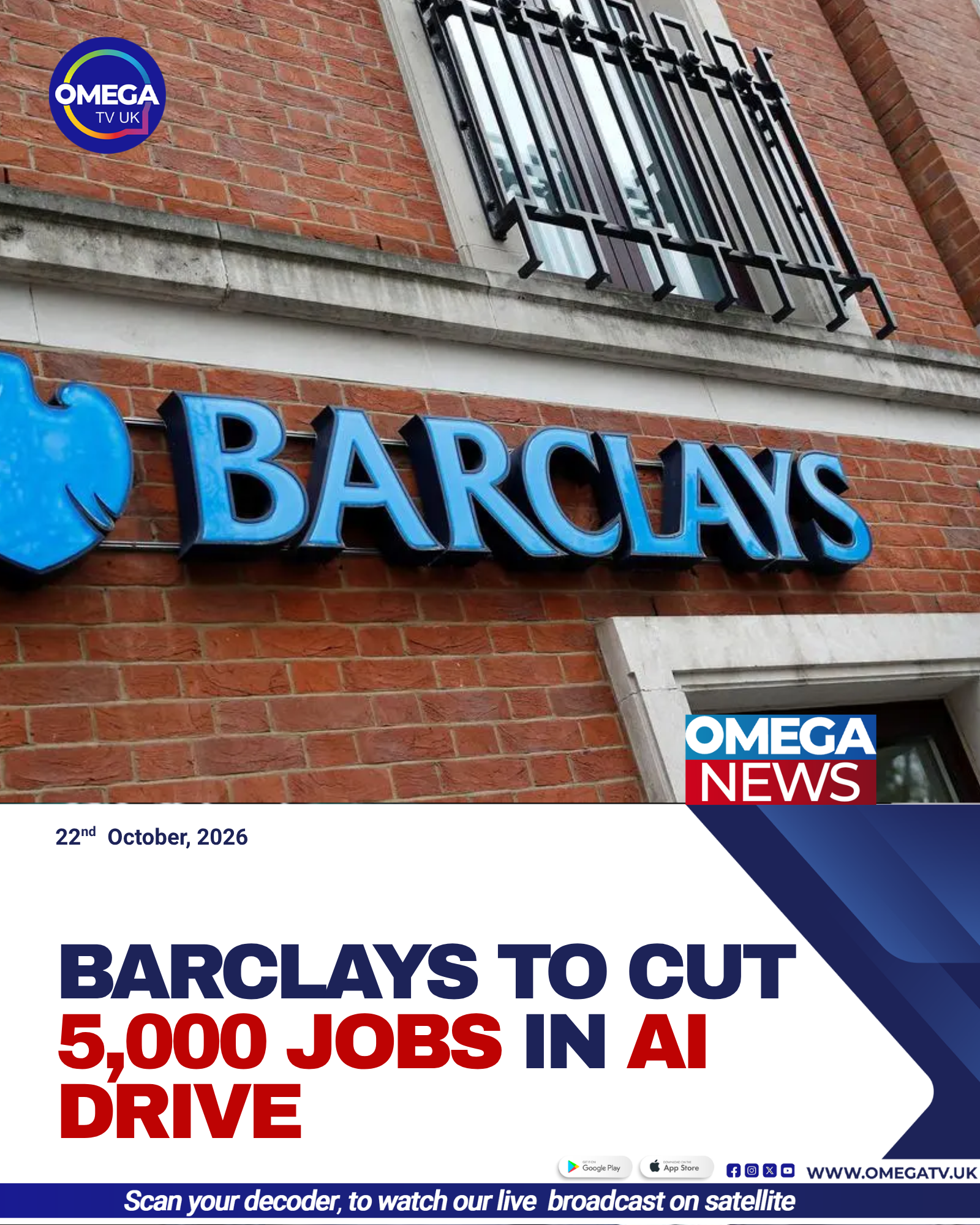
Barclays to Cut 5,000 Jobs in AI Drive
Barclays is cutting 5,000 jobs, representing around 5% of its workforce, as the British bank steps up efforts to reduce costs and improve efficiency through technology and artificial intelligence

The bank said approximately 1,000 positions had already been eliminated, with the remaining reductions expected to be completed by the end of 2026.
Most of the job losses are expected to affect the UK, particularly operational, support and functional roles. The restructuring forms part of Barclays’ wider strategy to improve productivity, reduce expenses and strengthen profitability.
Group chief executive CS Venkatakrishnan said the changes reflected investments the bank had made in technology over several years, alongside continued spending on digital systems.
The move comes as financial institutions increasingly adopt AI and automated processes to streamline operations and reduce the need for manual work across certain business functions.
Bank Defends Workforce Changes
A Barclays spokesperson said the bank was preparing its workforce for future business demands while ensuring it had the skills needed to deliver its long-term strategy.
The spokesperson said the organisation remained committed to helping employees develop their careers while responding to the changing needs of customers and clients.
Barclays has been expanding its use of AI technology to modernise existing systems and improve operational efficiency. In October, the bank announced a wider rollout of Anthropic’s Claude AI tools, including plans to increase adoption of its coding assistant among software developers.
Although such technology can help businesses automate routine activities and improve productivity, the latest restructuring highlights concerns about the potential impact of AI adoption on employment, particularly in administrative and technical roles.
Profits Rise but Miss Expectations
The announcement came as Barclays reported third-quarter pre-tax profits of approximately £2.3 billion, an increase of around 12% compared with the same period last year. However, the result fell short of analysts’ expectations, partly because of weaker performance in its fixed-income trading business.
Income from fixed-income, currencies and commodities trading fell by 19%, while equities trading income increased by 47%, reflecting contrasting performances across the investment banking business.
Following the results, Barclays shares fell by more than 2.5% during Thursday’s trading, as investors assessed the bank’s earnings and outlook.
Barclays’ decision reflects a broader shift across financial services, where banks are investing in AI and other digital tools to reduce operating costs and improve productivity.
Financial institutions are exploring how automation can streamline activities such as software development, administrative processing and customer support. These changes are also prompting questions about how employers will manage workforce reductions and retrain employees as job requirements evolve.
Earlier this year, Standard Chartered also outlined plans involving workforce reductions and a greater reliance on AI, illustrating the pressure on major banks to reassess their staffing needs.
For Barclays, the planned cuts form part of its continuing effort to make its operations more efficient while adapting to technological changes and evolving customer expectations.
The bank has said it wants to build a workforce equipped for the future, but the reductions mean thousands of employees will leave as its technology-led restructuring progresses.