US Sanctions Rwanda’s Defence Ministry Over Alleged Support for M23 Rebels
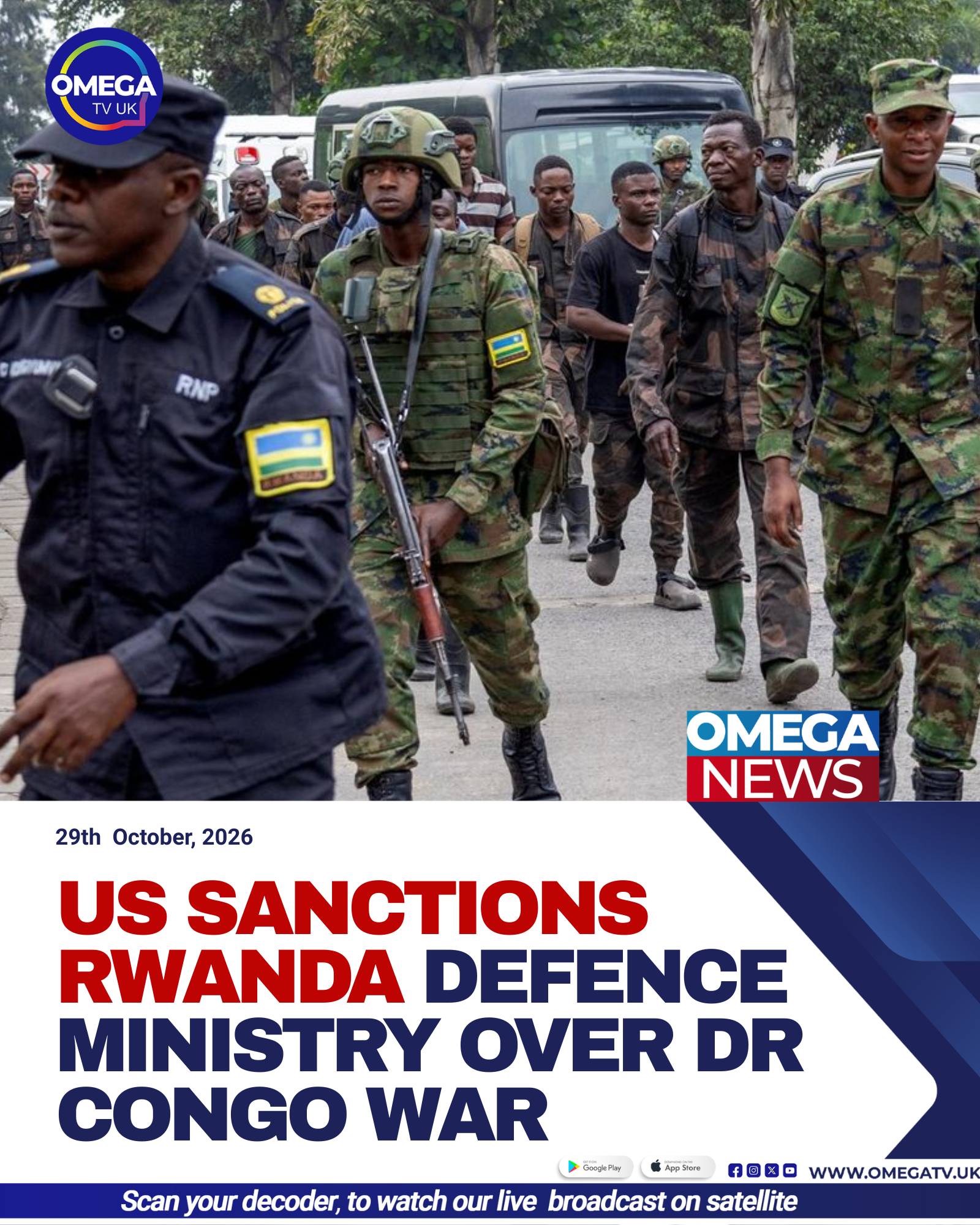
The United States has imposed sanctions on Rwanda’s Ministry of Defence over its alleged support for the M23 rebel group in eastern Democratic Republic of Congo (DR Congo), escalating pressure on Kigali to withdraw its troops and help end the conflict.

The US Treasury Department announced the measures on Wednesday, 28 October, also targeting Zigama Credit and Savings Society, a Rwandan financial institution serving the country’s security services.
US Treasury Secretary Scott Bessent called on Rwanda to end its support for M23 and withdraw its forces from eastern DR Congo, warning that Washington would hold Kigali accountable for its commitments under a US-brokered peace agreement. <Cite refs={[“turn267789search1″,”turn267789news22”]}/>
According to the US government, Rwanda’s defence ministry directed thousands of troops to operate alongside M23 fighters in the eastern Congolese provinces of North and South Kivu. Washington also alleges that Rwanda provided the rebels with weapons, military equipment, logistical assistance and training.
Rwanda has repeatedly denied supporting the rebel group.
Conflict continues despite peace agreement
The sanctions come months after Rwanda and DR Congo signed the Washington Accords for Peace and Prosperity on 4 December 2025, under US mediation. The agreement was intended to end the fighting and encourage regional trade and investment.
However, hostilities have continued in eastern DR Congo, where M23 captured the strategic cities of Goma and Bukavu in early 2025.
The conflict has displaced large numbers of civilians and heightened insecurity across the mineral-rich region, which contains important deposits of gold and coltan, a mineral used in electronics manufacturing.
The US Treasury alleges that minerals extracted from territories controlled by M23 enter supply chains in Rwanda. It also argues that Rwanda’s reported mineral exports exceed what its domestic mining industry can produce.
Washington says the measures are intended to increase pressure on Rwanda to comply with the peace agreement and address the armed conflict.
DR Congo welcomes sanctions
Congolese President Félix Tshisekedi had called for stronger international action against Rwanda ahead of the announcement.
The DR Congo government welcomed the US sanctions and urged Kigali to honour its commitments under the Washington Accords, respect international law and withdraw its troops from Congolese territory.
The measures also target Zigama Credit and Savings Society, which Washington accuses of facilitating financial transactions worth tens of millions of dollars for M23 and its political wing.
The US Treasury further alleges that the institution helped finance military equipment purchases for Rwandan forces and facilitated the transportation of gold from rebel-controlled areas into Kigali.
Rwanda defends its position
Rwanda has maintained that its security concerns must also be addressed as part of any lasting peace agreement.
Government spokesperson Yolande Makolo told the BBC that the accords included commitments concerning the neutralisation of the Democratic Forces for the Liberation of Rwanda (FDLR), an armed group linked to perpetrators of the 1994 genocide.
Makolo argued that these commitments had not been fulfilled and said Rwanda remained prepared to implement the agreement if DR Congo also met its obligations and the mediator held all parties accountable.
Kigali considers the FDLR a security threat and has cited the group’s presence in eastern DR Congo to justify its military posture.
Further pressure on Rwanda
The latest sanctions follow earlier US measures imposed in March 2026 against Rwanda’s Defence Force and four senior military officials. Washington also sanctioned a Rwandan gold refinery and companies accused of facilitating the smuggling of conflict minerals in June.
Pressure on Rwanda has extended beyond the conflict itself. US senators have questioned the NBA’s commercial relationship with the country, while Rwanda’s international sports sponsorship arrangements have also faced scrutiny.
The sanctions freeze designated entities’ assets under US jurisdiction and generally prohibit US individuals and businesses from conducting transactions with them unless authorised or exempt.
With fighting continuing despite diplomatic efforts, Washington is seeking to use financial pressure to reinforce the peace agreement. The impact of the latest measures will depend on whether they prompt changes in Rwanda’s military involvement and help create conditions for a lasting settlement in eastern DR Congo.