
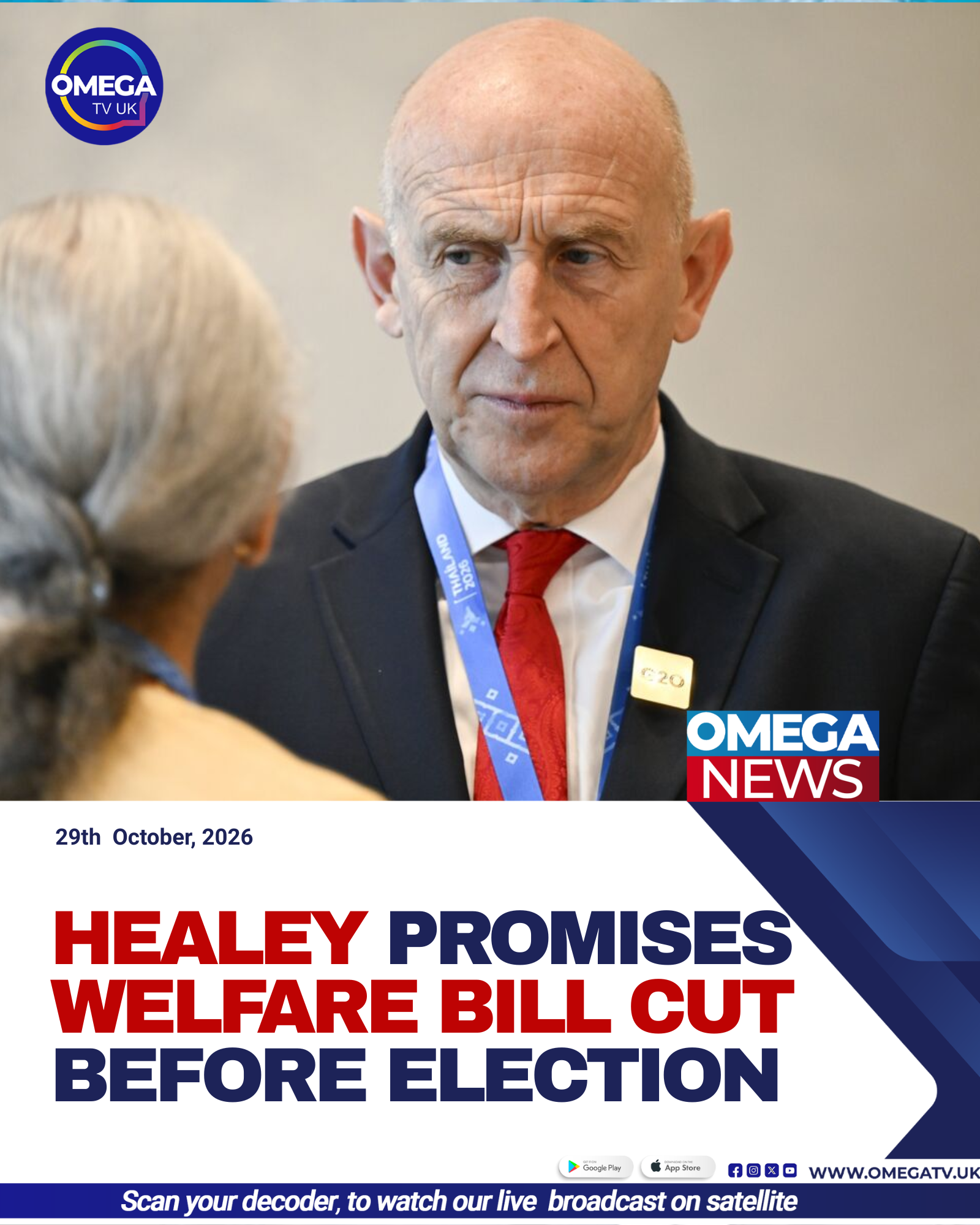
Healey Pledges to Reduce UK Welfare Bill Before Next General Election
UK Chancellor John Healey has pledged to reduce government spending on benefits before the next general election, following criticism that his first Budget failed to provide sufficient detail on welfare reform.

Speaking to BBC Radio 4’s Today programme on Wednesday, 28 October, Healey said the government had a “moral duty” to help nearly one million young people who are not in employment, education or training.
He argued that helping young people develop their skills, find work and contribute to the economy would support efforts to reduce welfare spending over the longer term.
Pressed on whether the benefits bill would fall before the next election, Healey said: “There will be a reduction in the benefits bill, we’ll do that in a Labour way.”
He added that allowing welfare spending to continue rising indefinitely was neither good for Britain nor consistent with progressive policies.
The pledge comes as the government prepares further changes to the welfare system, with more detailed proposals expected after two major reviews are completed. <Cite refs={[“turn161710search0″,”turn414470search4”]}/>
Welfare spending faces growing pressure
Government figures cited alongside the Budget show that welfare spending is forecast to rise by £19 billion this financial year to approximately £353 billion.
The Office for Budget Responsibility (OBR) expects the annual bill to reach around £431 billion by 2031–32, driven largely by spending on pensions, health-related benefits and disability support.
The projections have intensified debate over how the government can control spending while ensuring people who need financial assistance continue to receive support.
Healey said the government would avoid what he described as “crude cuts”, arguing instead that reforms should help people overcome barriers to employment while maintaining appropriate support for those unable to work.
Opposition criticises lack of detail
Conservative leader Kemi Badenoch criticised the Budget, accusing the government of prioritising welfare spending while placing increasing pressure on public finances.
She argued that the benefits bill was rising by tens of billions of pounds and described the current system as out of control.
Former chancellor and Conservative MP Sir Jeremy Hunt also criticised the lack of detail on welfare reform. He said the government had missed an opportunity to explain how it planned to help hundreds of thousands of young people move from benefits into employment.
Hunt warned that delaying difficult decisions could make reform more challenging in the future.
Liberal Democrat leader Sir Ed Davey said welfare reform needed to be handled carefully, with a focus on helping people into work while ensuring those who require care and support continue to receive it.
Helen Miller, director of the Institute for Fiscal Studies, said the government still faced difficult decisions, particularly concerning disability benefits and support for young people.
Reviews expected to shape future reforms
Healey told MPs that two reviews would help determine the government’s next steps.
A disability benefits review, co-chaired by Labour minister Sir Stephen Timms, is examining how disability support should operate in the future. A separate review led by former minister Alan Milburn is considering the challenges facing young people who are not in education, employment or training.
The government expects the reviews to provide recommendations that will inform its response and future legislation.
The Budget confirms that the government intends to respond before the end of 2026, with a White Paper expected in early 2027 and legislation to follow later that year.
£100 energy payment announced
The Budget also included a one-off £100 energy payment for eligible households to help with rising bills.
The payment will be available to households in council tax bands A to D in England, with devolved governments planning equivalent support in Wales and Scotland. The measure is intended to provide some relief during the winter, although critics have questioned whether it will be enough to offset higher energy costs.
The government also plans to abolish gas standing charges during 2027, transferring the costs into unit prices. This could benefit households with lower gas consumption but increase costs for heavier users.
Healey acknowledged that government payments could not eliminate all the financial pressures facing families, particularly those linked to the conflict in the Middle East and higher energy prices.
With welfare reform still awaiting detailed proposals, the chancellor faces pressure to demonstrate how the government will reduce spending while supporting vulnerable people and helping more people enter employment.


