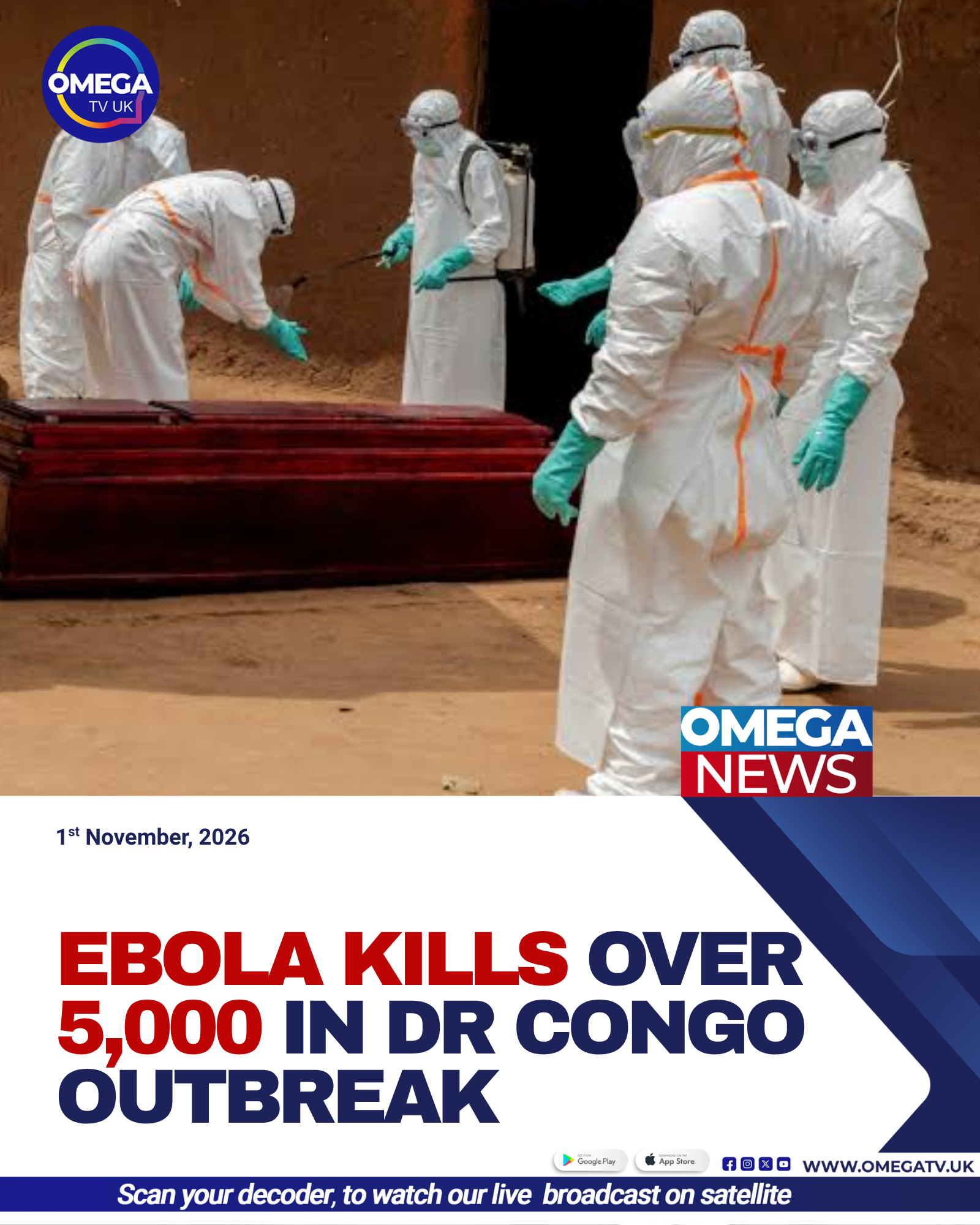
Ebola Outbreak in DR Congo Claims More Than 5,000 Lives
More than 5,000 people have died from an Ebola outbreak in the Democratic Republic of Congo (DR Congo), as the country continues to battle its deadliest epidemic of the disease.

The latest government figures, released on Saturday, October 31, show that 5,026 people have died out of 10,351 recorded infections, representing a fatality rate of approximately 48.6%.
The outbreak, caused by the Bundibugyo strain of the Ebola virus, was declared in May and has spread across eight of the country’s 26 provinces. It has become the second-deadliest Ebola outbreak recorded globally, behind the West African epidemic of 2014 to 2016, which claimed more than 11,000 lives.
The hardest-hit areas remain in eastern DR Congo, particularly Ituri and North Kivu provinces. The spread of the virus has been difficult to contain because of armed conflict, limited access to affected communities and pressure on already stretched healthcare services.
Public health officials have also raised concerns about delays in detecting infections, with many patients dying outside treatment centres before receiving medical attention.
According to health officials, the outbreak has spread across 67 of the country’s 178 health zones. Nearly 80 per cent of new infections are reportedly being identified outside the networks of contacts already being monitored, making it harder to trace transmission and prevent further spread.
The response has also been affected by attacks on healthcare workers and resistance from some communities. Earlier this week, a nurse was killed and another health worker seriously injured while responding to an Ebola alert. They were reportedly attacked by local youths who accused them of contaminating water sources and spreading the virus.
A politician who had promoted Ebola prevention measures was also beaten to death in September. In addition, Red Cross volunteers have faced attacks, with an ambulance reportedly set on fire during earlier incidents.
The Bundibugyo strain responsible for the outbreak has no approved vaccine or specific treatment. Patients are currently given medical care aimed at managing their symptoms and complications, while public health teams continue testing, surveillance and other containment measures.
The outbreak has also crossed international borders. Kenya and Uganda have reported infections linked to the wider epidemic, while Nigeria confirmed an imported case involving a woman who had travelled through Uganda. She and her husband were subsequently evacuated to Switzerland.
Nigeria’s health authorities also investigated two suspected cases in the country’s north-east. However, the Nigeria Centre for Disease Control and Prevention confirmed on Sunday that samples from both individuals tested negative after two rounds of testing.
The World Health Organization has called for stronger outbreak control measures, improved access to affected areas and greater community engagement to help stop transmission.
The current epidemic is the 17th recorded in DR Congo’s history and has become a major public health emergency, with insecurity, limited healthcare resources and community mistrust continuing to complicate efforts to contain the virus.