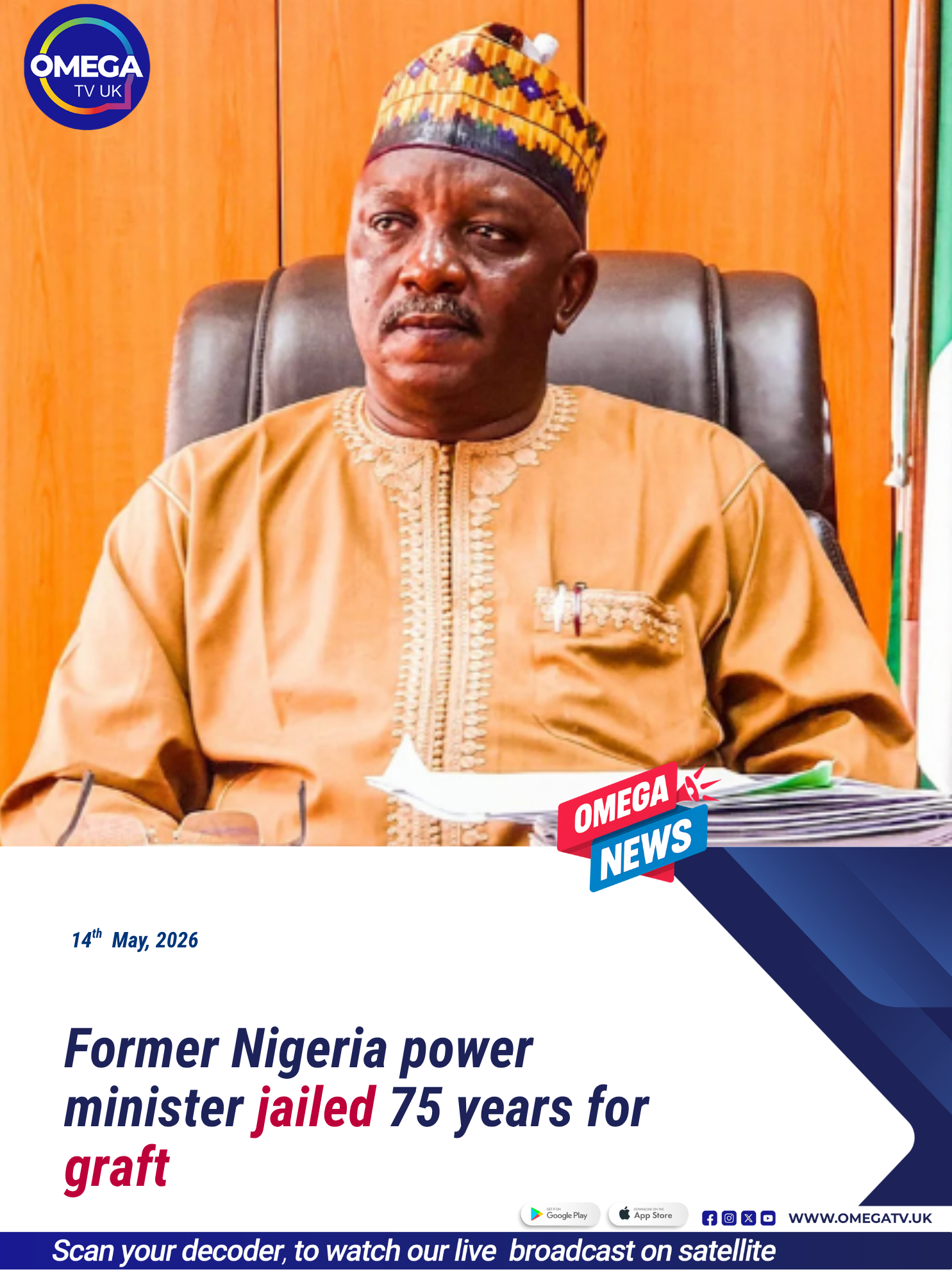
Former Nigerian power minister Saleh Mamman sentenced to 75 years for corruption
A Nigerian court has sentenced former Minister of Power Saleh Mamman to 75 years in prison after finding him guilty of laundering billions of naira linked to hydro-electricity projects.

The ruling was delivered on Wednesday by the Federal High Court in Abuja, marking one of the most significant anti-corruption convictions involving a former senior official from ex-President Muhammadu Buhari’s administration.
According to Nigeria’s anti-corruption agency, the Economic and Financial Crimes Commission (EFCC), Mamman was convicted for laundering 33,800,000,000 naira, equivalent to approximately $24,600,000.
Justice James Omotosho of the Federal High Court in Abuja sentenced Mamman in absentia, meaning the judgment was delivered without him being physically present in court.
Authorities said the funds were siphoned from hydro-electricity projects intended to improve Nigeria’s struggling power sector. The case centers on the diversion of public funds allocated to critical infrastructure projects aimed at addressing the country’s chronic electricity shortages.
Nigeria, Africa’s fourth-largest economy and the continent’s leading oil producer, has long faced severe electricity challenges due to aging infrastructure, inadequate generation capacity, and an unstable transmission grid.
Despite its large energy resources, millions of Nigerians continue to experience limited or no access to electricity. According to the World Bank, more than 40 percent of the country’s population lacks access to grid electricity.
The conviction is particularly notable because Mamman is reportedly the first former minister from Buhari’s administration to receive a prison sentence for corruption. Buhari, who served as president from 2015 to 2023, built much of his political reputation on anti-corruption promises and public accountability.
During his presidency, Buhari repeatedly positioned his administration as committed to fighting financial crimes and recovering stolen public funds. However, his government also faced criticism over allegations of selective prosecution and persistent corruption within state institutions.
Mamman served as Nigeria’s Minister of Power between 2019 and 2021, overseeing a sector already under pressure from public dissatisfaction and infrastructure deficits.
The EFCC announced the conviction in a statement shared on social media platform X, describing the case as a major milestone in its anti-graft campaign.
Several other former high-ranking officials from Buhari’s government are also currently facing separate corruption-related investigations or trials. These reportedly include a former justice minister, an ex-central bank governor, and a former labour minister.
The latest ruling is expected to reignite national conversations around public sector accountability, infrastructure corruption, and governance reform in Nigeria.
Corruption in the power sector has long been a politically sensitive issue in Nigeria, where billions of dollars have been invested over the years with limited visible improvements in electricity supply.
Repeated reform initiatives have struggled to resolve the country’s energy crisis, which continues to affect businesses, households, and economic productivity.
Analysts say the conviction may be seen as a test of Nigeria’s willingness to pursue accountability at the highest levels of government, especially as the country seeks to improve investor confidence and public trust.
No immediate statement was reported from Mamman or his legal representatives following the sentencing.
The case adds to a growing list of corruption prosecutions in Nigeria as anti-graft agencies face pressure to demonstrate stronger enforcement and institutional independence.