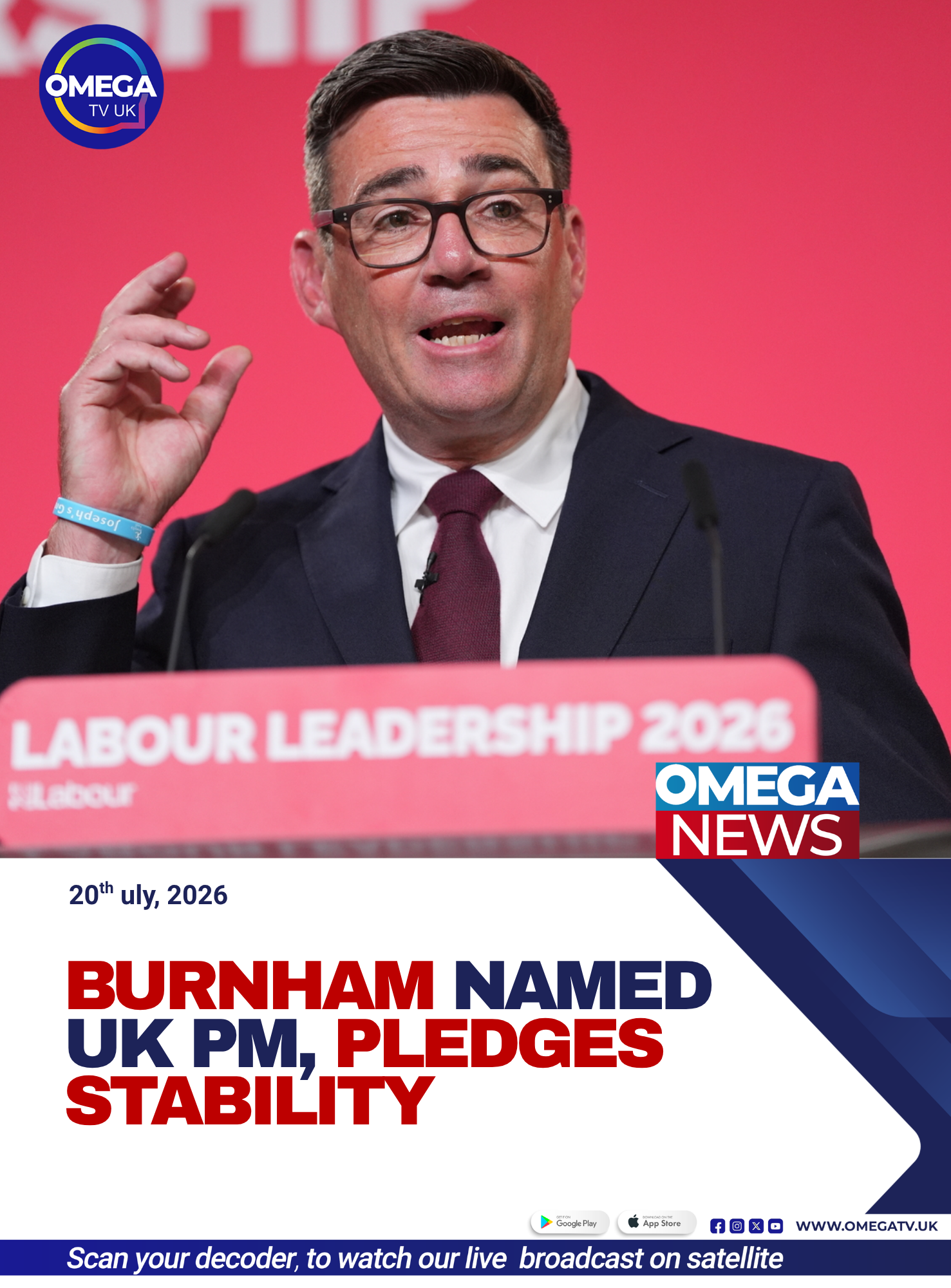
Andy Burnham is set to become the United Kingdom’s new prime minister today, marking another major political transition as he replaces Sir Keir Starmer at the head of government.

Burnham will formally assume office after Sir Keir submits his resignation to King Charles III at Buckingham Palace. The King will then invite Burnham to form a new government before the incoming prime minister heads to Downing Street to deliver his first address to the nation.
In his inaugural speech outside Number 10, Burnham is expected to promise “more breathing room” for the British public while committing to a more “stable and responsible” style of politics. His message is expected to focus on tackling the cost-of-living crisis, strengthening the economy, and restoring confidence in government after years of political uncertainty.
The leadership transition comes just days after Burnham was elected Labour Party leader, paving the way for his move into Downing Street. His appointment makes him Britain’s fifth prime minister in just four years, highlighting a period of significant political instability in the country.
Before leaving office, Sir Keir Starmer will deliver a farewell address reflecting on his time as prime minister before travelling to Buckingham Palace to formally resign. Burnham will then meet King Charles III, who will officially ask him to form a new government.
Attention will quickly turn to Burnham’s first cabinet appointments and the priorities of his administration. Speculation has continued over who will occupy key ministerial positions, including the influential role of Chancellor of the Exchequer.
Burnham has already indicated that his government will remain committed to Labour’s 2024 election manifesto while pursuing bolder reforms aimed at improving living standards and devolving more power to local communities.
Among the policies expected under the new administration are increased public investment, greater public control of key services, and measures designed to stimulate economic growth. Reports have also suggested the government could announce proposals for tax changes, including a possible reduction in income tax, although no formal details have yet been confirmed.
Opposition leaders have congratulated Burnham while also questioning his readiness for office. Conservative leader Kemi Badenoch wished him success but argued that he begins his premiership without a “clear plan” to address the country’s biggest challenges.
Despite the criticism, Burnham enters office with strong backing from the Labour Party and trade unions, having secured overwhelming support during the party’s recent leadership contest.
His leadership is expected to place renewed emphasis on regional development, economic fairness, and rebuilding trust in politics after years of leadership changes.
As Britain begins another political chapter, Burnham faces immediate pressure to deliver on promises to improve the economy, reduce the cost of living, and provide stable leadership at a time of domestic and international uncertainty.
The coming weeks will reveal the shape of his government and whether his pledge to bring greater stability can translate into lasting political and economic change.