BoG Urges Lenders to Use GH¢4.99trn MoMo Data to Support Informal Businesses
The Bank of Ghana (BoG) has called on banks, telecommunications companies, fintech firms and other financial service providers to use mobile money transaction records to improve access to affordable loans for traders and entrepreneurs in the informal sector.

The central bank believes the growing volume of digital financial transactions in the country could help lenders identify businesses that are financially active but remain excluded from traditional credit facilities.
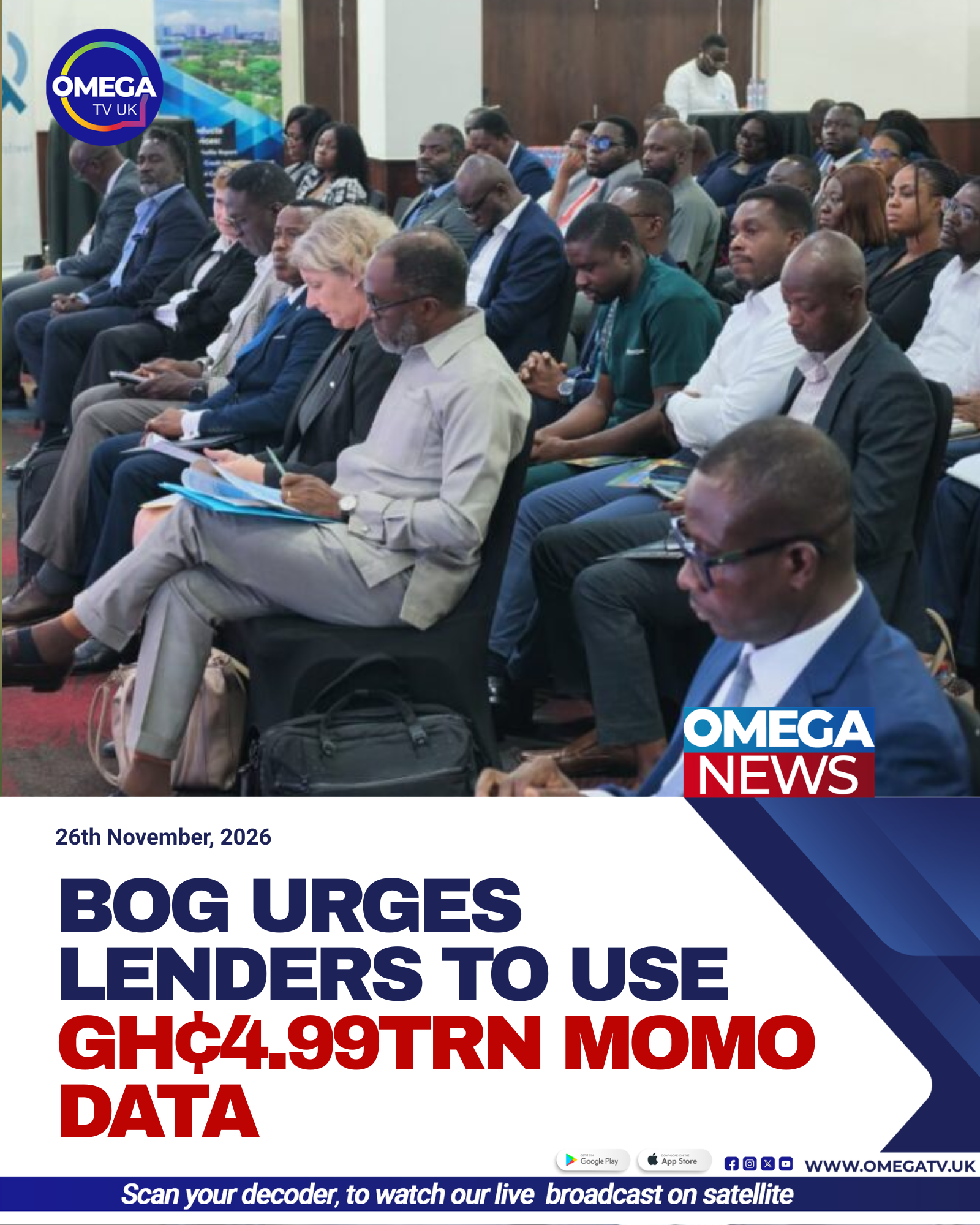
The appeal was made by the Second Deputy Governor of the Bank of Ghana, Mrs Matilda Asante Asiedu, during the Ghana Credit Data Providers Conference held in Accra on Wednesday.
Her speech was delivered on her behalf by Dr Settor Kwabla Amediku, Special Aide to the Governor on Financial Stability.
The conference was organised by the Bank of Ghana with support from the International Finance Corporation (IFC) and Switzerland’s State Secretariat for Economic Affairs (SECO). It brought together stakeholders to discuss ways of strengthening Ghana’s credit reporting system.
Mrs Asiedu highlighted the growing importance of mobile money in Ghana’s economy, revealing that transactions between January and October 2026 had reached approximately GH¢4.99 trillion.
In October alone, the country recorded 1.093 billion mobile money transactions valued at GH¢552.1 billion, representing an increase of about 27 per cent compared with the same period in 2025.
Ghana News Agency+1
She said the widespread use of mobile money by traders and small businesses presented an opportunity to develop alternative ways of assessing their financial strength and ability to repay loans.
According to her, many informal sector operators already use digital platforms to receive payments, purchase supplies, settle business transactions and pay utility bills. However, these activities are often not recognised under conventional lending assessments.
She referenced a 2024 Ghana Statistical Service report indicating that micro, small and medium-sized enterprises (MSMEs) employ 78.3 per cent of the country’s workforce.
Despite their contribution to employment, household income and economic growth, many businesses in the sector continue to struggle to obtain affordable financing.
Mrs Asiedu noted that credit bureau coverage had improved from 33.2 per cent in 2019 to 60 per cent by December 2025. However, a significant number of individuals and businesses remain outside the formal credit system.
She explained that transaction records could help lenders understand how much businesses earn, how regularly they receive payments and whether they meet their financial obligations, even when they do not have audited financial statements.
The Second Deputy Governor recalled that in 2015, when mobile money was still developing in Ghana, street vendors selling water often struggled to access credit.
She said the situation had changed, with some traders now able to obtain small digital loans, use the money for their businesses and repay the amount within the same day.
Mrs Asiedu stressed that such financial activities could provide useful information for assessing borrowers, although transaction records alone could not guarantee that a person would repay a loan.
BoG Calls for Responsible Use of Financial Data
The central bank also encouraged banks, fintech companies and mobile money operators to work together to develop suitable financing products for informal businesses.
Possible arrangements include short-term loans and Buy Now, Pay Later services that could help traders manage their daily business needs.
Mrs Asiedu said improving economic conditions, declining interest rates and a more stable cedi could create opportunities for financial institutions to introduce lending products based on reliable transaction data.
However, she emphasised that expanding access to credit should not mean weakening lending requirements.
“We are not asking financial institutions to lower their credit standards. We are asking them to raise the quality of information they use to assess borrowers,” she said.
She identified five important safeguards for the use of alternative credit information: data accuracy, privacy and data protection, fairness in the use of artificial intelligence, transparency and the right to challenge incorrect information, as well as responsible lending and the protection of sensitive data.
The Deputy Head of Cooperation at the Embassy of Switzerland, Magdalena Wüst, also highlighted the importance of alternative data in improving access to finance.
She said information showing how businesses earn money, make payments and meet financial commitments could help lenders assess borrowers more accurately.
Wüst added that better credit information would allow financial institutions to extend loans on fairer terms to businesses that contribute to employment and economic development.
Ghana News Agency+1
New Association Expected to Strengthen Credit Reporting
The two-day conference is also expected to develop plans for establishing a Credit Data Providers Association.
The proposed organisation would bring together banks, insurance companies, fintech firms, telecommunications operators, utility providers, credit reference bureaus and other businesses involved in providing credit-related services.
It is expected to establish common reporting standards, strengthen compliance and improve cooperation among institutions that share financial information.
The initiative forms part of broader efforts to build a more inclusive credit reporting system in Ghana.
The Bank of Ghana hopes that using reliable digital transaction records will make it easier for informal sector traders and small business owners without conventional credit histories to demonstrate their financial capacity and access appropriate loans.