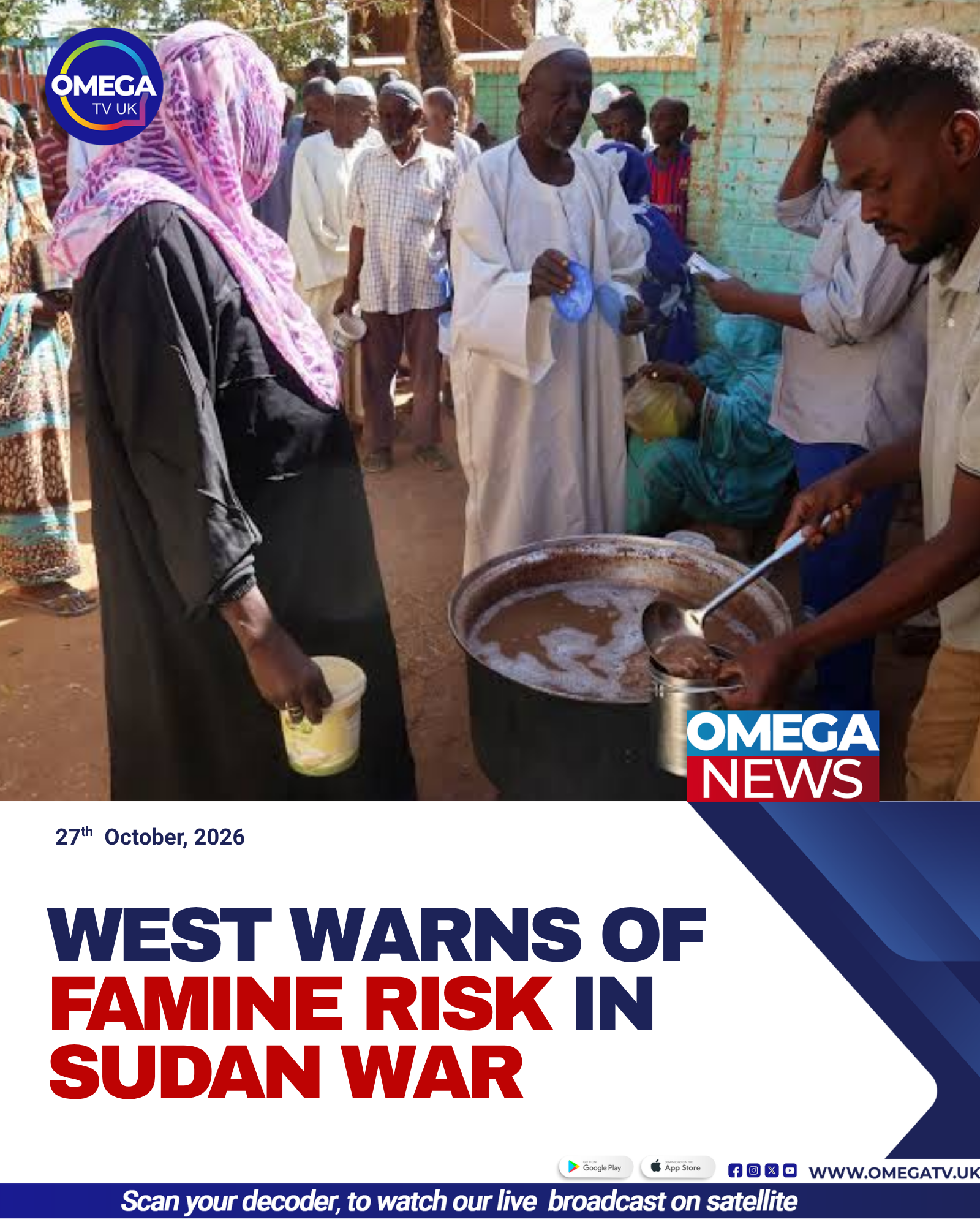
Western Nations Warn of Famine Risk in Sudan as Civil War Deepens Hunger Crisis
The United States, the United Kingdom and more than 30 other countries have warned of a worsening food crisis in Sudan, urging the rival forces fighting the country’s civil war to allow humanitarian aid to reach millions of people at risk of severe hunger.

In a joint statement published on Monday, 26 October, the signatories described an “alarming deterioration” in food security and warned that urgent action was needed to prevent famine in the coming months.
An estimated 19.5 million people, representing 41% of Sudan’s population, are experiencing high levels of acute food insecurity. Around five million people are facing emergency levels of hunger, while the number of children suffering from severe acute malnutrition could exceed 825,000 without immediate intervention. <Cite refs={[“turn980817search0″,”turn980817search2”]}/>
The statement was signed by the United States, the United Kingdom, the European Commission and numerous European and other Western governments, including Canada, Australia, Switzerland and Norway.
Civil war driving hunger crisis
Sudan’s conflict began in April 2023 following a power struggle between the Sudanese Armed Forces and the paramilitary Rapid Support Forces (RSF).
The fighting has displaced millions of people, damaged critical infrastructure and disrupted food production, healthcare services, supply chains and local markets. Humanitarian agencies have struggled to provide sufficient food and medical assistance as insecurity and restrictions continue to limit their operations.
Yusuf Roble, regional director for Islamic Relief East Africa, told BBC Newsday that people returning to Omdurman were finding homes destroyed or looted, leaving many families with little to rebuild their lives.
He described the situation facing displaced households, including a mother of seven whose husband, the family’s sole breadwinner, had been missing for three and a half years.
Some families are relying on community kitchens for meals, but these services are also struggling with funding shortages.
Roble said that by September, only around 40% of Sudan’s 2026 humanitarian needs plan had been funded, leaving significant gaps in the assistance available to vulnerable communities.
Aid restrictions and drought worsen conditions
The joint statement identified restrictions on humanitarian access as a major obstacle to preventing famine. Signatories called on both sides of the conflict to remove barriers to aid deliveries and guarantee safe, rapid and unhindered access for humanitarian workers.
They also urged the warring parties to protect aid personnel and civilian infrastructure, including agricultural facilities and essential services.
The crisis is being compounded by the effects of El Niño, which has contributed to reduced rainfall and increased drought across more than half of Sudan. These conditions are worsening food shortages, damaging livelihoods and placing further pressure on communities already affected by conflict and displacement.
The signatories warned that the number of areas facing severe food insecurity could double if conditions continue to deteriorate.
They called for humanitarian operations to be permitted through routes crossing front lines and international borders, including air access into Darfur, to speed up relief deliveries and support medical evacuations.
Children among those most at risk
Children are particularly vulnerable to the worsening crisis. The projected figure of more than 825,000 children facing severe acute malnutrition highlights the scale of the nutritional emergency.
Without adequate food, clean water and healthcare, malnourished children face increased risks of serious illness and death.
A June assessment by the United Nations-backed Integrated Food Security Phase Classification estimated that 5.1 million people in Sudan faced severe hunger. A subsequent alert issued in October warned that conflict, mass displacement, drought and inadequate humanitarian funding were increasing the risk of famine across parts of Greater Darfur and Greater Kordofan. <Cite refs={[“turn980817search8″,”turn980817search11”]}/>
International community urged to act
The Western governments said the parties to the conflict bear primary responsibility for alleviating the suffering of Sudanese civilians. They called on the wider international community to increase humanitarian funding and support efforts to deliver assistance to those most in need.
The statement stressed the urgency of preventing further deterioration, warning that delays and continued restrictions could undermine attempts to avert famine.
With millions facing hunger and humanitarian organisations struggling to meet growing needs, the focus is now on securing safe access for aid workers, restoring essential services and ensuring that vulnerable families receive food and medical support.
The signatories said immediate action was necessary to prevent famine and reduce further suffering among Sudan’s population.