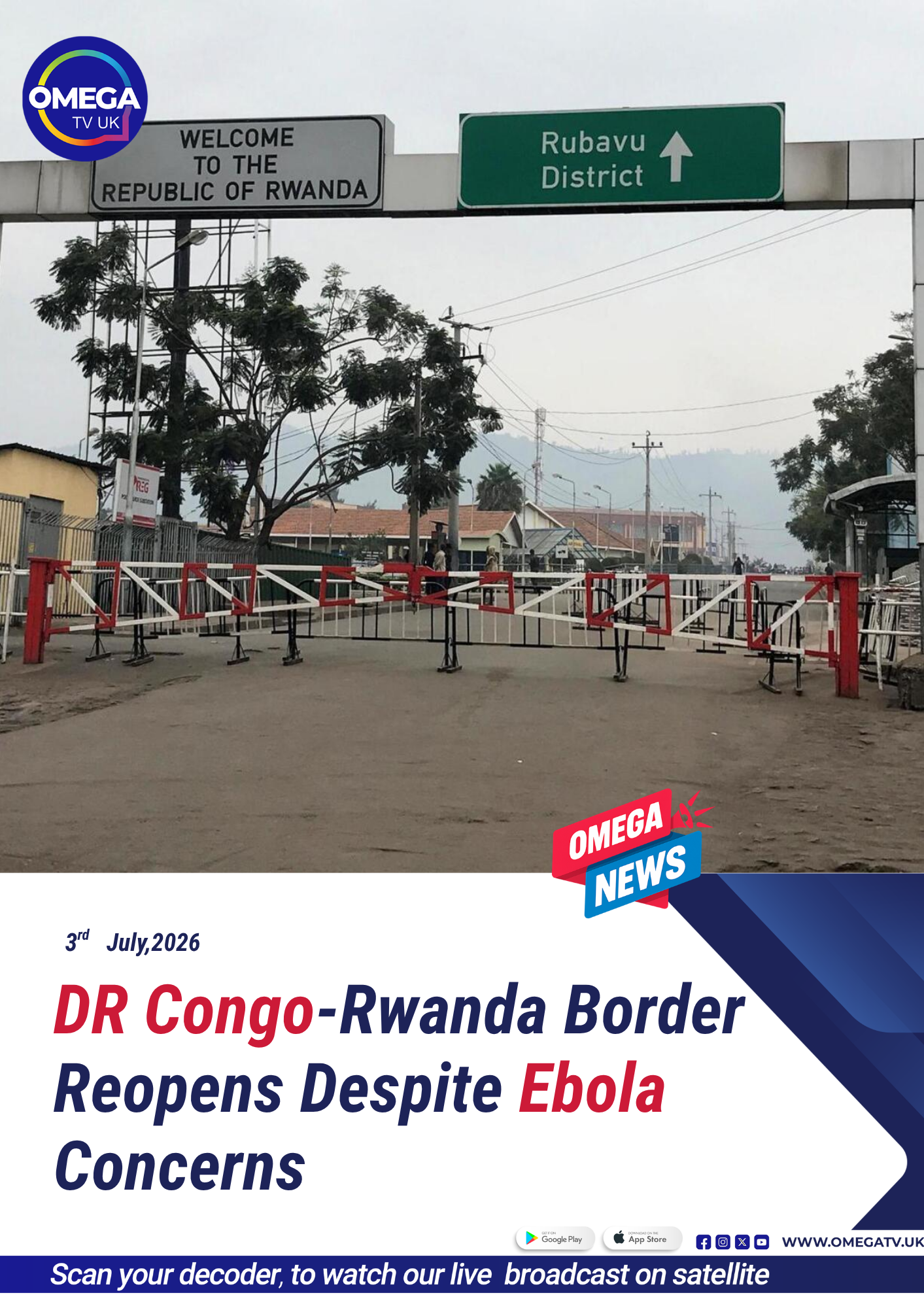
DR Congo-Rwanda Border Reopens After Ebola Closure, Bringing Relief to Goma Residents
The border between the Democratic Republic of the Congo and Rwanda reopened late Thursday after being closed since May because of the ongoing Ebola outbreak, providing a major boost to residents and businesses in the eastern Congolese city of Goma.

The reopening was announced in a statement issued by the Rwanda-backed M23 rebel group, which has controlled Goma since capturing the city early last year. The border closure had severely disrupted daily life, with thousands of traders, transport operators and workers unable to cross between the neighbouring countries.
Goma’s economy relies heavily on cross-border commerce, particularly since the city’s airport has remained closed following the M23 takeover. The shutdown left many residents dependent on the land crossing into Rwanda for trade, employment and international travel.
Local residents welcomed the reopening, describing it as a lifeline for families whose incomes had been badly affected during the closure. Goods courier Didier Mbombo said the border’s reopening would allow people to resume work and once again provide for their households after weeks of economic hardship.
Trader Joviale Bigombire also expressed relief, explaining that the inability to cross into Rwanda had made it extremely difficult to conduct business. For many small-scale traders in Goma, cross-border trade represents their primary source of income.
Although Goma has recorded at least one laboratory-confirmed case of the Bundibugyo strain of the Ebola virus, the city has largely escaped the worst of the outbreak, which has devastated Ituri Province in northeastern DR Congo.
Health authorities report that the outbreak has resulted in more than 1,400 confirmed infections and over 400 deaths, making it one of the country’s most significant public health emergencies in recent years.
The World Health Organization has consistently advised against closing international borders during Ebola outbreaks, arguing that such restrictions can hinder emergency response efforts, delay medical assistance and worsen humanitarian challenges without effectively stopping the spread of the disease.
The border reopening is expected to restore an important transport route for residents. With Goma’s airport still closed, many travellers have been forced to cross into Rwanda before continuing their journeys from Kigali International Airport, avoiding dangerous travel through conflict-affected areas deeper inside eastern Congo.
Travelling within DR Congo has become increasingly difficult due to the prolonged armed conflict that has affected the region for decades. The route through Rwanda has therefore become the safest and most practical option for international travel.
Meanwhile, researchers have launched clinical trials of a potential treatment targeting the Bundibugyo strain of the Ebola virus. Unlike the more common Zaire strain, the Bundibugyo virus currently has no approved vaccine or treatment, making the ongoing research particularly significant.
Health officials believe the outbreak spread undetected for several weeks because initial testing focused on the more common Ebola strain. Researchers hope the new experimental treatment will help improve survival rates and strengthen the response to future outbreaks if proven successful.