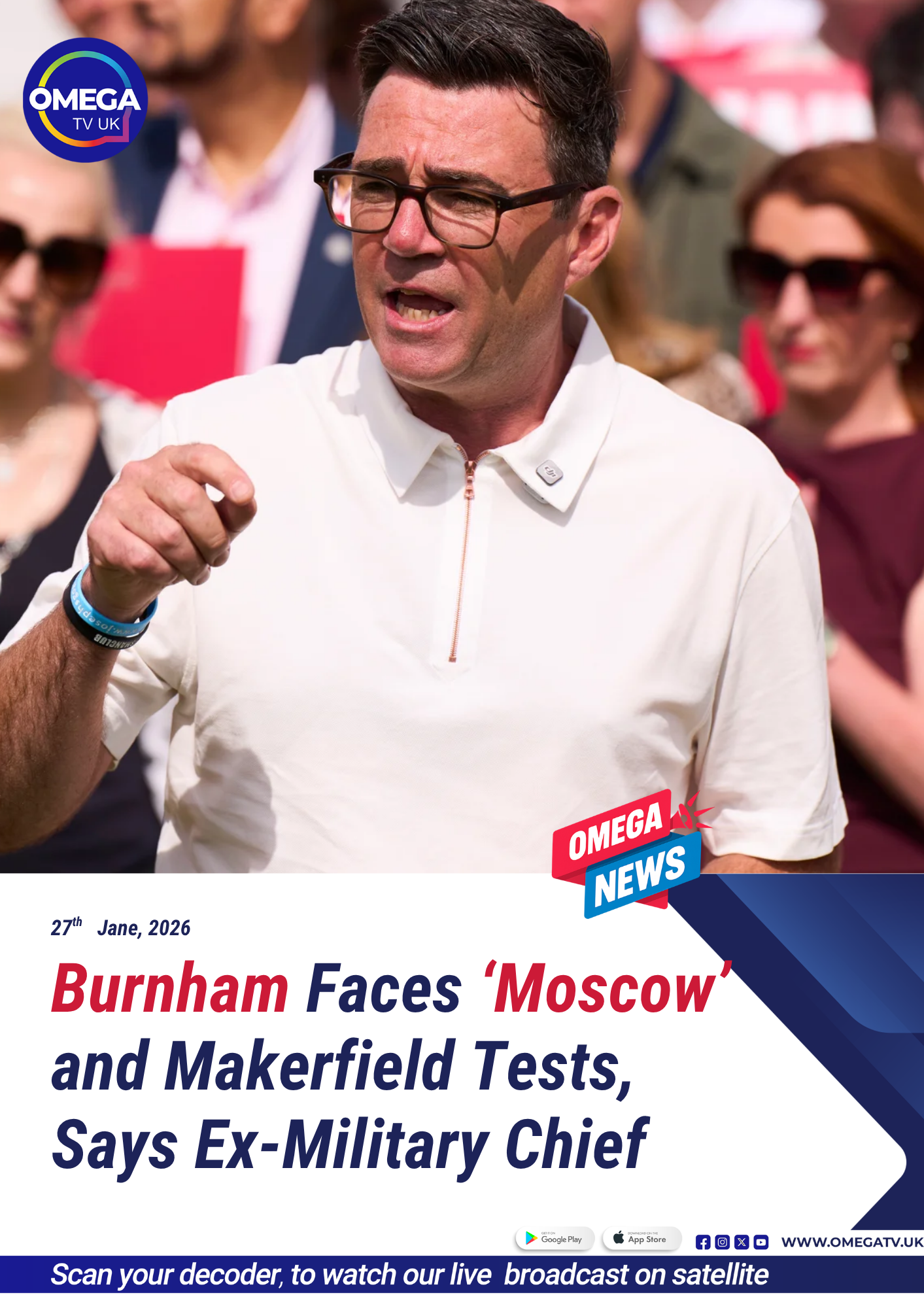
Former Chief of the Defence Staff Tony Radakin has said that any future British prime minister, including Labour leadership frontrunner Andy Burnham, will need to pass what he called both a “Makerfield test” and a “Moscow test” when shaping national security and defence policy.

Speaking on the BBC’s Sunday with Laura Kuenssberg, Admiral Sir Tony Radakin warned that the UK is operating in an increasingly dangerous global environment and suggested that the next leader may need to act “almost like a wartime prime minister” due to rising international tensions.
Burnham has previously argued that major government decisions should pass a “Makerfield test,” referencing the constituency where he was recently elected, as a way of ensuring policies directly benefit ordinary voters. However, Radakin expanded on that idea, saying Britain’s defence and foreign policy should also be measured against how it is perceived by adversaries and allies abroad.
He described the so-called “Moscow test” as a way of assessing whether UK policy demonstrates strength to rivals such as Russia, and whether Britain is seen as a credible and capable member of NATO. He also said decisions should reflect how the UK is viewed by key allies, particularly the United States.
Radakin stressed that maintaining strong defence capabilities is essential to national security. He warned that current military readiness risks falling short without increased investment, pointing to issues such as equipment shortages, maintenance challenges, and limited operational capacity across the armed forces.
He said: “We’ve been very clear in saying that we need to strengthen our armed forces… all of that at the moment is too bare,” highlighting concerns over the availability of ships, aircraft, tanks, and other military equipment.
The comments come as the UK government prepares to publish its long-awaited Defence Investment Plan (DIP), ahead of a NATO summit scheduled for July 7 in Turkey. The plan is expected to outline how the government intends to meet its commitment to raise defence spending to 3.5% of GDP by 2035.
However, internal tensions have emerged over how the funding will be secured. Reports suggest the Ministry of Defence requested an additional £28 billion in funding by the end of the decade but was only offered around £10 billion, prompting disagreements within government over priorities.
Defence Secretary John Healey and Armed Forces Minister Al Carns both previously raised concerns about the level of investment, with Healey warning that insufficient funding could lead to operational cutbacks.
Despite the disputes, the government has reiterated its commitment to increasing defence spending and maintaining strong ties with NATO allies. Officials argue that strengthening military capability is essential for both national security and international credibility.
Radakin’s intervention adds further pressure on the Labour leadership debate, highlighting the scale of global security challenges facing the next UK prime minister and the difficult balance between domestic priorities and defence commitments