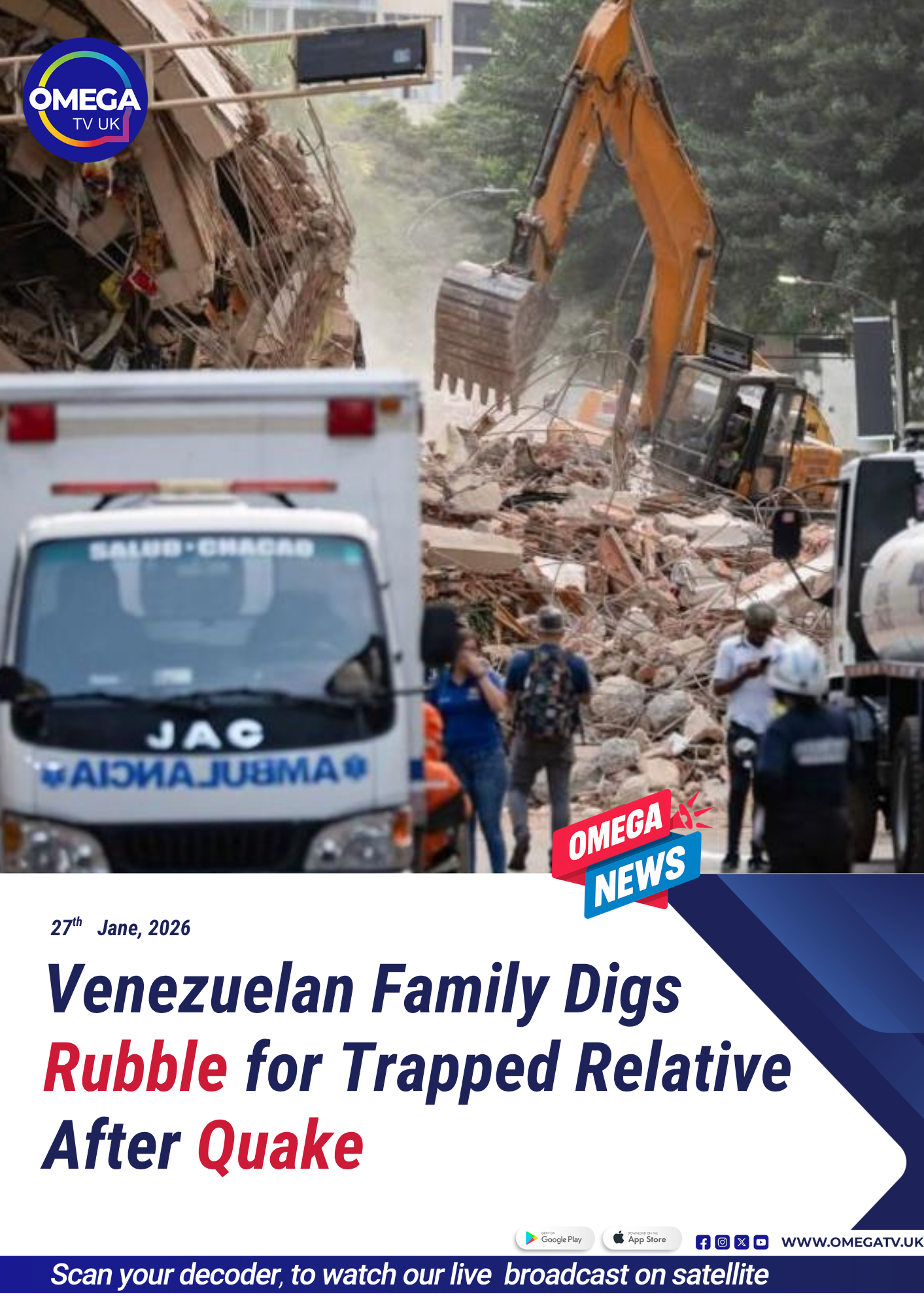
Rescue efforts in Venezuela are continuing for a third day after two powerful back-to-back earthquakes devastated large parts of the country, leaving communities in shock and thousands still unaccounted for. The disaster has killed at least 920 people and injured more than 3,360, with rescue teams racing against time to find survivors trapped beneath collapsed buildings.

Among the most harrowing accounts emerging from the disaster is that of a family who told BBC Mundo they believe a relative may still be alive under the rubble after hearing him “groan” during rescue attempts. The family has been digging desperately through debris while waiting for official rescue teams to reach the site, clinging to hope that he can still be saved.
The twin earthquakes, measuring magnitudes 7.2 and 7.5, struck within seconds of each other during a national holiday period when many people were at home. Entire neighbourhoods were flattened, and emergency services have been overwhelmed by the scale of destruction across multiple regions.
Acting President Delcy Rodríguez has expressed cautious optimism, saying she remains hopeful that more survivors will be found as rescue operations intensify. Authorities confirmed that at least 172 people are officially reported trapped, though civilian-led tracking systems suggest tens of thousands may still be missing, highlighting the uncertainty surrounding the full scale of the tragedy.
Rescue teams, supported by international aid and local volunteers, are continuing to search through collapsed structures using heavy machinery, trained dogs, and manual digging. However, damaged roads, unstable buildings, and limited communication in remote areas are slowing efforts in several regions.
Amid the devastation, there have also been moments of hope. Rescue crews have successfully pulled survivors from the rubble, including a newborn baby whose dramatic rescue has been shared widely, symbolising both the fragility of life and the persistence of hope in the disaster zone.
Hospitals remain overwhelmed, with medical workers treating large numbers of injured people while struggling with shortages of equipment, power disruptions, and overcrowding. Temporary shelters have been established across affected areas as thousands of families have been displaced from their homes.
The United Nations has described the current phase of the response as critical, warning that the next few days will determine how many more lives can still be saved. International rescue teams are continuing to arrive to support overwhelmed local services.
Seismologists say the strength and timing of the quakes contributed to the catastrophic damage, with the rapid succession of tremors leaving little time for evacuation or preparation. Experts continue to assess aftershock risks as rescue operations proceed.
As families continue to search through the rubble and wait for news of loved ones, the country remains in a state of deep uncertainty, with both grief and hope shaping the ongoing response to one of the deadliest natural disasters in recent memory.