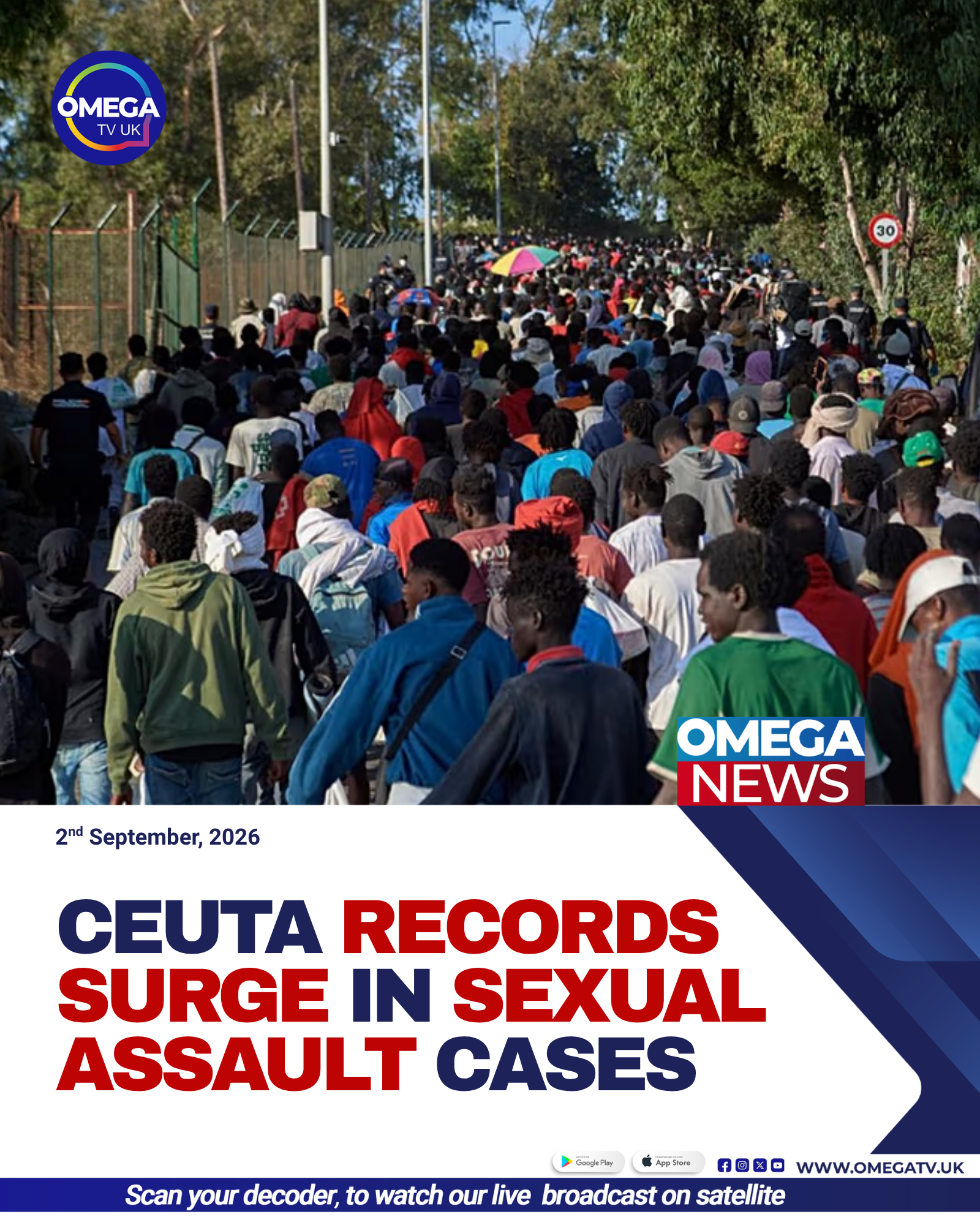
Spanish prosecutors say 23 sexual assault cases, including nine involving children, have been reported in Ceuta since a mass influx of migrants from Morocco into the Spanish-administered territory at the end of July.

Ceuta’s chief prosecutor, Silvia Rojas, said the reported cases represented almost one incident a day and warned that the actual number could be higher because some victims may not have reported attacks. She told El País that migrant girls were particularly vulnerable because of their irregular status and difficult living conditions.
About 72,000 migrants entered Ceuta on 30 and 31 July, according to figures cited by Spanish authorities. Most have since returned to Morocco, while around 5,000 people remain in the territory, including an estimated 1,400 to 1,600 children.
Spanish news agency Efe reported that suspects identified in connection with the sexual assault cases include four Moroccans, three Spaniards and one Belgian. The allegations remain subject to investigation and due legal process.
The sudden influx has placed significant pressure on Ceuta’s public services and intensified tensions between migrants and some local residents. Authorities have also reported incidents of violence linked to the broader crisis.
Medical staff at Ceuta University Hospital have treated several people suspected of being victims of sexual assault. Emergency doctor Susana Ascaso said one of the patients was a 10-year-old child.
The Spanish government has approved a multi-million-euro package aimed at supporting essential services and the care of unaccompanied children. Prime Minister Pedro Sánchez has also convened Spain’s national security council twice within a week as officials respond to the situation.
Sánchez’s government has faced criticism from opposition parties over its management of the migrant influx. Ceuta’s regional president, Juan Jesús Vivas, has called for demonstrations in support of the territory.
The developments have also added to longstanding tensions between Spain and Morocco. Rabat claims sovereignty over Ceuta and neighbouring Melilla, although both territories are administered by Spain.
Sánchez has rejected suggestions that Morocco organised the mass crossing, saying Spanish authorities have no intelligence indicating direct involvement by the Moroccan government. He has instead pointed to online disinformation, alleging that networks linked to Russia, Israel and the international far right helped amplify messages encouraging migration. Russia and Israel have rejected those allegations.
Morocco has also denied organising or participating in the mass crossing.
Spanish fact-checking organisation Maldita has reported that messages encouraging people to attempt the crossing circulated on Moroccan social media before the influx.
The crisis has also carried a heavy human cost. Ceuta authorities say at least 100 people died while attempting to reach the territory by sea.