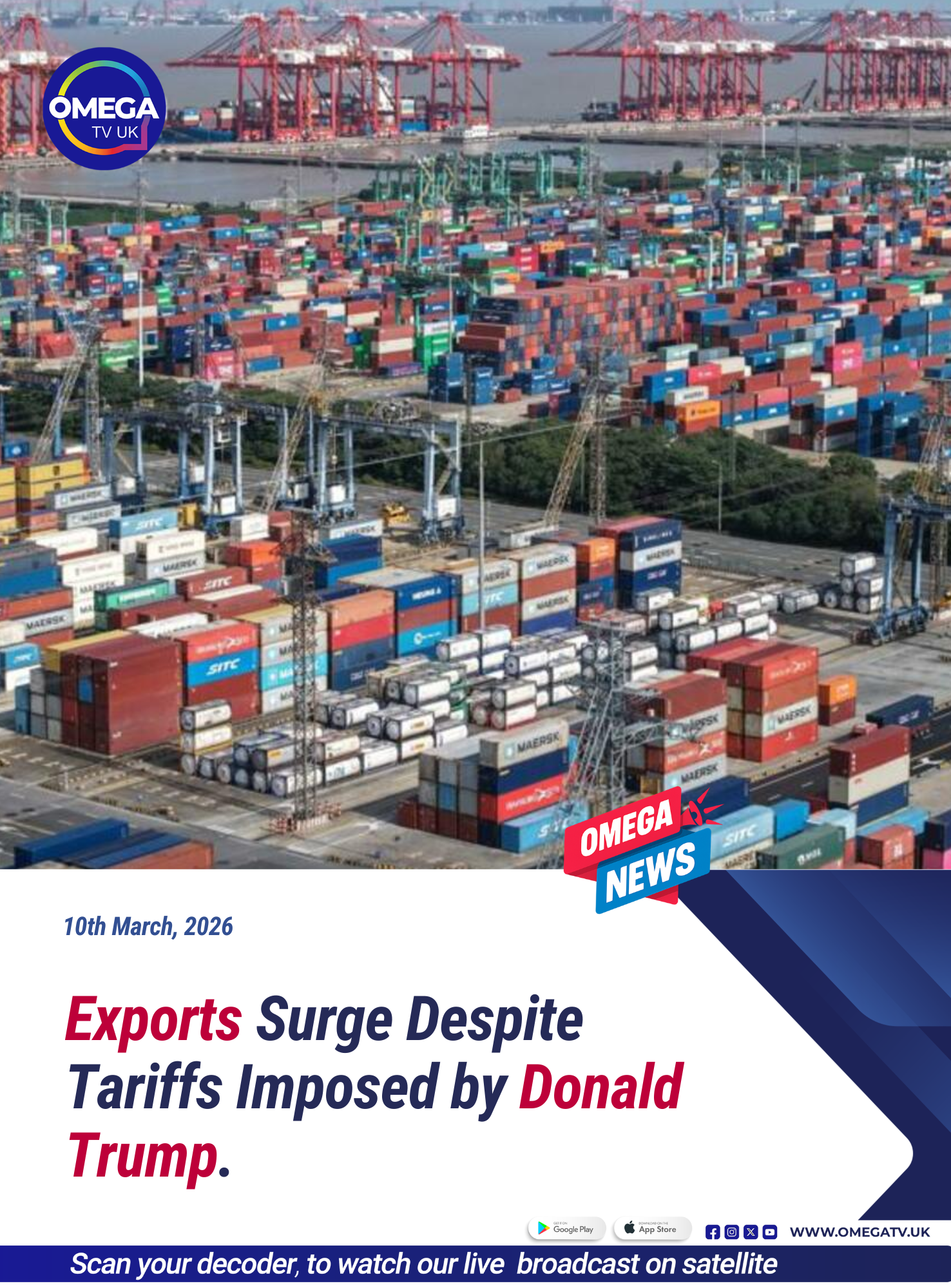
Exports from China surged in the first two months of the year, defying expectations despite ongoing trade tensions with the United States and tariffs imposed by President Donald Trump.
Official data released by Chinese authorities showed that the country’s exports jumped by more than 20 percent in January and February combined. The sharp rise is nearly three times higher than what economists had predicted highlighting the resilience of China’s export sector even amid geopolitical and economic pressures.
The strong performance puts the world’s second-largest economy on track to potentially surpass the record-breaking annual trade surplus it recorded in 2025. Analysts say the surge reflects continued global demand for Chinese manufactured goods, including electronics, machinery and consumer products.
The export boom comes at a crucial time for China’s economy, which is currently grappling with several domestic challenges. These include weak consumer spending, a declining population and an ongoing crisis in the country’s property sector all of which have slowed internal economic activity.
Because of these pressures, exports have become an increasingly important driver of economic growth. Strong overseas sales help offset slower domestic demand and provide support for factories and employment across the country.
The announcement also arrives ahead of an anticipated diplomatic engagement between Donald Trump and Chinese leader Xi Jinping. Trump is expected to visit China in early April for talks that could address trade relations, tariffs and broader economic cooperation between the two global powers.
Trade tensions between the two nations have shaped global markets for years, with tariffs and restrictions affecting supply chains and international commerce.
Despite these challenges, China’s latest export data suggests its manufacturing sector remains highly competitive. However, economists caution that sustained growth will depend on how global trade relations evolve and whether domestic economic weaknesses can be addressed.