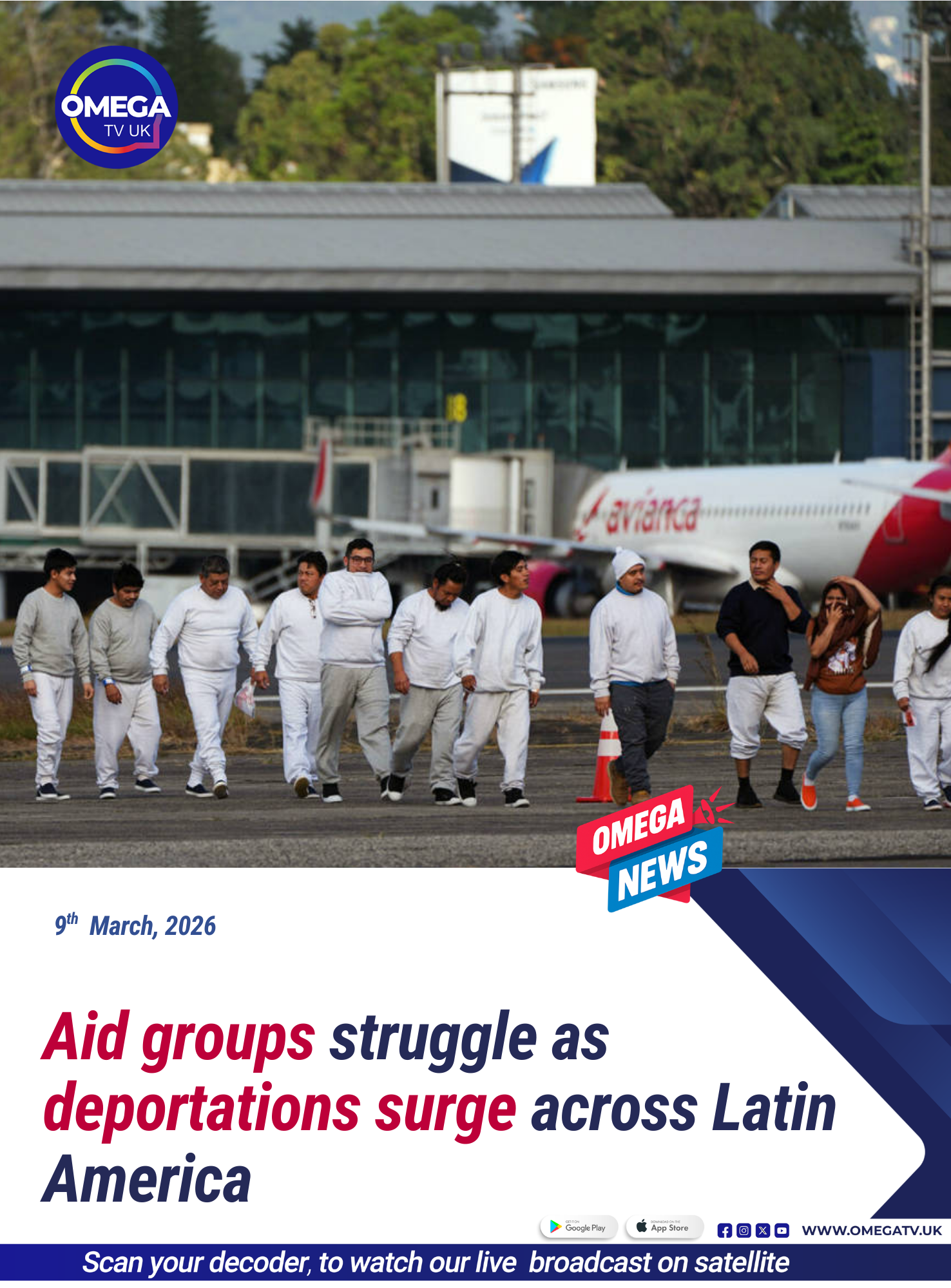
Humanitarian and faith-based aid groups across Latin America are struggling to cope as deportations surge while international aid funding declines.
Organizations that once relied heavily on financial support from the United States say they are facing a severe crisis as more migrants are deported while resources continue to shrink. Among the hardest hit is Jesuit Refugee Service in Mexico.
According to Karen Pérez, deportees are often released with almost nothing after arriving in southern Mexico.
“People arrive with nothing no money, no way to move and no network to help them,” she said.
Relief workers say that at least once a week deportation flights arrive in Tuxtla Gutiérrez, near Mexico’s southern border. Migrants step off planes still wearing grey detention uniforms issued in the United States, often confused about where they are and without personal belongings.
The situation has become even more difficult because aid groups are facing major funding cuts. The Mexico branch of Jesuit Refugee Service has reduced its staff from 70 workers to just 28 over the past year.
The cuts follow major changes in U.S. foreign aid programs, including the dismantling of the United States Agency for International Development under the administration of Donald Trump.
As a result, the organization’s annual budget dropped nearly 40 percent, falling from about 33 million pesos to 20 million pesos in 2025, even as deportations increased.
Mexican authorities say more than 140,000 people were deported to Mexico in 2025, including about 12,000 migrants from other countries. Data from Human Rights First shows that 292 deportation flights arrived in Mexico in 2025 — a 62 percent increase from the previous year.
Aid workers say many deportees are being sent to southern cities like Tapachula, a region already struggling with poverty and limited infrastructure.
Staff there assist around 10 to 15 deported migrants each day, helping them seek legal advice, refugee status, and access to shelter.
Despite these efforts, organizations warn they can no longer respond to every request for help.
A recent report from the American Friends Service Committee found that many migrants faced poor conditions during detention. Among those surveyed, over 20 percent reported limited access to food, water or hygiene, while others described confusion about immigration procedures and incidents of mistreatment.
With deportations continuing and resources shrinking, humanitarian groups warn that the crisis for migrants in Latin America could deepen in the months ahead.